
A Call for Historical Evidence: Addressing Cultural Heritage Claims Between Cambodia and Thailand
To the people of Thailand, I write with respect and openness as a citizen of Cambodia.
Whenever an image surfaces online and voices from Thailand quickly claim that Cambodia has appropriated Thai culture, I find myself asking a fundamental question: what proof supports this assertion?
If Thailand wishes the international community to scrutinize photographs, garments, customs, sculptures, historical figures, and cultural traditions based on verifiable evidence, then Cambodia holds an equal right to request that Thailand examine its own historical documentation with the same rigor.
This brings us to a far more significant question: how many ancient Khmer temples and archaeological locations exist within Thailand's current borders?
The answer is substantial. These sites are scattered throughout many provinces, especially concentrated in Thailand's northeastern and eastern regions. Well-documented examples can be found in Buriram, Surin, Sisaket, Nakhon Ratchasima, Sa Kaeo, and additional provinces.
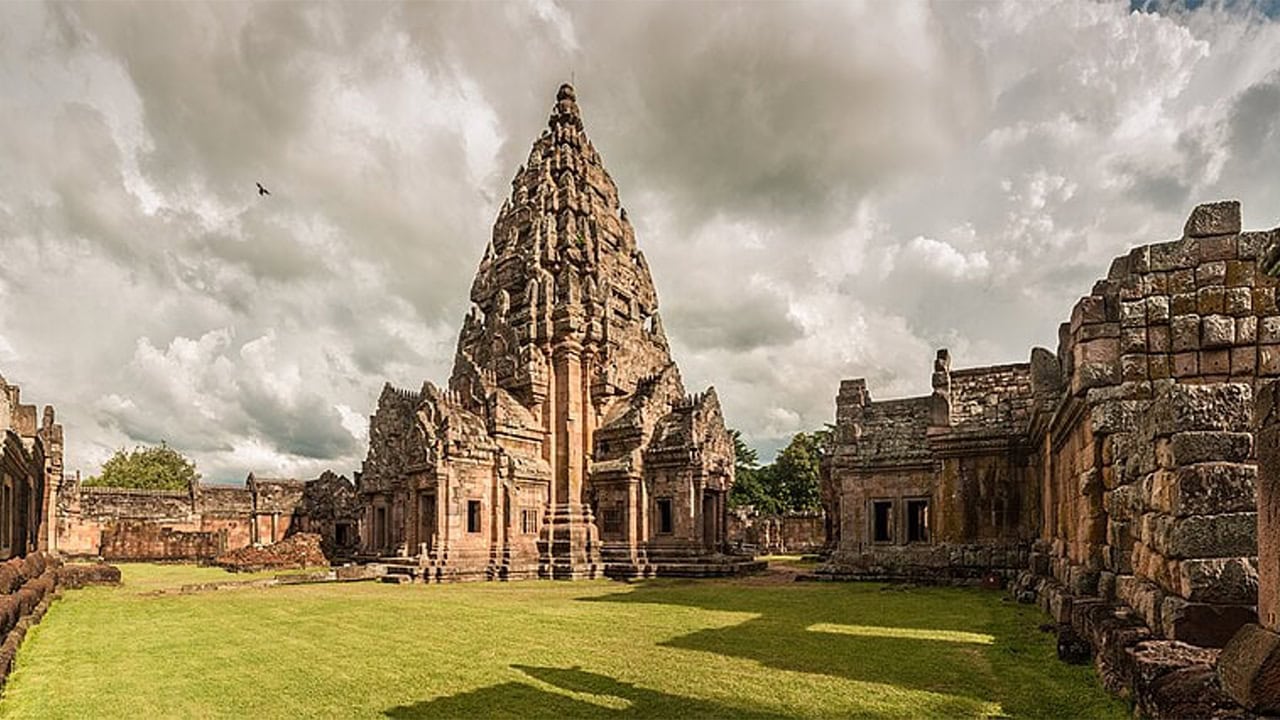
Thailand's official tourism materials themselves describe Phanom Rung in Buriram as a significant monument of Khmer artistic achievement and list Prasat Muang Tam and Phimai among crucial historical landmarks.
Thai archaeological officials have also catalogued ancient Khmer remnants in locations like Sa Kaeo, where material evidence confirms the reach of ancient Khmer civilization.
Published scholarly inventories specifically dedicated to ancient Khmer locations in northeastern and eastern Thailand demonstrate that these facts are not fabrications created by Cambodians on social platforms.
So when someone points to a single photograph and proclaims that Cambodia has stolen from Thailand, I ask them to consider carefully: what historical documentation supports such a claim?
A photograph does not constitute archaeological fieldwork. A social media post is not an ancient inscription. Modern national boundaries do not prove the original cultural identity of structures built centuries ago.
Simply because an ancient Khmer temple stands within Thailand today does not erase the civilization responsible for its creation.
Consider Phanom Rung. Consider Muang Tam. Consider Phimai. Examine the Khmer temples throughout Surin. Review the Khmer archaeological evidence in Sisaket. Study the heritage from the Khmer period across Buriram and other northeastern Thai provinces.
Then ask yourself honestly: who built these structures? When were they constructed? What language is inscribed on their walls? Which religious practices do they embody? What architectural tradition do they exemplify? What conclusions do contemporary archaeological studies reach?
These are historical inquiries that cannot be resolved simply by referencing today's political boundaries.
To those who persistently accuse Cambodia of appropriating Thai culture, I say this plainly: before making such accusations, please investigate the history of the territory where you stand.
I am not claiming that every modern Thai citizen has Cambodian ancestry. I am not asserting that every tradition practiced in Thailand belongs solely to Cambodia. My point is much simpler: ancient Khmer cultural heritage exists within Thailand today, and this reality deserves honest acknowledgment.
The history of mainland Southeast Asia is complex. Kingdoms rose and fell. Populations migrated. Languages and faiths evolved. Cultures exchanged influence. Neither modern Cambodia nor modern Thailand possessed their present-day borders during the eras when many of these monuments were erected.
Therefore, neither nation should distort ancient history to serve contemporary nationalist agendas.
Here is a particularly important question for Thailand's culture ministry: if Cambodia is continually required to prove the historical roots of its cultural heritage, why should the same exacting standard not apply when discussing ancient Khmer heritage situated within Thai territory?
I challenge anyone claiming that Cambodia has appropriated everything to present their evidence. Not insults. Not internet memes. Not nationalist rhetoric. Evidence.
Present the inscriptions. Present the archaeological documentation. Present the excavation data. Present the historical cartography. Present the dates. Present the academic research. Allow independent historians and archaeologists to evaluate them.
That is how genuine historical discourse should proceed.
As a Cambodian citizen, I harbor no ill will toward ordinary Thai people. My objection is to historical double standards.
I desire peace between Cambodians and Thais. But peace does not require silence. Friendship does not demand forgetting. And respect does not mean permitting historical evidence to be supplanted by social media accusations.
To the people of Thailand, the Thai government, and the Thai Ministry of Culture, I respectfully pose this question: if a single photograph suffices for someone to accuse Cambodia of stealing Thai heritage, then what conclusion should we draw when thousands of archaeological records and numerous ancient Khmer monuments are preserved within present-day Thailand?
Who will have the courage to share this history with the world? I will.
Not from hatred of Thailand or its people, but because I am a Cambodian citizen who believes history must be confronted with evidence, regardless of where that evidence leads.
Let the evidence speak. Let archaeology testify. Let inscriptions reveal their truths. Let history be heard. And let Cambodians and Thais face the reality of our intertwined past without animosity.