Cambodia Urges Francophonie to Act Earlier to Head Off Conflicts
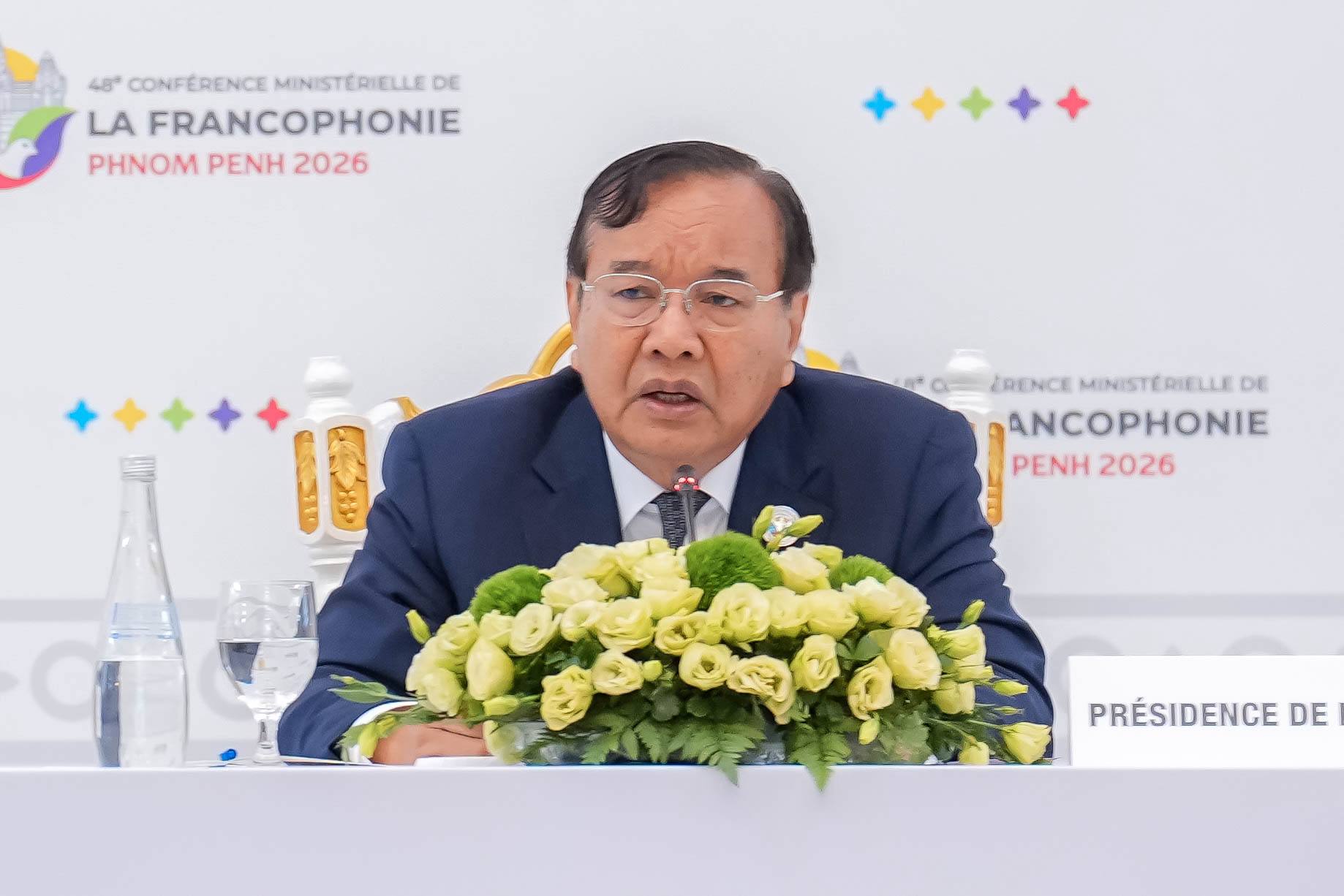
Cambodia has called on Francophonie members to step in sooner to prevent conflicts and back mediation. Ministers gathered in Phnom Penh on November 14 to review a draft peacebuilding resolution ahead of the 20th Francophonie Summit.
Opening the 48th Francophonie Ministerial Conference, Foreign Affairs and International Cooperation Minister Prak Sokhonn said Cambodia’s own history of war and rebuilding had shaped the summit’s theme, “Reinvesting in peace for shared prosperity and lasting stability.” He asked the organisation to help stop crises from escalating and to support reconciliation in countries recovering from conflict.
“Investing in peace starts with acting earlier: preventing crises, supporting mediation and helping communities reconcile,” Sokhonn said in French.
Lessons from Cambodia’s past
Sokhonn pointed to the 1991 Paris Peace Agreements, which paved the way for national reconciliation and reconstruction in Cambodia. Thirty-five years later, he said, the country’s experience shows that lasting peace depends on ongoing dialogue, trust, cooperation and adherence to international law.
He drew on a Khmer proverb about fish eating ants when the water rises, and ants eating fish when it falls, to make the point that power shifts over time. Respect for sovereignty and territorial integrity, he argued, along with the peaceful resolution of disputes, protects both large and small states. No country keeps the upper hand forever, he said, so peace cannot depend on the balance of power alone.
Texts for the leaders
Ministers were due to examine the Phnom Penh Declaration and a draft resolution on crises, post-crisis recovery and peacebuilding across the French-speaking world. Both documents were being finalised for heads of state and government, who are scheduled to meet the following day.
Sokhonn said the texts had already been through detailed work within the organisation and urged delegations to resolve remaining differences by consensus. With only a half-day session and a full agenda, he asked each delegation to limit its remarks to three minutes and state its position clearly.
He also tied lasting peace to public trust in institutions, access to education, and opportunities for women and young people. He noted that people facing violence and forced displacement show why the Francophonie must keep speaking out in favour of peace.
Sokhonn placed cultural heritage within the same agenda, pointing to Cambodia’s care of Angkor and to the role heritage plays in helping younger generations understand their history. He added that the Phnom Penh Appeal on the Protection of Cultural Heritage and the Promotion of Cultural Diversity would also be presented to leaders.
The summit marks the Francophonie’s return to Asia, nearly 30 years after its last gathering in Hanoi. Sokhonn paid tribute to the late King Norodom Sihanouk, whom he named as one of the organisation’s founding figures, alongside Léopold Sédar Senghor, Habib Bourguiba and Hamani Diori.
“Tomorrow, our heads of state and government will receive the texts we finalise this morning,” Sokhonn told delegates. “Let us give them documents with broad backing that meet the hopes of our people.”