Childhood Memories on Two Wheels Inspire a Photographer's Cambodia-Wide Moped Trip
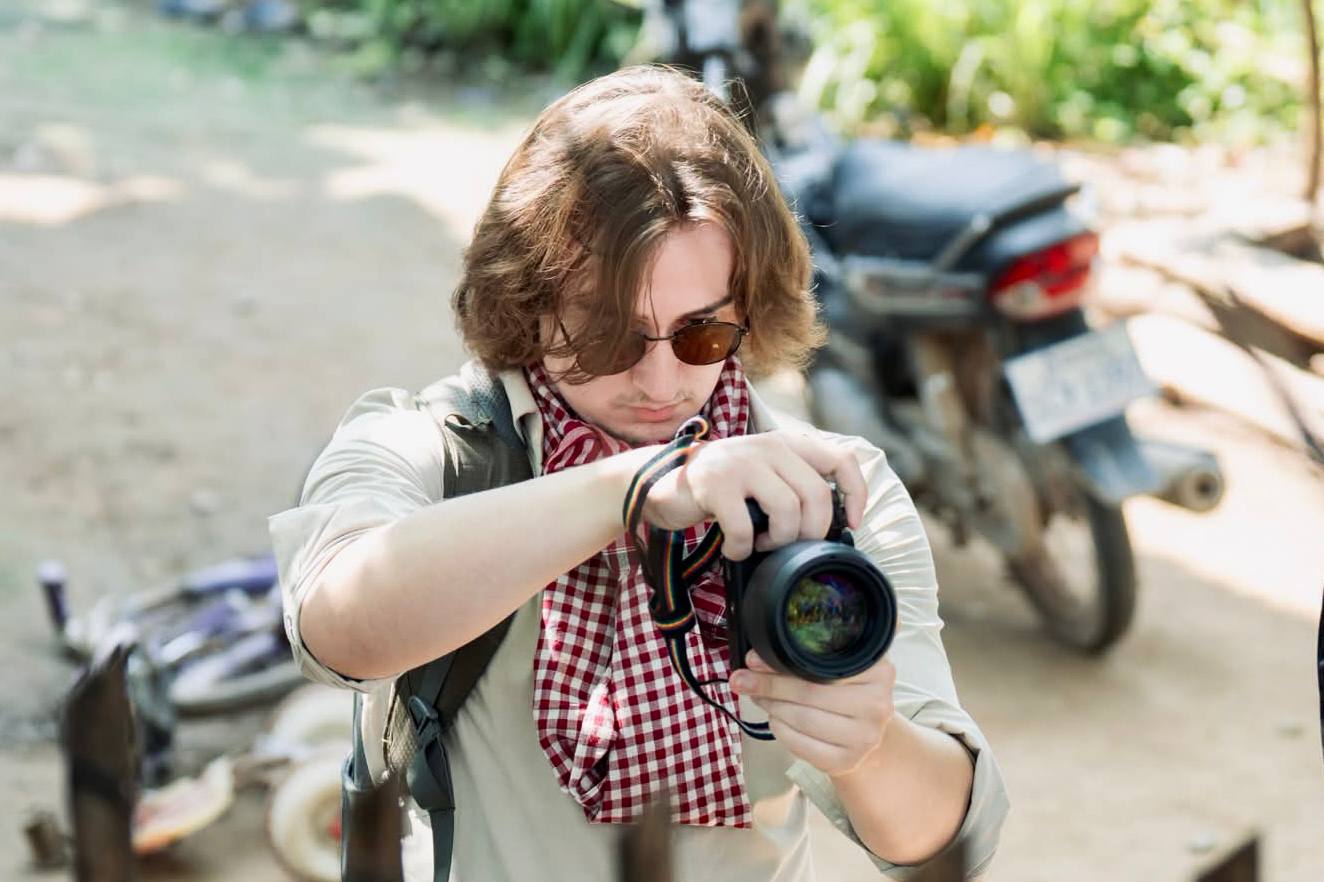
Paulie Marechal spent part of his childhood riding pillion on his father's motorbike along the roads outside Sihanoukville. Now the Phnom Penh-based French photographer is preparing to set off on a journey of his own, on two wheels.
In mid-to-late December, he plans to ride a bright red moped from the 1980s and spend seven to eight months photographing everyday life in all 24 of Cambodia's provinces and the capital. The project, called Ciao Cambodia, takes its name from his 50cc Piaggio Ciao.
Marechal intends to return to Phnom Penh for an exhibition in late July or August 2027. It will feature one large-format print from each province and from the capital, along with smaller photographs of the people he meets on the road.
His connection to the country goes back more than two decades. He first arrived as a baby, when his mother was teaching in Preah Sihanouk province, and he spoke his first words there. He remembers travelling around with his father, who explored Cambodia on a Honda Cub and an XR dirt bike.
Marechal trained as a studio portrait photographer in Ireland and later worked on projects in India, Indonesia and Vietnam. When he came back to Cambodia, it was the reddish-orange soil that first stirred memories of those early rides. Stepping off the plane, he was overwhelmed by nostalgia, and the smell of the fish markets and the aroma of rice reminded him of riding the back roads with his father.
After that return trip, he went through his own old photographs as well as the ones his parents had taken two decades earlier. Those pictures sparked the idea for a longer journey. He found that there was little practical information for Western travellers about much of Cambodia beyond its best-known destinations.
His tentative route heads east from Phnom Penh through Kandal, Prey Veng and Svay Rieng, then turns north through provinces such as Kratie, Mondulkiri, Ratanakiri and Stung Treng. The loop continues through the northwest, along the coast and through Takeo before returning to the capital. The order may change with the seasons and local festivals.
He expects the moped to shape parts of the trip. Its modest speed will let him stop often, and a breakdown could keep him in a village he would otherwise have passed through. He views those unplanned delays as opportunities, noting that being stuck for a week waiting for a spare part might give him a chance to capture a picture he would never have found otherwise.
Local people, he stresses, will shape the story as much as he does. He hopes to photograph fishermen, farmers and market vendors, and he wants to stay in touch with the people he photographs and send them a print as a way of giving something back.
Marechal plans to shoot with both film and digital cameras. His team, which includes Cambodian collaborators, will help select the 25 photographs for the main collection, each to be printed in a large format. The smaller images will appear in a companion book bearing the same title. He also intends to publish journal entries and short video essays while on the road.
He estimates the project will cost between $7,000 and $12,000. He initially paid for it himself, but he is now seeking sponsorships and brand partnerships. He has also committed to donating a share of the exhibition's proceeds to a Cambodian charity or NGO, which will be named before the show opens.
What first drew him back to this work was the family photographs he grew up with. He hopes the scenes he records over the coming months will one day hold the same meaning for others. 'Photographs of Cambodia in 2026 and 2027 might seem ordinary today,' he said. 'I hope that in 20, 50 or even 100 years, people will look back and say he documented Cambodia at a very different time.'