Officials Anticipate November 16 Unveiling of Restored West Mebon Temple After 14-Year Project
Preparations are finished for the formal reopening of the restored West Mebon Temple in Siem Reap province, scheduled for November 16. King Norodom Sihamoni and French President Emmanuel Macron are expected to attend the ceremony.
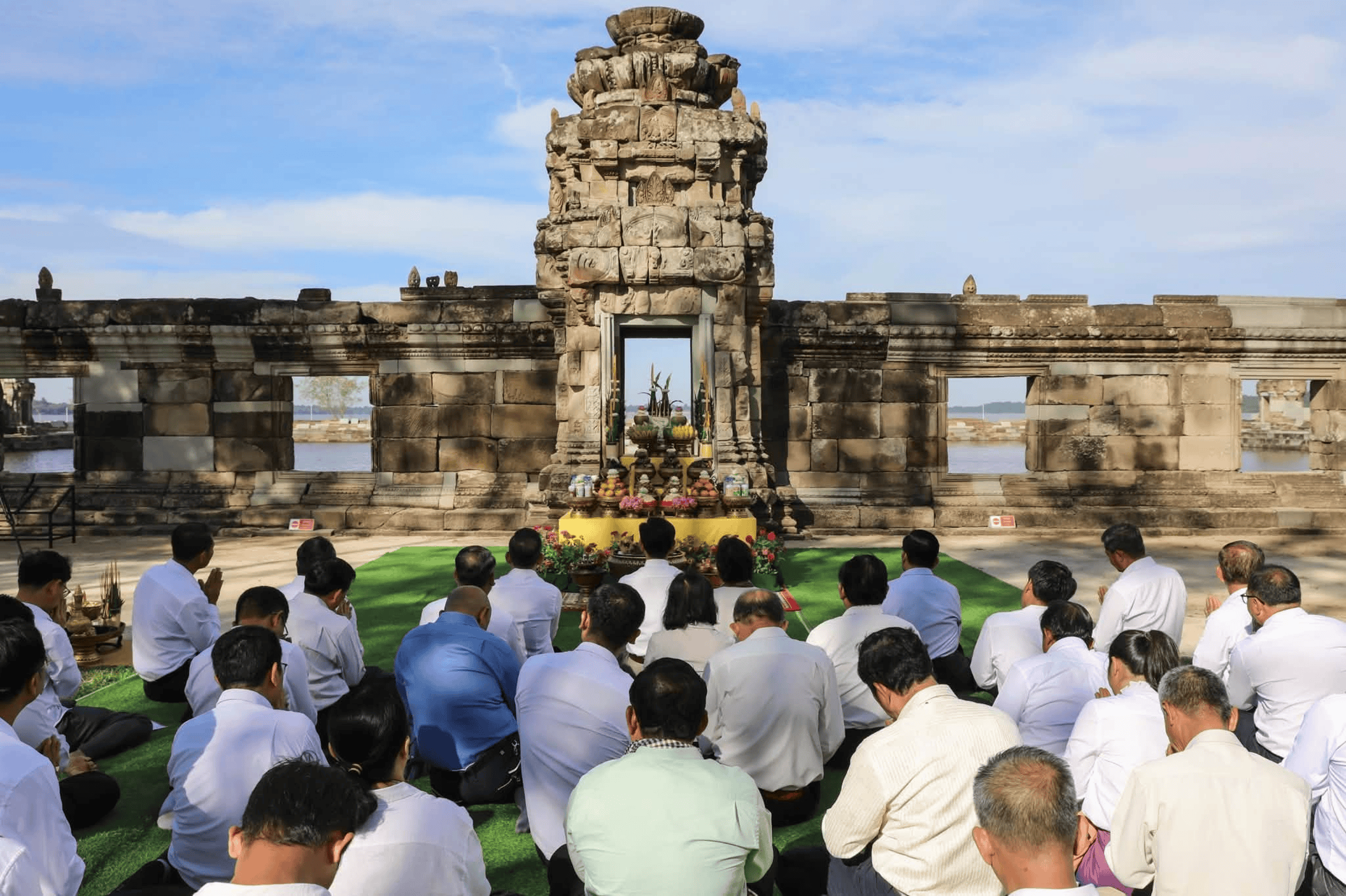
On the morning of November 12, the APSARA National Authority (ANA) held a traditional Krong Peali ceremony at the temple. Director-General Hang Peou led the rite, joined by senior officials, advisers and staff. The ritual asked the guardian spirits of the land and water for their blessing and protection, and it wished peace, prosperity and good fortune for the site and everyone involved in the work.
The inauguration marks the end of a major Cambodian-French restoration effort that started in 2012 and was finished in October of this year. It also coincides with Cambodia's hosting of the 20th Francophonie Summit in Phnom Penh, held November 15 to 16, which will bring the Cambodian monarch and the French president together to celebrate this milestone in cultural heritage.
The restoration was funded with a package worth $12 million and carried out through Cambodian-French cooperation, with more than 100 specialists taking part. According to the Ministry of Culture and Fine Arts, the work involved recording the temple's condition, finding missing stones and placing them back where they belonged, carving and fitting sandstone blocks, and moving heavy machinery and building materials by boat. Crews also had to manage water levels in the West Baray during the rainy season, so that construction could continue while still supplying water for irrigation and the town of Siem Reap.
The Siem Reap provincial administration has announced temporary road closures and traffic diversions for November 16, when the royal visit and Macron's trip take place. Residents and visitors are asked to follow the posted traffic instructions and cooperate with authorities to keep congestion to a minimum.
West Mebon sits on an island in the middle of the West Baray, an ancient Angkorian reservoir. Built in the 11th century during the reign of King Udayadityavarman II, the temple complex includes 16 towers inside a wall measuring 100 metres on each side. A causeway leads to the central sanctuary, which once housed a huge bronze statue of the reclining Hindu god Vishnu.
Speaking in October, Peou said the restoration methods and engineering techniques used on the project should keep the walls and towers stable for many years to come. “The temple can last at least 50 to 150 years, or even longer, provided it receives proper and regular upkeep,” he said.
The temple's most famous piece, however, is not on site. The nearly 1,000-year-old bronze reclining Vishnu, which stretches almost 20 feet, is travelling on an international exhibition and is currently on display at the Asian Art Museum in San Francisco. It is expected to return to Cambodia in early 2027.
The project is a significant step in preserving one of the Angkor-era monuments within the West Baray, so that its architectural remains can continue to be seen and studied by visitors and future generations. As Peou put it, “Through this restoration, we hope to preserve the temple for future generations.”