Peace Cannot Be Picky: Why the Francophonie Should Not Ignore the Cambodia–Thailand Conflict
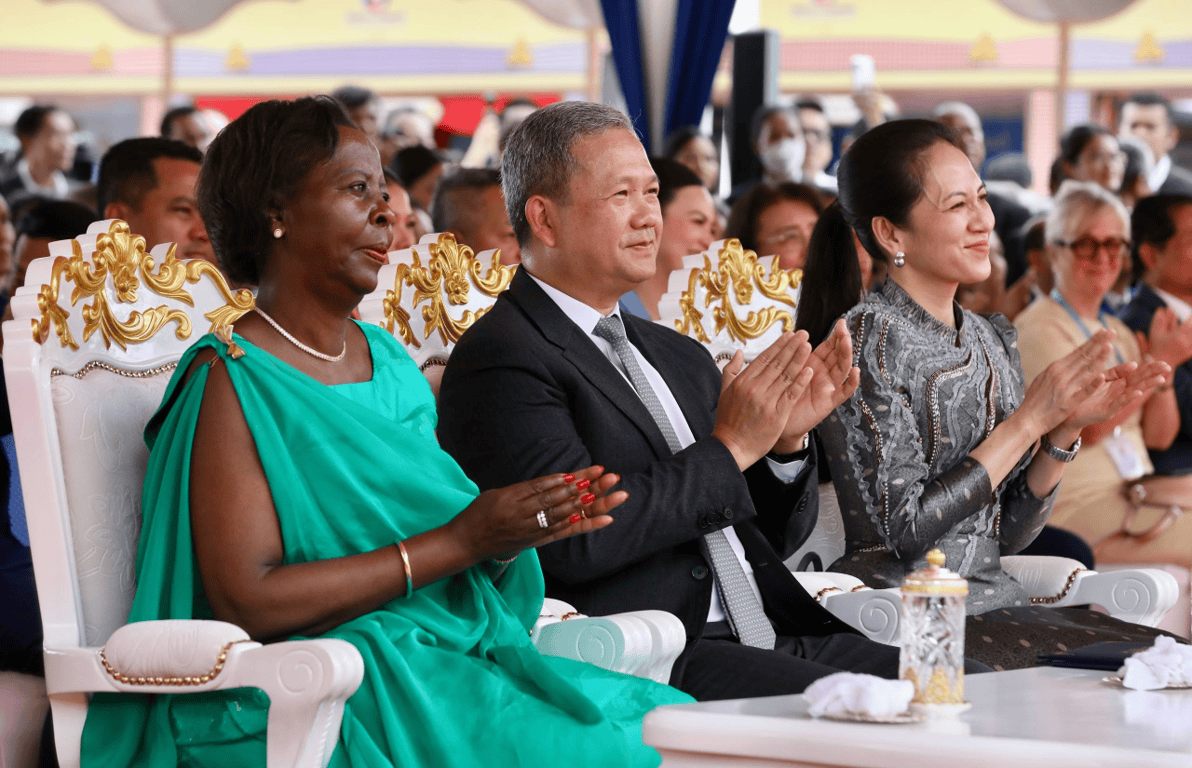
The 20th Francophonie Summit, held in Phnom Penh under the theme “Reinvest in Peace for Shared Prosperity and Lasting Stability,” raises a basic question. What does a real commitment to peace look like, and how far is the Francophonie willing to go to turn that commitment into action?
The theme needs to be tested against actual events, especially when fighting threatens the sovereignty and security of neighbouring countries. The armed clashes and ongoing tensions along the Cambodia–Thailand border offer a concrete test of the principles the summit says it wants to advance.
Cambodians have a fair question of their own. How will the Francophonie respond to the armed fighting and military actions Cambodia says it has suffered at Thailand’s hands? How can a summit devoted to peace and lasting stability avoid a conflict that directly challenges those very principles? For Cambodians, the stakes include sovereignty, territorial integrity, security, livelihoods and the protection of civilians.
The issue reaches well beyond the two countries. It bears on whether the international community’s pledge to peace is credible, and on whether smaller states can trust international law. Peace cannot be protected by staying silent, and stability cannot be built by sidestepping hard questions.
When peace becomes a test of institutional credibility
The Francophonie has a chance to show that its commitment to peace goes beyond rhetoric. The Cambodia–Thailand conflict gives member states a setting in which to reaffirm the rules that should guide relations between states: respect for sovereignty, protection of civilians and the peaceful settlement of disputes.
Raising the matter does not have to turn the summit into a stage for bilateral confrontation. It can open a discussion on how multilateral cooperation might prevent escalation, encourage accountability and strengthen peaceful mechanisms.
Cambodia’s history gives this discussion particular weight. After decades of conflict and enormous human suffering, the country knows that peace is neither automatic nor permanent. It depends on political will, restraint, reconciliation and institutions able to settle disputes without violence. That experience is a strong reason to insist that international principles be applied consistently.
Member states do not need to agree on every aspect of the dispute in order to reaffirm those principles.
Thailand’s observer status and the limits of institutional participation
Thailand takes part in the International Organisation of La Francophonie (OIF) as an observer, while Cambodia is a full member and the summit host. The difference matters institutionally. Under OIF rules, observers may attend summit sessions but do not join institutional debates or vote on declarations, resolutions and decisions.
Thailand’s recent objections deserve a hearing. According to a Thai government briefing on November 11, Thailand delivered a diplomatic protest to the OIF Secretariat. Its vice-minister for foreign affairs also met ambassadors and representatives from 11 countries to voice Bangkok’s opposition to any mention of the bilateral situation in the summit’s outcome document.
Thailand argues that the dispute should not be pulled into the Francophonie and that referring to it could damage confidence-building between the two countries.
There is a legitimate difference between stopping a multilateral gathering from becoming a platform for inflammatory accusations and stopping members from discussing matters that fall within the organisation’s purpose. The first is reasonable. The second raises questions about institutional openness and the independence of members.
Thailand is free to raise its concerns through diplomatic channels. The real question is whether an observer’s objections should set the limits of discussion among full members. The secretariat and member states must stay independent and be guided by the organisation’s rules and the evidence, not by outside pressure.
Agreements on paper versus peace on the ground
Thailand signed the Kuala Lumpur Peace Accord, but its commitments have not produced peace on the ground.
According to Cambodia’s Ministry of National Defence, nearly 8,000 Cambodians near the Boeung Trakuon checkpoint, and roughly 20,000 border residents overall, still cannot return home more than ten months after the December 2025 ceasefire. Thai forces hold the ground behind barbed wire, shipping containers and fortified positions.
Thailand says these barriers are security measures on territory it claims. Whatever the competing claims, an agreement that keeps thousands of civilians out of their homes is not being carried out. Thailand cannot ask others to keep this issue off the Francophonie’s agenda while the promises made in the declaration remain unmet. It should remove the barriers that keep families from their homes, allow the Joint Boundary Commission to resume demarcation without delay and honour every term of the declaration it signed.
Cambodia has reaffirmed its own commitment to the accord, and it should be held to the same standard.
International law cannot be separated from peace
The conflict also raises a wider question about international law and regional security. Article 2(3) of the UN Charter obliges states to settle disputes by peaceful means. Article 2(4) bans the threat or use of force against the territorial integrity or political independence of any state.
For Cambodia, the border question should be resolved through the relevant historical instruments, bilateral agreements and peaceful mechanisms. The 2000 Memorandum of Understanding on border surveying and demarcation, the Joint Boundary Commission and other relevant instruments remain key parts of the bilateral framework.
A military presence or unilateral action on disputed land cannot take the place of lawful boundary determination. Competing territorial claims should not be settled by force or by efforts to create facts on the ground.
Cambodia maintains that its position rests on international law and historical boundary documents. Thailand has its own interpretations and objections.
The Francophonie does not need to decide disputed boundaries or act as a court. Raising the issue does not require the summit to prejudge territorial claims. It only requires acknowledging that civilian protection, respect for sovereignty, restraint in the use of force and peaceful dispute settlement are legitimate international concerns.
The human cost must not vanish behind diplomacy
Diplomatic talks can get bogged down in political positioning and competing narratives. Yet every border standoff affects real people: families driven from their homes, children whose schooling is disrupted, farmers unable to reach their fields and communities living under the threat of renewed fighting.
Cambodian authorities have reported civilian displacement and ongoing hardship for border communities. Cambodia has also raised concerns about military activity, limits on civilian access and damage to homes and infrastructure. Thailand disputes Cambodia’s account and has offered its own.
These claims should be examined through credible monitoring, independent verification and suitable diplomatic channels. The ASEAN Observer Team and relevant bilateral mechanisms can help build transparency and confidence.
A ceasefire is essential, but it does not resolve the dispute. Lasting peace requires compliance, mutual restraint, protection of civilians and progress on the disputes that caused the confrontation. The Francophonie can encourage both countries to honour their commitments, address humanitarian needs and pursue peaceful mechanisms without further escalation.
A responsibility that extends beyond Cambodia
The summit’s implications reach beyond the bilateral relationship.