FrancoTech Speakers Urge AI That Understands Khmer and Local Needs
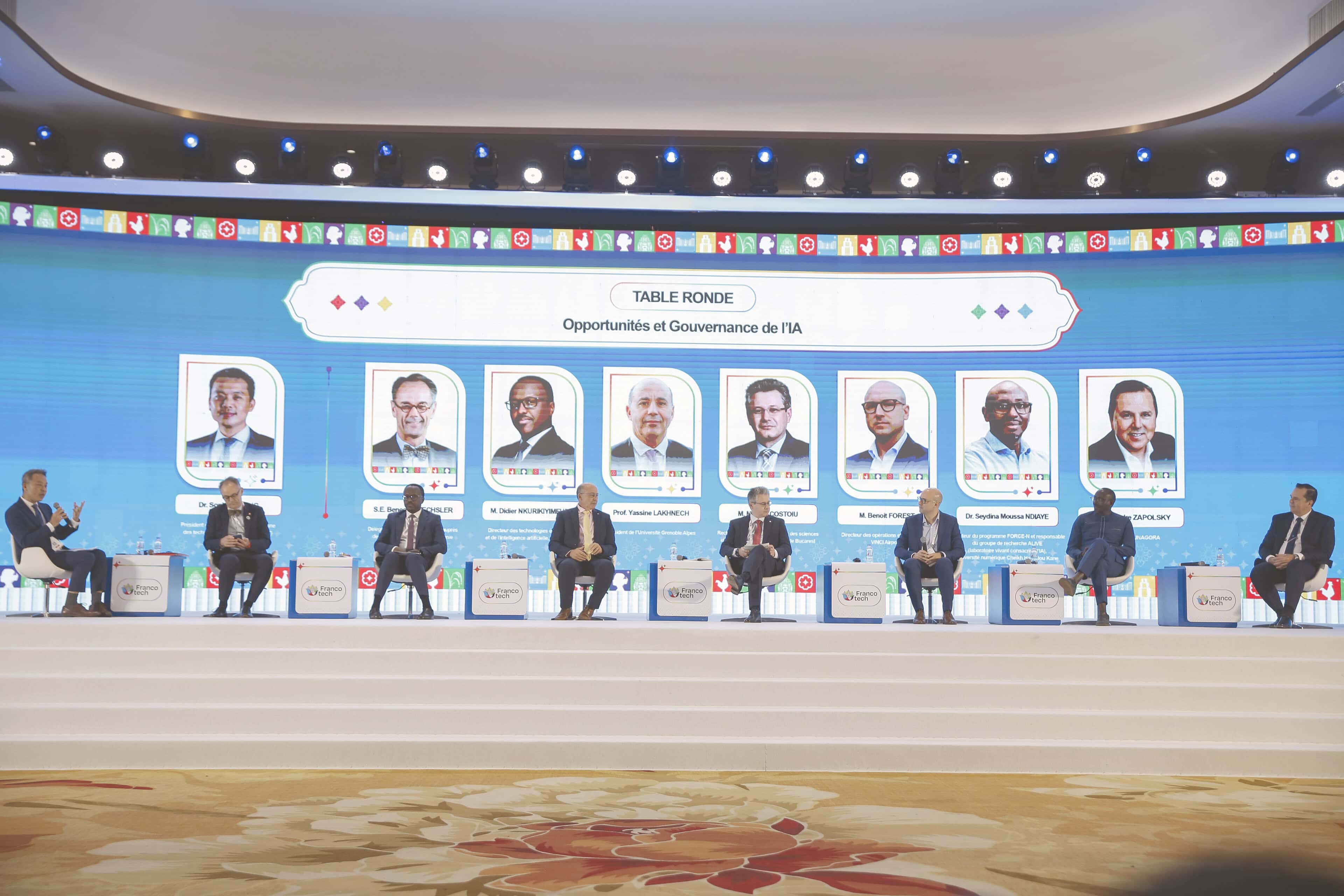
AI tools used in Cambodia should understand Khmer, respect the country’s culture, and serve local needs, Seng Sopheap, president of the Cambodian Academy of Digital Technology (CADT), told a FrancoTech roundtable in Phnom Penh on November 14.
The discussion brought together researchers, university leaders, and technology executives from Asia, Africa, and Europe. They looked at how Francophone countries could build AI suited to their own languages and institutions.
For Cambodia, Sopheap said, the priority is building the expertise to shape the tools that people will use in schools, businesses, and public services.
“For a country like Cambodia, using artificial intelligence is very important, but we have to make sure it understands our language, understands our history and respects our culture,” he said. “We also need the ability to build AI that responds to our needs.”
Seydina Moussa Ndiaye, director of the FORCE-N programme at Senegal’s Cheikh Hamidou Kane Digital University, illustrated the risk with a hypothetical case. An AI assistant might answer a question in Wolof, a language widely spoken in Senegal, while describing a procedure that applies in a different country. For a Cambodian user, the equivalent would be a reply in fluent Khmer that gives the wrong steps for accessing a public service.
Ndiaye said AI systems should be judged by the language they use, the sources they draw on, and the setting in which people will use them.
“French can connect our research communities and companies,” he said. “That cooperation must also support Khmer, Wolof and the other languages of our societies.”
He proposed that universities and research teams work together to develop language resources, share computing infrastructure, and agree on common ways to test their systems. People who know the languages and local practices should take part in preparing those resources, he said, and the terms governing how their contributions are used should be clear.
Safeguards before deployment
Ndiaye also called for systems to be tested before they are deployed, for clear responsibility over AI-generated decisions, and for human oversight suited to each service. Start-ups, universities, and public agencies would need the skills and resources to put these safeguards into practice, he said.
Alexandre Zapolsky, president of the French software company LINAGORA, said voice-based AI could help people who struggle to use existing digital public services. He advocated open-source models that countries could adapt to their own needs. Relying on a small number of international providers, he argued, could limit countries’ ability to shape these tools and protect their cultural diversity.
Yassine Lakhnech, president of Université Grenoble Alpes, said technical skills would determine how much control countries could exercise over the technology. Universities, he said, could help build the expertise needed to develop AI systems and prepare institutions to govern tools supplied by others.
A wider Francophonie debate
The language question also came up at the 48th Francophonie Ministerial Conference. In his opening remarks, Cambodian Foreign Minister Prak Sokhonn said digital technology and AI could open opportunities for young people and economies across the Francophonie. He urged member countries to make sure those benefits were widely shared and that French and other languages had a place in these technologies.
At the FrancoTech roundtable, Ndiaye pointed to CADT and his own university in Senegal as institutions that could turn that goal into joint research. He said researchers, companies, and public agencies could begin with shared problems, test tools with the people who will actually use them, and agree from the outset on who holds the rights to the results.