Cambodian Product Fair Aims to Link Local Makers With Wider Markets
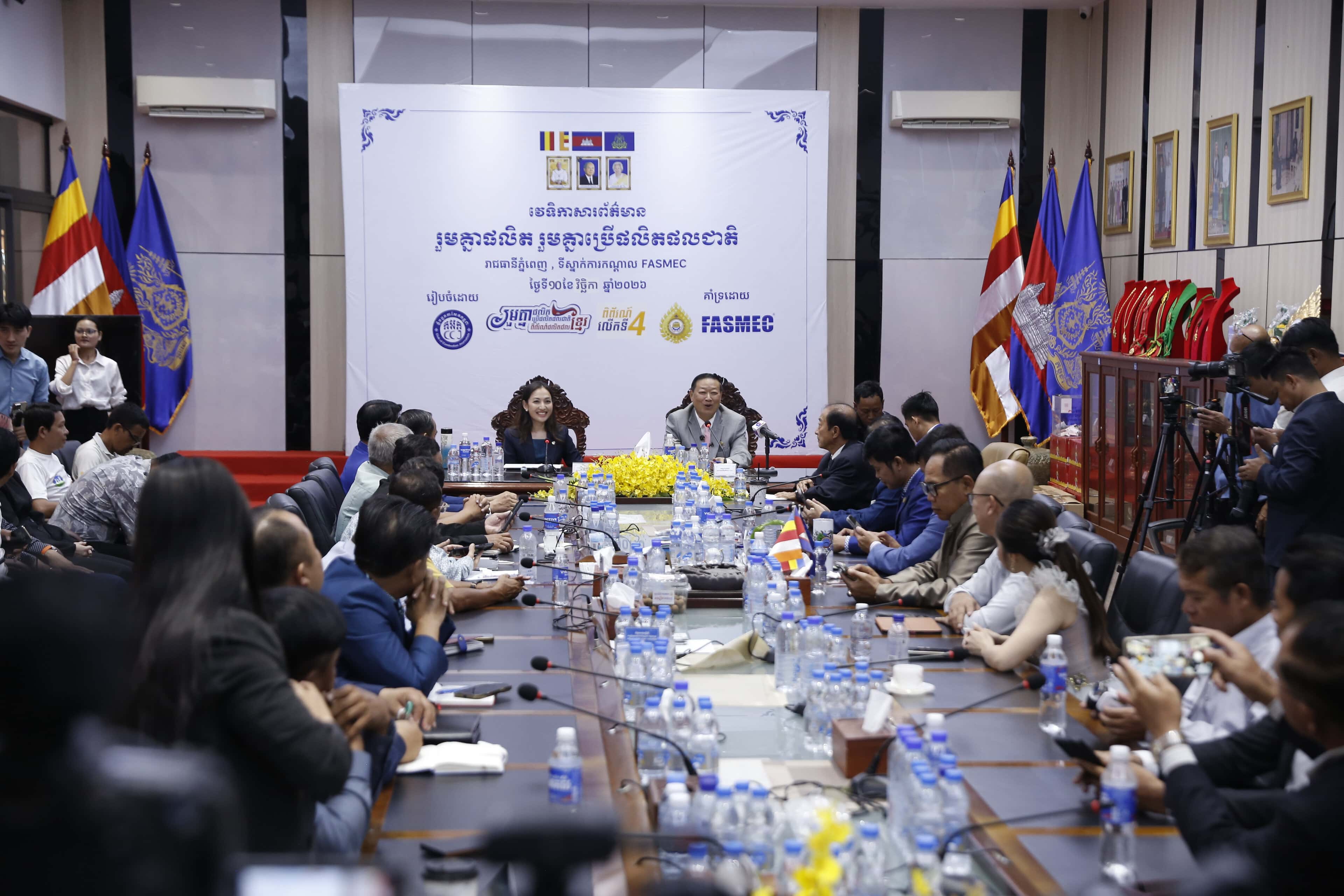
The fourth edition of a Cambodian product exhibition will run from November 20 to 22 at Koh Pich in Phnom Penh. More than 300 booths and over 100 types of goods will give local producers a chance to meet consumers, wholesalers and distributors.
Te Taing Por, president of the Federation of Associations for Small and Medium Enterprises of Cambodia (FASMEC), told a press conference that about 95 per cent of the products on display will be made in Cambodia. Prime Minister Hun Manet and his wife are also expected to attend.
Por said the fair is meant to show the public what Cambodian factories and workshops can produce, while giving companies a stage to launch new items and build business ties. Without events like this, he argued, many people would have no idea what Cambodians are making.
He said shoppers of all ages are increasingly interested in homegrown goods. To keep that momentum going, manufacturers need to focus on quality, fair pricing and their ability to keep the market supplied. Por stressed that the fair is not just about making products look attractive or closing quick sales. As an SME federation, FASMEC also checks whether items are suitable, whether prices are within reach, and whether information about them reaches all 25 provinces and the capital.
FASMEC has organised product exhibitions since 2004, when domestic output was far more limited and displays mixed imported goods with local ones. Por noted that nearly all the products at the upcoming event will be Cambodian.
FASMEC secretary-general Chhin Ket said this edition places more emphasis on selecting products that meet quality and standards requirements. The event is designed not only to showcase manufacturers' work but also to help them find distribution partners, a major obstacle for companies that can make goods but struggle to get them to market. Bringing sellers and buyers together in one place, he said, makes it easier to forge connections and expand markets faster. Speeding up the distribution of Cambodian products remains a central goal.
Kunthea, a distributor and exhibitor of Cambodian goods, said the participation of retailers, wholesalers and distributors will be crucial to turning the fair into real business for producers. She encouraged potential partners to visit and meet manufacturers so that supply and distribution relationships can continue well beyond the three days.
She also pointed to new products launched over the past six months as signs of changing local food processing. Cashew products, once sold mainly as whole or broken kernels, now include cashew powder that can be added to baking or stirred into milk. She also highlighted ready-made seasoning mixes for Khmer dishes, including yao hon hotpot, beef stew and curry, designed to make home cooking or meals on the road easier.
Por acknowledged that wider market access depends on steady supply and sufficient production volumes. Asked about getting onto supermarket shelves, he said businesses should prepare for both domestic retail and overseas markets, where buyers' requirements and destination-country standards must be met. Without adequate quantities and proper standards, he said, exporting successfully is unrealistic.
Por added that FASMEC will keep gathering business concerns about financing, raw materials, packaging and production costs, and will raise them with relevant institutions to look for solutions. The federation plans to keep providing platforms for manufacturers developing new goods and seeking broader recognition. As long as support for Cambodian products continues, he said, FASMEC will keep organising exhibitions, and as long as manufacturers keep creating new products, it will keep staging shows to introduce them to the public.