Investment Board Chief Says Cambodia's 39 Operating SEZs Are Vital to Growth
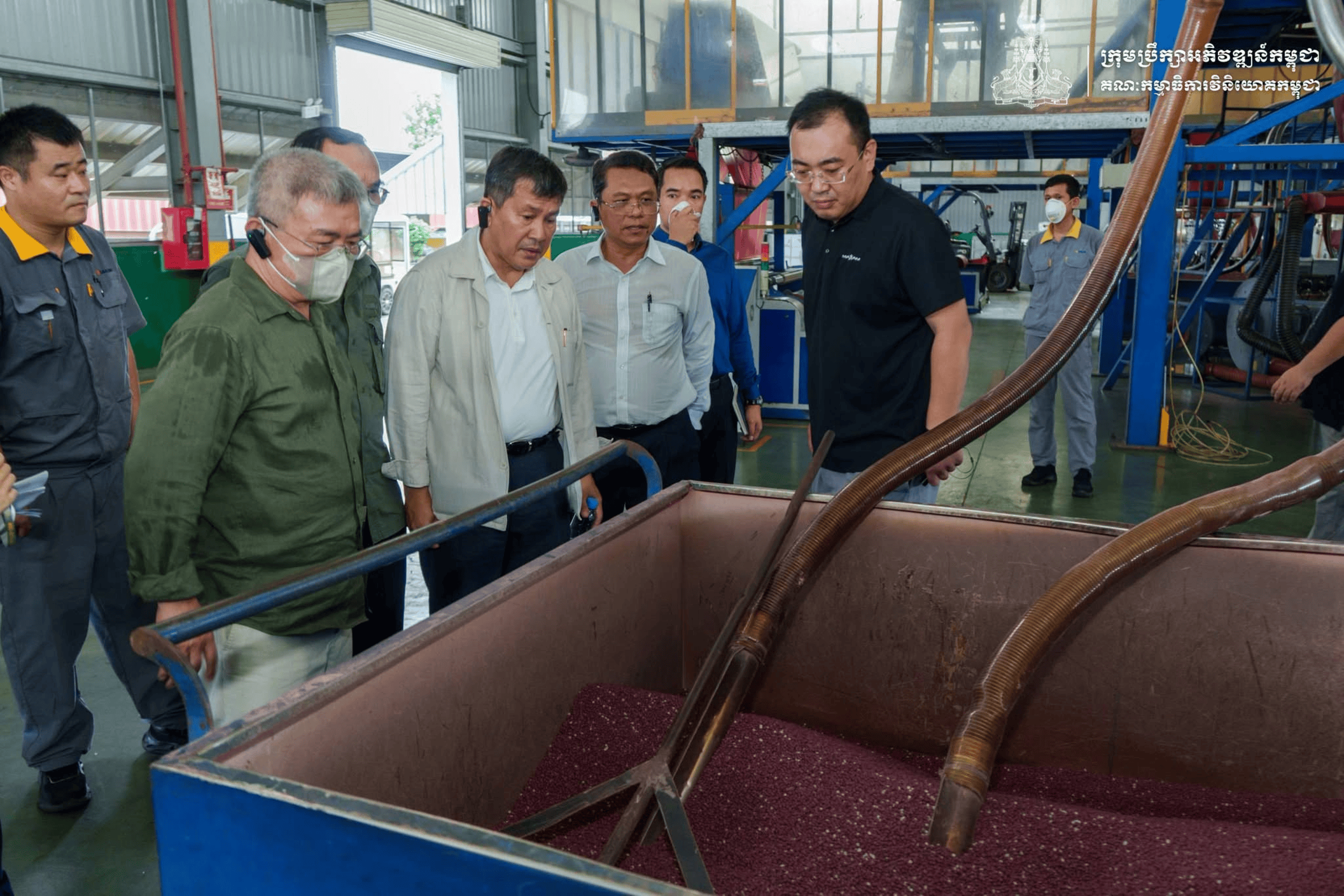
Chea Vuthy, secretary-general of the Cambodian Investment Board under the Council for the Development of Cambodia (CDC), spent the end of last week touring the Qilu Special Economic Zone and the Huashang International Special Economic Zone in Svay Rieng province to review their progress.
He said special economic zones (SEZs) are becoming a bigger draw for both domestic and foreign investors, while also expanding the country's export capacity and its reach into international markets.
As of November 2026, Vuthy said, the 39 operating SEZs had attracted 1,149 investment projects with combined capital of roughly $15 billion, creating around 270,000 jobs.
He credited former prime minister Hun Sen, now president of the Senate, with first proposing the zones. The program has turned large areas of empty land and rice fields into industrial hubs that continue to attract new projects and contribute significantly to socio-economic development.
Vuthy added that the zones have also helped diversify the industrial base, moving the economy away from labour-intensive production toward higher-value, technology-based industries.
During the visit, he also pointed to Prime Minister Hun Manet's call to expand domestic agricultural processing to add more value, and to tie foreign investment more closely to local industries. The aim is to build stronger, more sustainable domestic supply chains.
Two Decades of Growth
Over the past 20 years, SEZs have played a major role in Cambodia's economic expansion. Royal Group Phnom Penh Special Economic Zone (RGPPSEZ) is a clear example, with both its imports and exports climbing steadily.
Imports through the zone rose from $378 million in 2016 to $2.166 billion in 2025, while exports grew from $316 million to $2.144 billion over the same span.
The company said land that was once rice fields and vacant ground now hosts 117 companies from 15 countries, producing everything from food and beverages to assembled automobiles.
Kit Meng, chairman of Royal Group and Royal Group Phnom Penh SEZ Plc, said he was proud of the zone's performance. He credited the trust and commitment of investors, partners, employees and other stakeholders for two decades of progress, and pledged to keep supporting investors, attracting quality projects and contributing to Cambodia's economic and industrial development.
Making Operations Easier
Sam Soknoeun, chairman of the board of SAM SN Group, said SEZs come with essential infrastructure such as roads, electricity and one-stop service offices, which make running a business far more convenient for factory and enterprise owners.
He explained that companies in the zones find it simpler to handle every step, from securing approval to import raw materials to shipping finished goods to overseas buyers.
He noted that textiles currently account for most of the export goods made in the zones. That could change, however, as Cambodia attracts more large manufacturers of electronic components, machinery and advanced technological equipment.