Youth Support Extended as Funding Cuts Put HIV Prevention at Risk
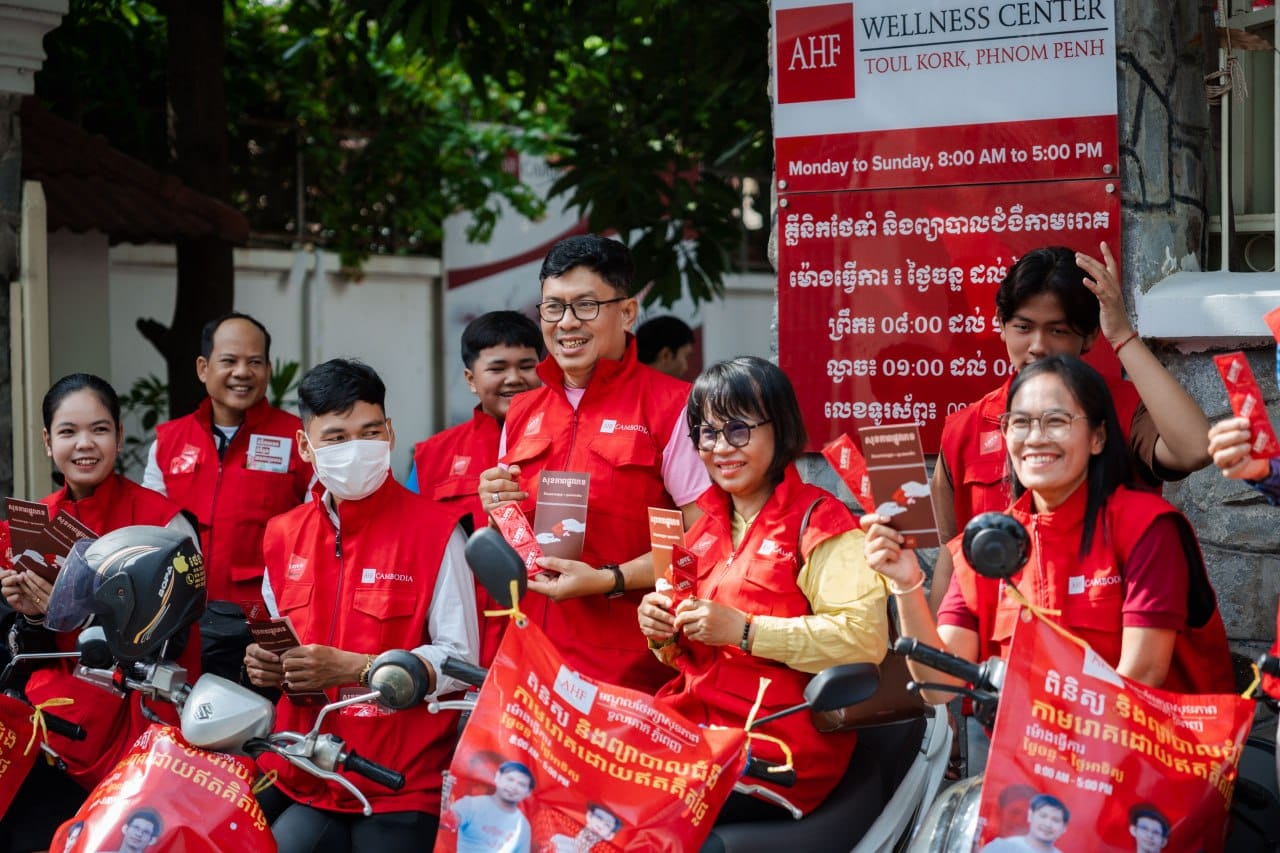
Shrinking international aid is putting pressure on Cambodia’s HIV prevention work. The National AIDS Authority (NAA) has warned that reduced funding for civil society organisations has already weakened prevention activities, even though young people still make up a large share of new infections.
Speaking at the NAA’s 2026 annual conference in Preah Sihanouk province on November 11, NAA chairman Senior Minister Ieng Mouly said Cambodia is still working toward ending HIV transmission despite a difficult global funding climate.
“Over the past year, we have worked closely together to achieve our goal of ending the spread of HIV and AIDS, even as external support has been declining,” he said.
Mouly warned that money shortages are hurting organisations that carry out HIV prevention and community outreach. “Funding gaps for NGOs and civil society groups working on HIV have forced a cutback in prevention work,” he said.
Figures presented at the conference showed that people aged 15 to 24 accounted for 44 percent of the 960 new HIV infections recorded in Cambodia in 2025. Mouly blamed their continued vulnerability on low awareness of HIV risks, shifting sexual behaviour and falling condom use. “Changing behaviour and poor awareness of HIV and AIDS among young people, combined with less condom use, continue to leave them exposed to infection,” he said.
He also voiced concern about new infections among men who have sex with men, calling it another challenge for the country’s HIV response.
Dr Chan Phanna, country programme manager of AIDS Healthcare Foundation (AHF) Cambodia, said social and economic barriers still prevent vulnerable groups from using prevention services. Stigma, fear of discrimination and worries about privacy stop some young people from getting tested and receiving counselling.
Adolescent girls and young women face additional hurdles, including poor sexual health education, financial dependence and unequal power in relationships. These factors can make it hard for them to insist on condom use. In rural areas, travel costs and a shortage of youth-friendly health services further limit access to testing and prevention.
AHF Cambodia has run its Girls Act programme since 2019. It offers education, peer support and practical help to adolescent girls and young women, including those living with HIV. The initiative has built a network of more than 300 members, supported by 12 community leaders, and focuses on sexual and reproductive health awareness, reducing discrimination and keeping girls on treatment.
In 2026, Girls Act expanded its practical support. It now provides menstrual hygiene supplies to schools and disadvantaged communities, backs antiretroviral therapy (ART) services and covers transport costs for girls who need medical care.
Phanna said supporting girls and young women is especially important, because stigma, financial dependence and limited access to confidential care can shape their healthcare decisions. “HIV-positive girls deserve the same chance to study, work and build their futures as anyone else. Through Girls Act, we want to build their confidence, help them stay on treatment and make sure stigma doesn’t stand in the way of their care,” he said.
Progress in treatment has not eliminated concern about transmission among younger people. Phanna argued that better treatment must go hand in hand with stronger prevention education, confidential testing and early diagnosis, especially for young people who may underestimate their risk.
He also stressed that young people who test positive should be connected to treatment quickly and supported to take their medication consistently, free from stigma and discrimination.
Effective ART can reduce the amount of HIV in the blood to undetectable levels. People who achieve and maintain an undetectable viral load do not pass HIV on through sex, a principle known as “Undetectable equals Untransmittable,” or U=U.
At the national level, Mouly reported progress in expanding social protection for people living with HIV. As of the third quarter of 2026, 56,598 people receiving ART had obtained Health Equity Fund cards. That is 77.03 percent of the 73,449 people undergoing HIV treatment across the country.
He said ministries, government agencies and provincial administrations have kept building HIV awareness and anti-discrimination messages into their everyday work.
Even so, the decline in external aid has raised concerns about sustaining prevention programmes, particularly those run by community organisations that serve vulnerable populations.
The conference reviewed the country’s HIV response in 2026 and set priorities for 2027. These include workplace prevention, provincial action plans, civil society participation and preparations for the eighth funding cycle of the Global Fund.
Looking ahead, Phanna said AHF Cambodia will continue supporting HIV testing, counselling and community outreach in 2027, encouraging people at risk to learn their status and access prevention and treatment. He argued that progress should be judged not only by how many people are on treatment, but also by whether they can stay healthy, keep studying or working, and live free from discrimination.
For AHF Cambodia, the priority is strengthening community-based prevention while keeping treatment uninterrupted. Doing both, the organisation says, is key to protecting vulnerable people and sustaining the country’s gains against HIV.