South Korea Revives Cigarette Tax Debate After 11 Years Without a Hike
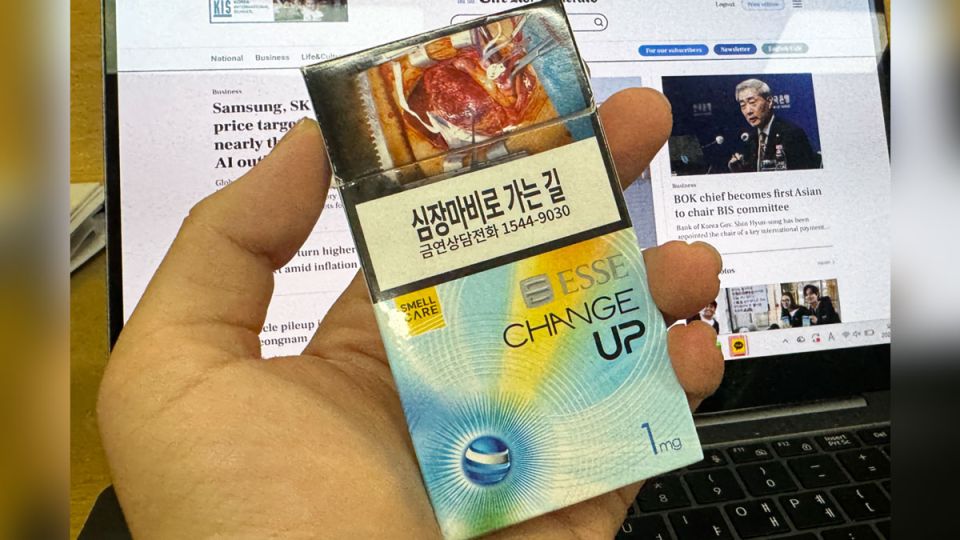
A prominent medical expert has called for a steep rise in cigarette prices in South Korea, reopening long-running arguments about tobacco pricing and public finances.
Park Eun-cheol, vice president of the National Academy of Medicine of Korea, proposed raising the price of a pack from 4,500 won to 8,500 won, or roughly $3.40 to $6.40. He made the case on Tuesday at a forum co-hosted by the academy and the Korean Association of Medical Journalists. Pack prices have stayed near 4,500 won since 2015, even as the cost of most other goods has climbed. Park argued that cigarettes have become easier to afford as the minimum wage and household incomes have risen.
How South Korea compares abroad
Park said that, once purchasing power is factored in, South Korea still has some of the cheapest cigarettes in the OECD. He cited 2022 World Health Organization figures showing an average pack cost about $8.30 in the United States, $12.70 in the United Kingdom and $10.70 in France, compared with $3.50 in South Korea at that year’s exchange rate.
He estimated that an 89 percent price increase could lower the adult smoking rate from 17 percent to 14 percent, while adding about 2.76 trillion won a year in tobacco tax revenue.
Calls to regulate newer nicotine products
Other speakers urged broader rules for newer nicotine products. Lee Sung-kyu, head of the Korea Center for Tobacco Control Research and Education, warned that nicotine pouches from KT&G and Philip Morris Korea could soon reach the domestic market, and that nicotine strips and toothpicks are also emerging. He called for a preemptive regulatory framework that does not depend on specific ingredients or product formats.
Government holds off on price hikes
The government’s 2027–2031 plan for tackling tobacco-related health risks, announced on October 29, did not include a price increase. Officials at the forum said the government prefers anti-smoking measures that do not involve raising prices.
The 4,500 won figure is a government target rather than a fixed price, since manufacturers set their own retail prices. That target still constrains them, because taxes and levies make up roughly three-quarters of a pack’s price.
Lessons from the 2015 increase
The last hike, in January 2015, raised the target price by 80 percent, from 2,500 won to 4,500 won. It added 0.58 percentage points to consumer price inflation in its first month. Opposition lawmakers at the time accused the conservative Park Geun-hye government of using a public health measure to raise taxes on ordinary consumers. Cigarette sales fell 23.7 percent in 2015 from a year earlier, but critics said the drop was modest given the size of the price rise. A similar proposal under the Moon Jae-in administration in 2021 drew comparable objections, and no increase followed.
Smoking patterns also vary by income. According to the Korea Institute for Health and Social Affairs, smoking among people earning less than 60 percent of the median income rose from 15.48 percent in 2015 to 17.26 percent in 2024, while rates fell in other income groups.
Tobacco taxes and firefighting funding
Tobacco taxes also play a major role in funding firefighting. Each pack carries a 594 won individual consumption tax. Initially, 20 percent of that revenue went to the Fire Safety Subsidy, a share that rose to 45 percent in 2020. Conventional cigarette sales, however, fell from about 3.4 billion packs in 2017 to 2.87 billion in 2024, putting pressure on the subsidy.
Concerns about how firefighting is financed have grown. In October, Gyeonggi Province Governor Choo Mi-ae drew criticism for calling firefighting costs a “drain on local budgets” during a parliamentary audit. She pointed out that local governments bear these costs even though firefighters are national government employees.
A September survey of 1,024 adults by the Korea Youth Legislative Policy Association found that 77.9 percent backed a 300 won increase in the individual consumption tax on tobacco to offset the expected drop in subsidy revenue.
How the National Health Promotion Fund should be used
A separate debate centers on the National Health Promotion Fund, which is financed by a tobacco levy. At a National Assembly forum on Tuesday, a coalition of civic and research groups proposed using part of the fund for community-based integrated care for older people and people with disabilities. Researchers there called for periodic tobacco tax increases while keeping the fund’s public health purpose intact. A Health Ministry official said any increase would require coordination among ministries and broader public consensus.