An Open Letter to Thailand’s Ambassador on Cambodia’s Refugee Camp History
Dear Ambassador Cherdchai Chaivaivid,
When you addressed the United Nations General Assembly on September 28, you said that Cambodians living in areas first created as temporary shelters in the 1970s had not gone home and that their presence infringed on Thai territory. A fuller public account is needed. People need the facts, the historical background, and the experiences of those who lived through the border crisis.
The crisis began after war and collapse
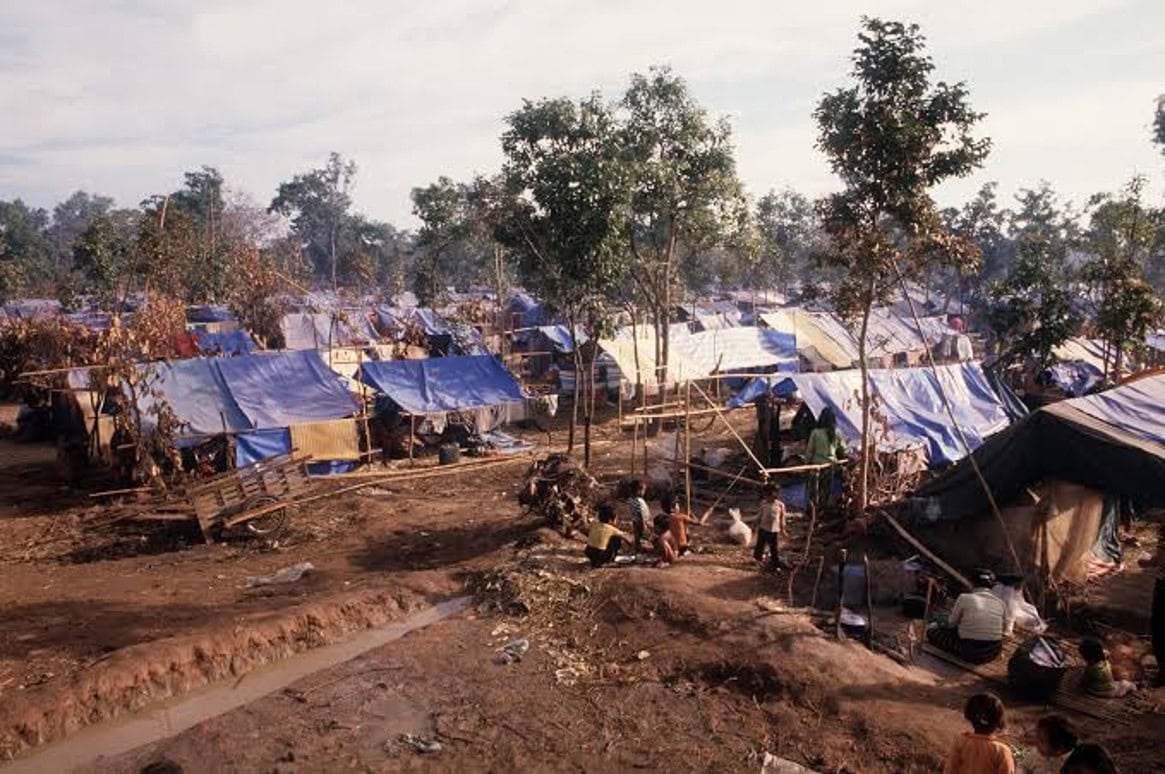
Cambodia’s refugee emergency was not the result of people choosing to settle abroad. It developed from conflict, repression, uprooting and fear after the Khmer Rouge government collapsed in 1979. Tens of thousands of Cambodian civilians headed toward Thailand seeking protection. The emergency drew help from UN bodies, the International Committee of the Red Cross, and many international and local agencies.
American government documents mention Rosalynn Carter’s November 1979 visit to Thailand, during which she observed the suffering of Cambodian and other Indochinese refugees, including children hit by malaria and hunger. That history matters. The camps did not arise without explanation.
Thailand’s role deserves a balanced review
Thailand gave shelter and aid, a contribution that should be credited. Acknowledging that help does not place every Thai action beyond review. In 1979, American diplomatic files and congressional records described forced returns of Cambodian refugees and the dangers they faced when pushed into mined or otherwise unsafe zones. Thailand later altered its stance and accepted Cambodian refugees for temporary asylum.
The historical record includes help and serious controversy over refugee protection. If Thailand asks others to review the past, it should also accept review of the difficult parts of that past.
Cold War politics shaped the camps
The 1980s geopolitical contest around Cambodia is another crucial layer. Cambodia was pulled into a regional confrontation among Vietnam, China, the Soviet Union, Thailand, the United States, and rival Cambodian political and military groups. Border camps and settlements took on meanings beyond humanitarian relief.
Former UN High Commissioner for Refugees Sadako Ogata noted that geopolitics shaped treatment of Indochinese refugees and that some outside powers supported resistance factions on the Thai border as a counterbalance to Phnom Penh’s Vietnam-backed government.
That does not justify depicting refugees as fighters, and camps did not all serve one role. It does mean the past cannot be explained by calling the sites temporary shelters alone. Security worries, political interests and humanitarian needs overlapped, while ordinary Cambodian families had limited control over the forces shaping their lives.
Were the camps really temporary?
The label temporary also needs historical context. Some people remained in camps for long periods. Khao-I-Dang, created in 1979, grew to shelter about 140,000 refugees before closing in 1993. Border populations experienced insecurity, forced movements, and shifting conditions as fighting persisted.
For households stripped of property and livelihoods, a camp could be the only place they thought they could survive. A place designed as temporary does not by itself show that every resident could safely go home immediately.
That observation still needs limits. Decades-old camp history and the mere passage of time do not by themselves settle sovereignty. Present-day proof is needed.
Most refugees did return
The 1991 Paris peace settlement reshaped Cambodia’s political situation. From March 1992 onward, UNHCR supported the return of roughly 370,000 Cambodian refugees from border camps to selected locations inside Cambodia, enabling them to take part in elections supervised by the United Nations.
Those returns show why the refugee past cannot be collapsed into a claim that people refused to go home. Returning people depended on a political agreement, coordinated international action, movement logistics, help with reintegration, and conditions suitable for rebuilding lives. The crisis was addressed through an international peace process, not by ordering displaced people to depart.
Today’s territorial claims need evidence
Ambassador, Thailand has a lawful concern for its territorial integrity, and Cambodia has an equal concern for its own. A border issue cannot be resolved fairly through historical language alone.
If Thailand believes that particular Cambodian families or communities live on Thai territory, it should name the exact places and present the relevant proof, including:
- applicable boundary instruments;
- maps;
- historical records;
- the conditions under which settlements were created;
- evidence about the current population.
Cambodia should also make its legal case with supporting proof. Decades-old camp history and the mere passage of time do not by themselves settle sovereignty, but that history should not be ignored when explaining how people came to live in a border area.
If a genuine border dispute exists, the states should use suitable bilateral tools and peaceful means under international law. If civilians face hardship, protection and dignity should come first. Outside states should review the proof fairly, not be asked to accept either government’s narrative without checking.
Cambodia’s history should be heard
Addressing the world from the General Assembly carries weight. The UN is not merely a venue for states to defend national claims; it is also a forum for remembering humanitarian disasters, assessing proof, and pursuing peaceful settlement.
Cambodians remember the destruction of their country, the movement of families toward the border, the arrival of relief work, and the way refugee fates were bound up with Cold War politics. That history cannot be flattened into the charge that people did not go home.
The ask is not for Thailand to surrender its stance, but for the complete history to be recognised and for proof to be reviewed fairly.
If Thailand raises the presence of Cambodians in former refugee zones, it should also describe how those zones came about, the role of humanitarian bodies, the Cold War realities, and the later international effort to return displaced people to Cambodia.
If the real issue is sovereignty today, boundary tools, maps and proof should be assessed through peaceful and appropriate methods.