Analysts Say Anutin's UN Speech Was a Calculated Move to Reshape Thailand's Image
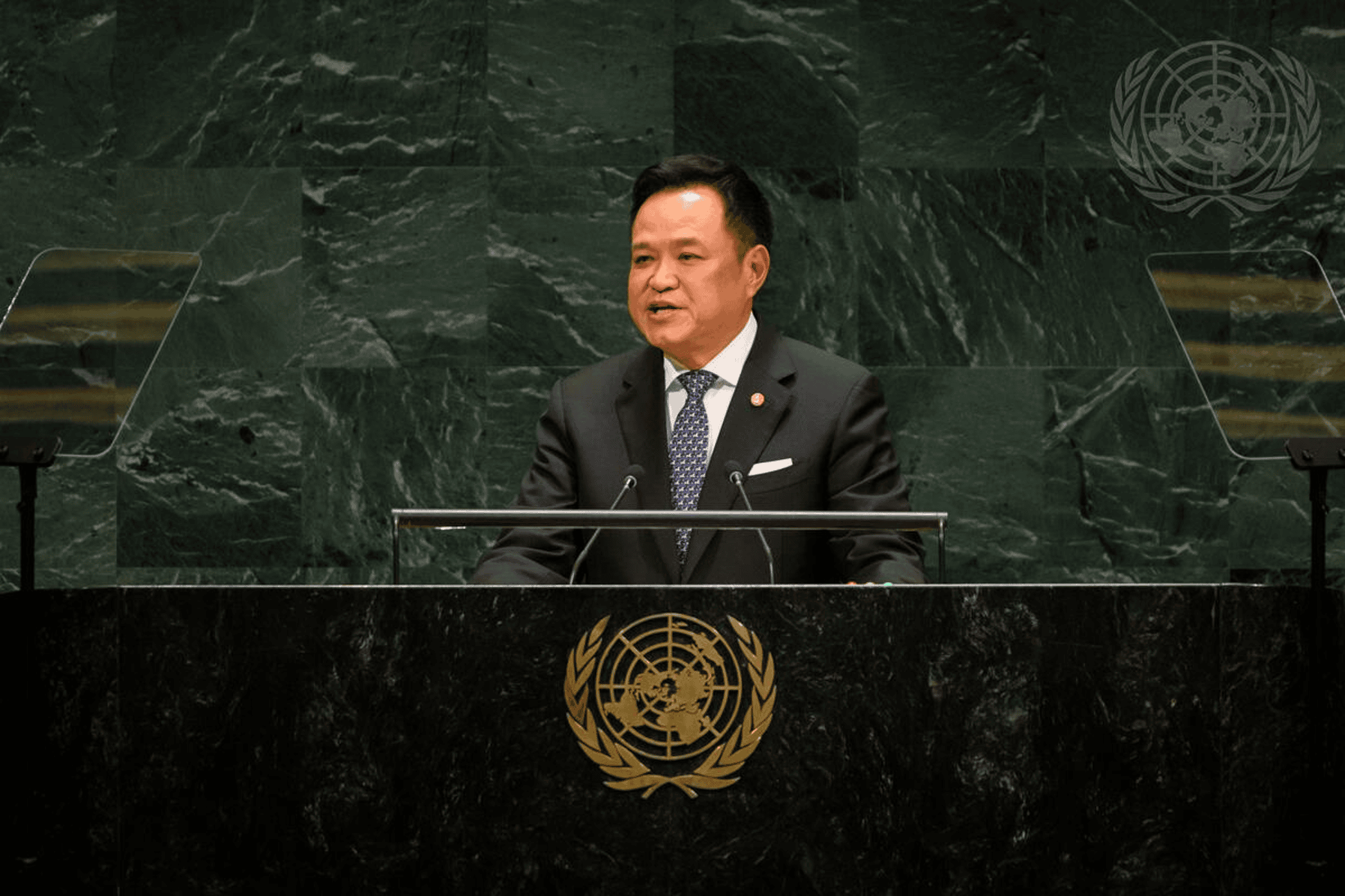
Thai Prime Minister Anutin Charnvirakul had previously warned that he would push back if Cambodia raised their border dispute at the United Nations General Assembly. Yet in his own address at the UN in New York on September 24, he brought up the issue himself — delivering remarks that observers say paint a misleading picture of the situation.
In his speech, Anutin recounted a conversation with Cambodian Prime Minister Hun Manet in May, claiming both leaders had agreed to settle border matters through bilateral channels. He then accused Cambodia of abandoning that understanding by initiating compulsory conciliation proceedings under the United Nations Convention on the Law of the Sea (UNCLOS).
"Thailand has engaged in good faith, but our position is clear: this process concerns only the maritime boundary," Anutin told the assembly. He urged Cambodia to cooperate on border security, including efforts to dismantle online scam networks and clear landmines, adding that "our shared border must be a place of shared prosperity, not a place where the scars of conflict are remembered."
However, analysts point out that his account contradicts the record. Since the two countries signed their second ceasefire agreement on December 27, 2025, Cambodia has repeatedly sought negotiations with Thailand on land border issues. Prime Minister Manet has made these talks a priority, pledging to pursue peace even if the odds are slim. Cambodia has also repeatedly asked Thailand to commit its Joint Boundary Commission (JBC) team to the process, but no tangible progress has followed.
A Scripted Performance, Critics Say
Nhel Rattha, a geopolitical analyst, described Anutin's UN address as a calculated diplomatic maneuver designed to shape a narrative that benefits Thailand politically, both at home and abroad.
According to Rattha, the speech was crafted to project strength and control, creating the impression that Thailand holds the upper hand and sets the terms of engagement. He characterized it as a form of psychological warfare aimed at convincing the public that Bangkok commands the negotiating table.
Rattha also noted that the remarks effectively placed the onus on Cambodia, diverting attention and fostering the perception that Phnom Penh is the party dragging its feet — while Thailand appears perpetually ready to talk. Domestically, he argued, the speech was aimed at rallying nationalist sentiment and winning support from the military establishment by portraying the government as firm on border and maritime resource disputes.
Cambodia Responds
Kin Phea, who directs the Institute of International Relations at the Royal Academy of Cambodia, offered a similar assessment, calling the remarks hollow rhetoric designed to convince the international community that Thailand is acting in good faith.
In Phea's view, the reality on the ground tells a different story. He cited continued Thai military presence on Cambodian territory and the destruction and seizure of Cambodian homes, farmland, and other property — actions he said violate the ceasefire agreement and international law.
"If Thailand truly wanted to resolve the border issue peacefully, it would deploy its JBC working team without delay so technical teams could do their work, rather than illegally occupying Cambodian territory with military forces," Phea said.
He dismissed the UN speech as an exercise in image management, arguing that Thailand's words are meant to project the image of a law-abiding, civilized nation, while its actions on the ground tell a very different story.