Analysts say Anutin used UN speech to recast Thailand’s border stance
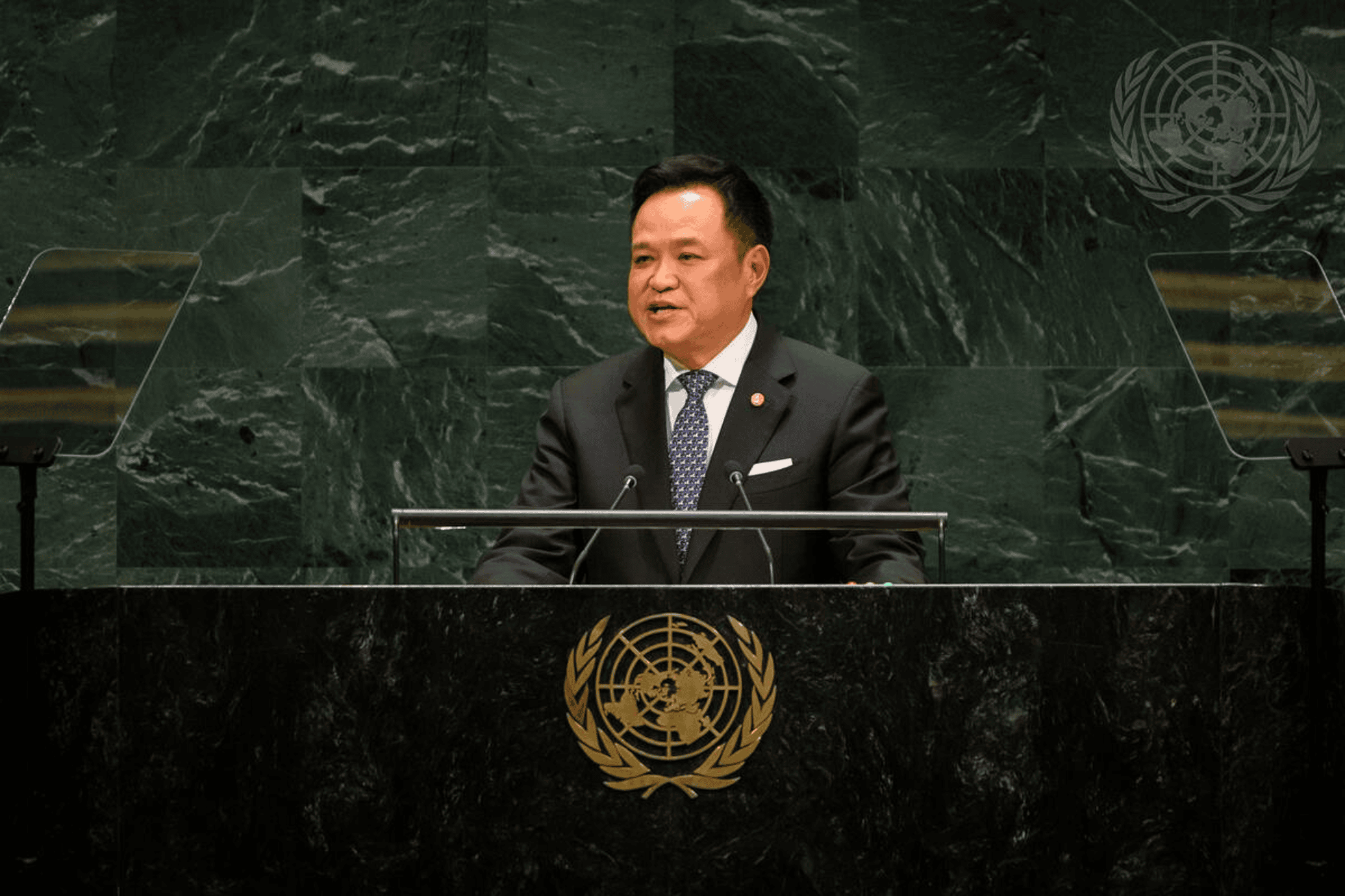
Thai Prime Minister Anutin Charnvirakul had warned that his government would answer Cambodia if it brought the border dispute before the UN General Assembly. He later raised the matter himself in New York, in comments analysts said were crafted to reshape Thailand’s image rather than reflect events on the ground.
Addressing the UN on September 24, Anutin said he had spoken with Cambodian Prime Minister Hun Manet in May and that both governments had agreed to handle border matters through bilateral channels. He then said Cambodia had moved instead to begin compulsory conciliation under the UNCLOS framework.
He said Thailand had participated in good faith but maintained that the UNCLOS process applied only to the maritime boundary. He added that Cambodia should cooperate with Thailand on border security, including action against online scam networks and demining.
Anutin also said border communities would remain unsafe without firm action on those issues. He described the frontier as a place that should bring shared prosperity rather than revive memories of conflict, adding that Thailand did not seek confrontation and that peace required sincere cooperation from Cambodia.
Analysts said the remarks appeared inconsistent with Cambodia’s repeated calls for talks on land border issues since the two countries signed their second ceasefire agreement on December 27, 2025.
Hun Manet has said negotiations remain a priority and has pledged to pursue peace even if the chance of success is small. Cambodia has repeatedly urged Thailand to send its Joint Boundary Commission team to work with Cambodian counterparts, but the process has not advanced.
Analysts describe a political message
Geopolitical analyst Nhel Rattha said Anutin’s UN comments amounted to a diplomatic tactic designed to build a political narrative, manage perceptions and gain advantages both inside Thailand and abroad.
Rattha said the Thai leader sought to present himself as firm and in control, implying that Thailand could dictate the terms of engagement. He described the approach as psychological messaging aimed at convincing the public that Thailand held the stronger position at the negotiating table.
He added that the remarks appeared to shift responsibility onto Cambodia, creating the impression that Phnom Penh was unprepared or causing delays while Bangkok remained ready to negotiate.
Rattha said the message also served domestic politics in Thailand by appealing to nationalist sentiment and the military establishment.
He said the remarks were aimed at Thai audiences, including citizens overseas, and were intended to boost Anutin’s standing by showing a tough position on border and maritime resource issues involving Cambodia.
Rattha described the speech as diplomatic language meant to satisfy Thai nationalists.
Claims of goodwill disputed
Kin Phea, director of the Institute of International Relations at the Royal Academy of Cambodia, gave a similar assessment. He said Anutin’s remarks were rhetorical and intended to persuade the international community that Thailand was acting in good faith over the border dispute.
Phea said the reality was different, accusing the Thai military of remaining on Cambodian territory and violating international law through the destruction and seizure of Cambodian homes, farmland and other property. He said such actions breached the ceasefire terms.
He said that if Thailand genuinely wanted a peaceful settlement, it would send its JBC working team without delay so technical officials from both sides could begin their work. Instead, he said, Thai forces were occupying Cambodian territory illegally.
Phea accused Thailand of lacking goodwill and said its public statements were meant to project an image of a civilised state that respects international law. In reality, he said, Thailand was acting as “a barbaric, robber state”.