Analysts See Anutin’s UN Speech as Political Spin on Border Dispute
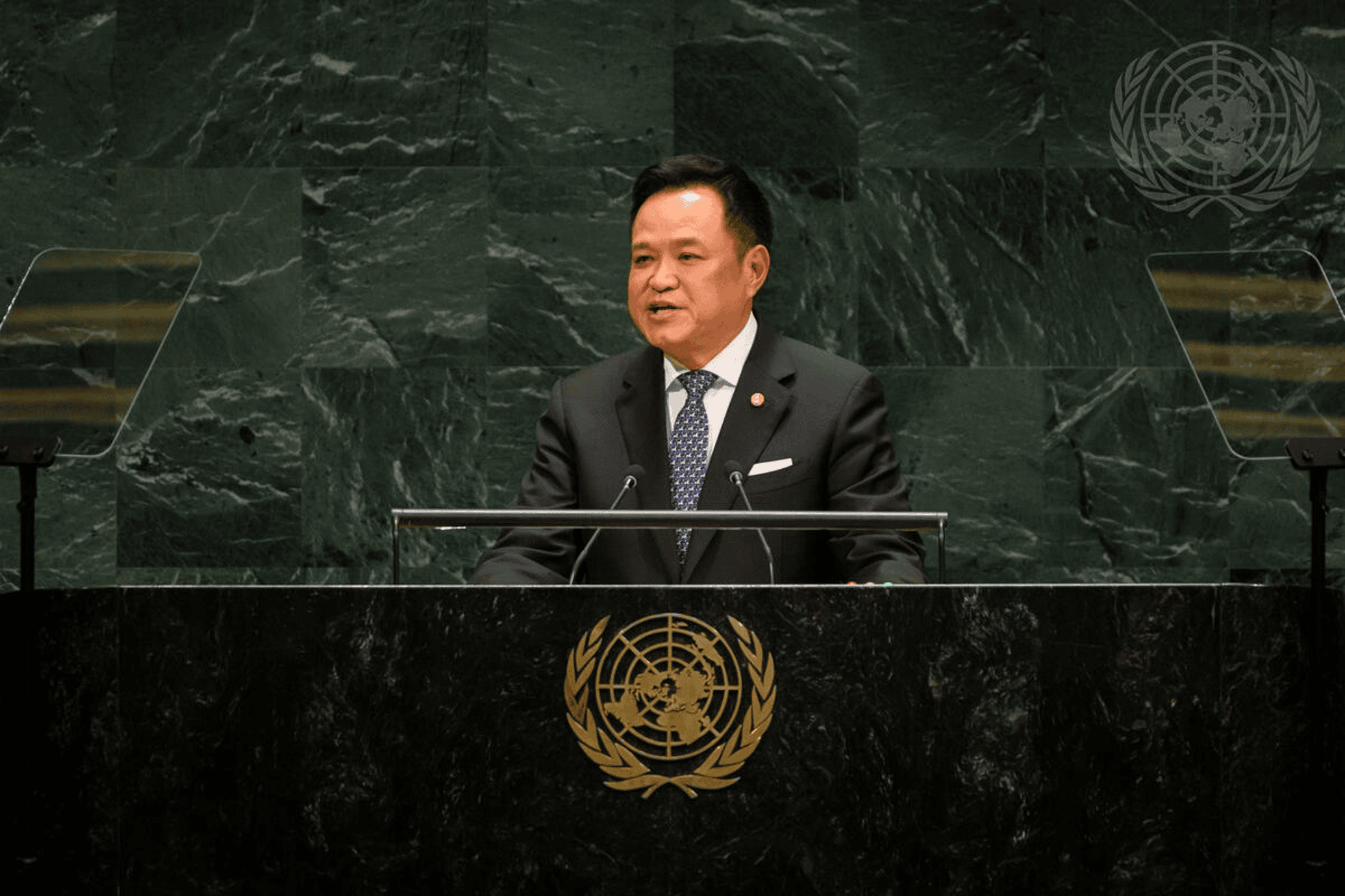
Thai Prime Minister Anutin Charnvirakul raised eyebrows at the UN General Assembly in New York on September 24, claiming he had urged Cambodia to resolve border disputes through bilateral channels — even as he himself raised the issue on the global stage.
He recounted a May conversation with Cambodian Prime Minister Hun Manet, saying both sides had agreed to use established bilateral mechanisms. Yet he went on to accuse Cambodia of bypassing those channels by launching compulsory conciliation proceedings under the United Nations Convention on the Law of the Sea (UNCLOS).
At the same time, Anutin called on Cambodia to cooperate on border security, citing joint efforts against online scams and landmine clearance as necessary steps for community safety. He concluded with an appeal for mutual sincerity: Thailand, he said, has always sought peace, not conflict — but peace requires genuine effort from both sides.
Analysts, however, argue this framing obscures reality. Cambodia has consistently pushed for direct negotiations to settle land border disagreements, especially following the December 27, 2025 ceasefire agreement. Hun Manet has repeatedly expressed readiness, saying he would pursue peace even with only a sliver of hope.
Cambodia has repeatedly requested Thailand deploy its Joint Boundary Commission team to begin technical work. So far, no such engagement has materialized.
Geopolitical analyst Nhel Rattha described Anutin’s remarks as strategic narrative-building — a mix of diplomatic theater and domestic positioning. By casting Thailand as the ready and reasonable party, he said, the prime minister shifts blame and creates the impression that Cambodia is dragging its feet. This, Rattha added, serves both international optics and domestic politics, appealing to nationalist sentiment and the military establishment.
Kin Phea, director of the Institute of International Relations at the Royal Academy of Cambodia, was more direct. He accused Thailand of violating international law by maintaining military presence on Cambodian territory and damaging civilian property — actions that contradict its diplomatic statements.
According to Phea, if Thailand truly wanted peaceful resolution, it would deploy its boundary commission immediately. Instead, he said, diplomatic wording is being used to portray the country as lawful and civil — while masking what he called掠夺性 occupation and destruction.