Angkor's Glory: 1,000-Year-Old Vishnu Statue Goes on View in San Francisco
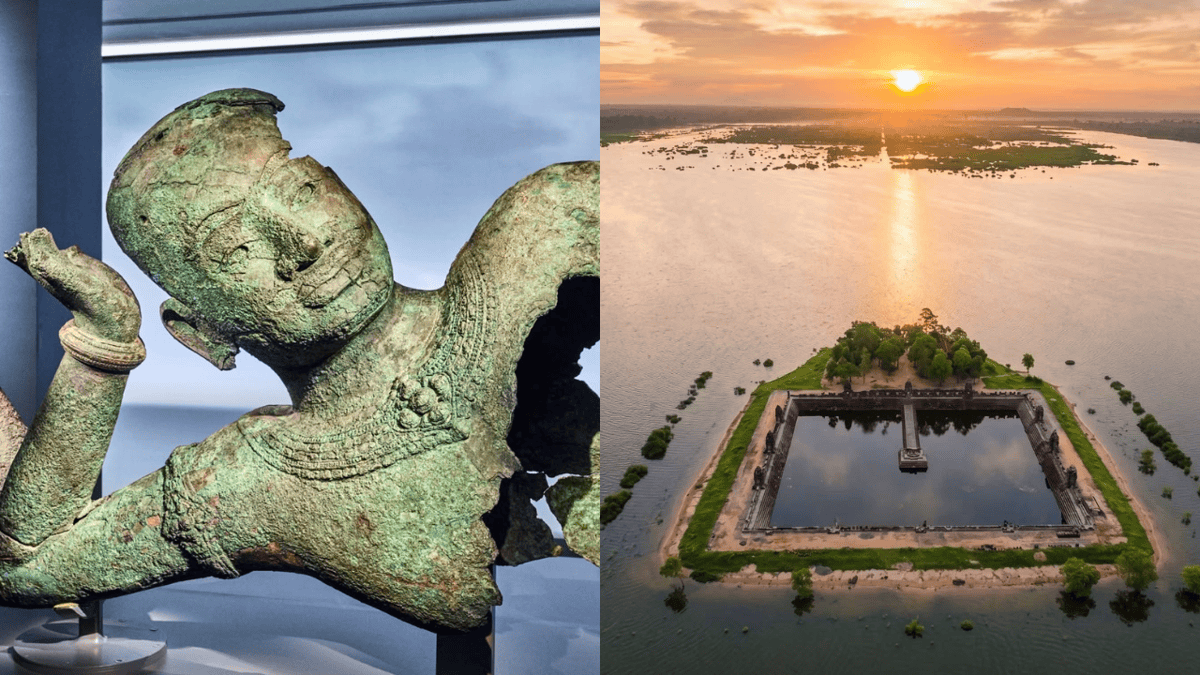
A bronze statue of the reclining Hindu god Vishnu, made in Cambodia about 1,000 years ago, is now on display at the Asian Art Museum in San Francisco. The sculpture anchors an exhibition that explores how Hindu beliefs, water management, and the power of the ancient Khmer kings were connected.
Titled "Vishnu's Cosmic Ocean," the show opened to the public on October 23 and will run until January 25 of next year.
The statue is the largest ancient bronze ever discovered in Southeast Asia. It is on loan from the National Museum of Cambodia and will return home when the exhibition closes.
The museum has scheduled an opening ceremony for October 25. It will include a traditional Khmer Buddhist blessing organized by Wat Dhammararam, intended to bring protection, good fortune, and well-being to the statue and its visitors. The day will also feature Khmer dance performances by Morodok Angkor and Proleung Seilaphak, along with art activities, family storytelling sessions, and guided tours.
On November 1, the Society for Art and Cultural Heritage of India (SACHI) will host a special event called "The Calm and Chaos of Vishnu's Cosmic Ocean." Natasha Reichle, the museum's curator of Southeast Asian art, and Forrest McGill, a former curator, will lead a discussion on how Khmer rulers used large-scale water engineering and the Hindu myth of the cosmic ocean to assert their authority, encourage prosperity, and establish grand ceremonies that still shape cultural traditions today.
From a Temple Island to a Museum Gallery
The reclining Vishnu comes from the West Mebon temple in the Angkor region. Roughly a thousand years ago, it was placed on an artificial island in the middle of a vast reservoir. That setting reflected the Hindu belief that Vishnu rests on the serpent Ananta in the primordial ocean before the universe is created.
The statue lay buried for centuries until it was rediscovered in 1936. Today it is regarded as a masterpiece of Khmer bronze art and a lasting example of the technical skill and artistry of the Angkorian civilization.
The museum says the exhibition gives visitors a chance to appreciate the statue's scale, which measures about six meters in length.
The show also arrives as interest in West Mebon temple is growing, with reports of large numbers of visitors. An official opening ceremony for the exhibition is scheduled for November.