As China Defines Its Red Lines, Questions Arise About America's Boundaries
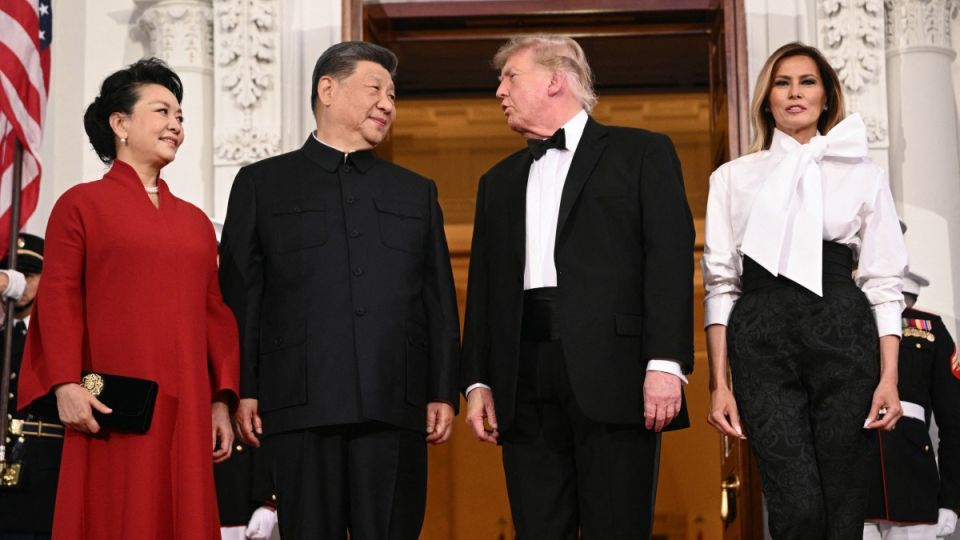
As President Donald Trump extends an elaborate welcome to Chinese President Xi Jinping for his first White House visit in over ten years, American foreign policy experts are questioning where Washington will establish its own boundaries in the relationship.
The September 24 reception includes a formal arrival ceremony complete with military bands and fighter jet demonstrations, followed by bilateral talks between the two leaders. First Lady Melania Trump has arranged a visit to the Smithsonian National Museum of Asian Art with Xi's wife Peng Liyuan, and the day will end with a state dinner.
Just before Xi's arrival in Washington, China's Ambassador to the United States Xie Feng outlined Beijing's non-negotiable positions in an op-ed published in the People's Daily on September 23.
"China's sovereignty, security and development interests cannot be violated, and four red lines – the Taiwan question, democracy and human rights, development paths and systems, and development rights – cannot be challenged," Xie stated.
These positions represent longstanding Chinese policy frequently emphasized before and after meetings with senior American officials. Xi himself had presented similar points during his November 2024 meeting with then-President Joe Biden in Lima.
But what boundaries is the United States setting for China?
"The United States has not as clearly stated its own red lines; we could try to infer them," explained Kelly Grieco, a US foreign policy researcher at the Stimson Center.
The conflict with Iran likely tops the list. China purchases Iranian oil and is believed to support Iran's military activities. Observers are keen to see whether Beijing will propose mediation and what it might request from Washington in exchange.
Another critical issue involves China's dominance over rare earth element exports, which are vital for manufacturing products ranging from smartphones to military hardware. Despite officially easing export restrictions, Beijing has tightened supplies to American companies.
According to Scott Kennedy, a China specialist at the Center for Strategic and International Studies in Washington, American red lines have traditionally centered on China's industrial policies, Taiwan reunification ambitions, South China Sea territorial disputes, and human rights concerns.
However, these issues appear less prominent in the current Trump administration's approach, Kennedy noted. "Instead, they want an avoidance of war. They want to keep markets up, and anything that makes President Trump look good. Very different kinds of red lines that the US now has than in the past."
Grieco disagreed that there has been a fundamental shift in US positions, highlighting that the Trump administration has challenged Chinese aggression in the South China Sea by reaffirming defense agreements with the Philippines, continuing joint maritime patrols, and conducting military drills.
"On maritime disputes and China's support for Iran, I'd look more closely at actual policy decisions rather than changes in rhetoric," she said.
"Some analysts are conflating the administration's effort to avoid needlessly provocative rhetoric with a substantive retreat from US commitments. Those are two very different things," she added.
Both nations would benefit from more transparent communication about their boundaries.
"Clarifying the two sides' red lines could be helpful to stabilise relations, particularly to avoid misperceptions and the dangers of accidental or inadvertent escalation," Grieco concluded.