ASEAN-China Centre Ramps Up SME Training as Trade Gap Persists
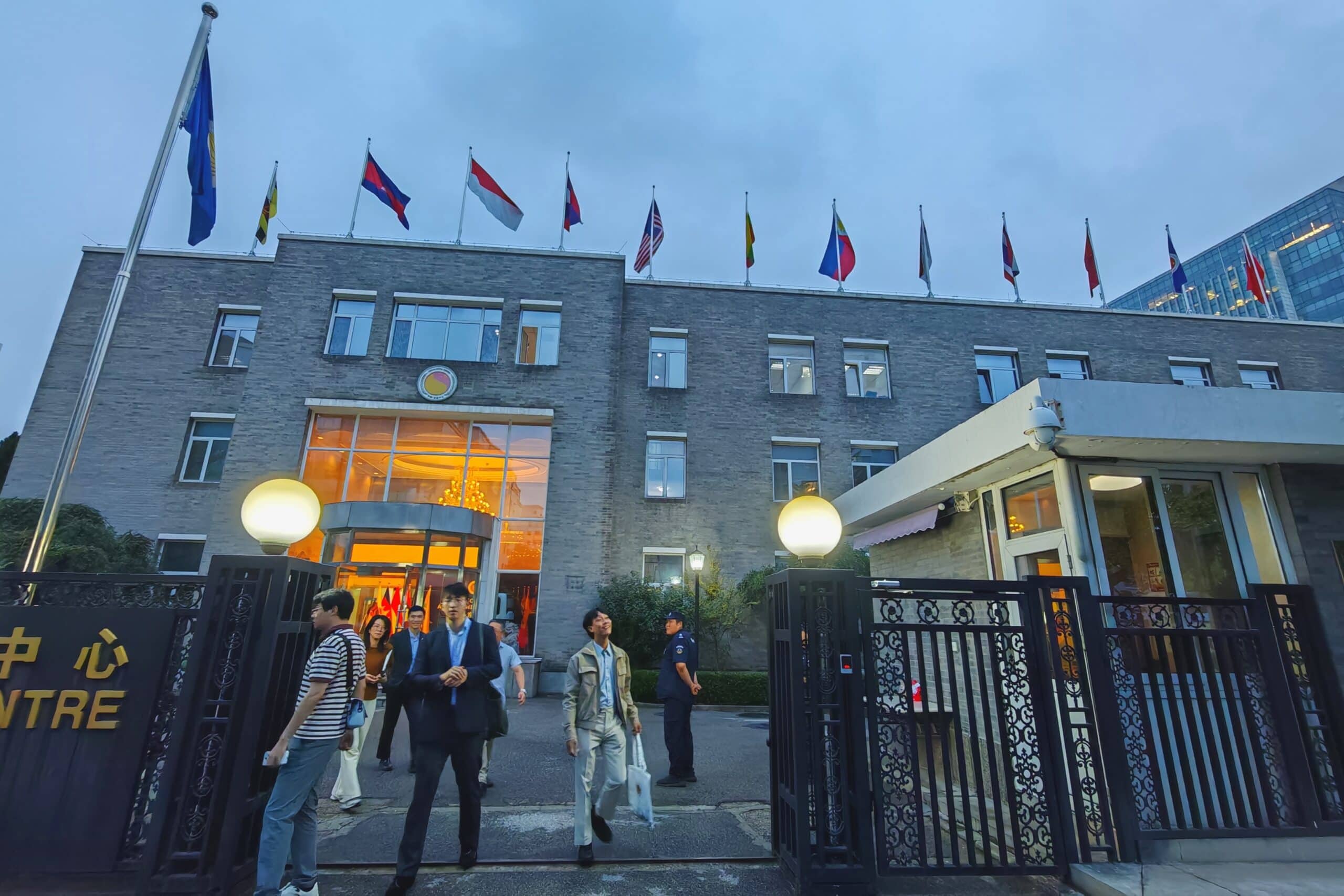
The ASEAN-China Centre (ACC) is broadening its efforts to equip small and medium-sized enterprises across Southeast Asia with the tools they need to access the Chinese market, amid acknowledgment that the trade relationship between the two sides remains uneven.
Pichayapat Benjasiriroj, deputy director of the ACC's Trade and Investment Division, said that many smaller companies lack the knowledge and resources to deal with customs regulations or take advantage of existing free trade agreements.
"We also realise that trade is quite imbalanced between ASEAN and China. That's why we came up with the programme to support ASEAN SMEs," he told reporters at an ACC Open Day held in Beijing on September 24.
Training Expanding Beyond Beijing
The ACC launched the initiative last year with a two-day workshop in Beijing focused on customs processes, free trade agreements, cross-border e-commerce, and marketing strategies. In 2025, a session was held in Hefei, located in China's Anhui province, and for the first time the programme was brought directly to Thailand and Laos to improve accessibility for local firms.
Pichayapat said the centre intends to continue the programme next year and is actively looking for partners to extend its reach into other ASEAN member states. He did not mention any plans for a Cambodia-specific session and offered no figures on the number of businesses that have participated so far.
Implications for Cambodian Exporters
The issue of market access is particularly relevant for Cambodian businesses hoping to increase their exports to China. While Pichayapat's remarks suggest that practical support could be on the horizon, the ACC has not yet outlined a dedicated programme for the country.
Broader Economic Engagement
ACC Secretary-General Zhang Lizhong, addressing visiting ASEAN journalists, highlighted SME-focused trade and investment workshops as a key part of the centre's mission to deepen economic ties. He noted that the organisation also arranges business delegations, trade promotion events, and an ASEAN-China forum centred on emerging industries and innovation.
Pichayapat said the forum had brought Chinese companies to Malaysia in 2024 for talks on advanced industries, and to Thailand a year earlier for a conference on renewable energy and carbon reduction. This year, the ACC facilitated a trip for roughly 50 Chinese entrepreneurs to Vietnam, where they met with local businesses and toured Hoa Lac High-Tech Park.
The centre additionally organises visits by ASEAN trade officials and business groups to Chinese provinces for exhibitions and investment events.
Milestones and Trade Figures
Napasorn Bhuvaborirak, director of the ACC's Information and Public Relations Division, outlined the centre's activities spanning trade, investment, education, culture, tourism, and media. Founded in 2011 by China and the 10 ASEAN member states, the ACC has carried out more than 200 flagship projects and taken part in over 4,000 events.
Zhang noted that 2026 will mark several milestones: 35 years of ASEAN-China dialogue, five years of their comprehensive strategic partnership, and the ACC's 15th anniversary. He cited bilateral trade of $470 billion in the first half of 2026, representing a 10.5 per cent year-on-year increase.
Despite those headline numbers, the ACC's training push underscores a persistent challenge for smaller ASEAN exporters — converting the region's expanding trade with China into tangible opportunities at the firm level.