Azerbaijan Becomes First Eastern European Nation to Sign Double Taxation Agreement with Cambodia
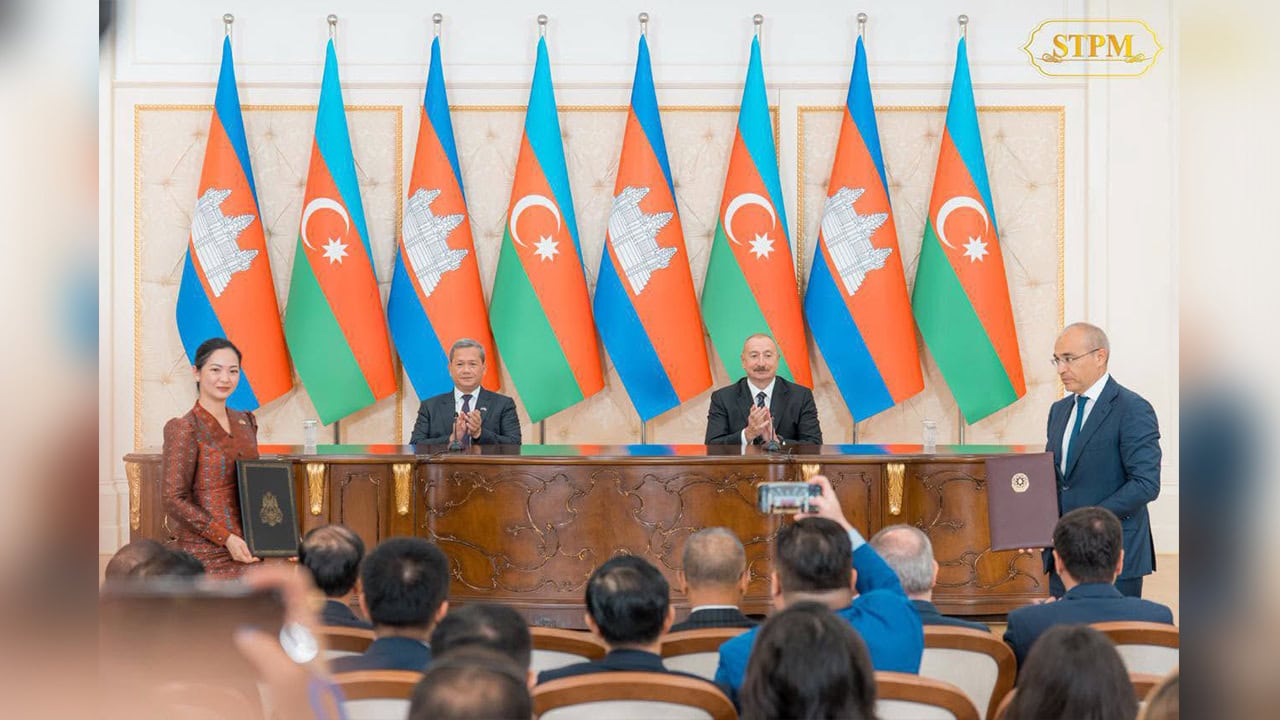
Azerbaijan has become the first Eastern European country to sign a double taxation agreement (DTA) with Cambodia. The pact is meant to stop income from being taxed twice and to help curb tax evasion and avoidance. With this deal, Cambodia has now signed DTAs with 15 countries and jurisdictions.
The agreement was signed on October 12 at the Presidential Palace in Baku. Cambodian Minister of Commerce Cham Nimul and Azerbaijani Minister of Economy Mikayil Jabbarov put their signatures to it, with Prime Minister Hun Manet and Azerbaijani President Ilham Aliyev in attendance.
The General Department of Taxation (GDT) called the signing a major achievement for the seventh-mandate government. "This agreement will strengthen and broaden tax cooperation between Cambodia and Azerbaijan, bringing benefits to both sides," the department said.
According to the GDT, DTAs give signatory countries several advantages. They strengthen bilateral ties, provide clearer certainty over which country has the right to tax particular income, and widen the tax base by attracting foreign direct investment, capital flows, technology transfers and overseas expertise. They also protect residents from unfair tax treatment and safeguard domestic tax revenue by letting both countries cooperate against tax evasion.
Cambodia's DTAs that are in force and actively applied include agreements with Singapore, China, Thailand, Brunei, Vietnam, Indonesia, Hong Kong, Malaysia, South Korea, Macao and Turkey, among others. Cambodia has also concluded or is still negotiating agreements with several other partners, including France, Japan, the United Arab Emirates, Morocco and Qatar.
Economist Weighs In
Hong Vanak, an economist at the Royal Academy of Cambodia, said signed trade agreements are designed to benefit all parties. Negotiators typically spend a long time working through the details before reaching a deal. He noted that a DTA could reduce government tax revenue, but it would also encourage investors from each country to put money into the other's market.
"Tax exemptions or reductions are among the key benefits investors look for. Removing double taxation can also lower the cost of goods, which helps exports reach international markets," he said.
Tax Officials Explain the Benefits
Speaking at a seminar on recent developments in international taxation, organised by the GDT on August 14, Seng Cheasith, director of the department's Legislation, Tax Policy and International Tax Cooperation unit, explained that a DTA allocates taxing rights between the two signatory countries. He said Cambodia negotiates these agreements with its main investment partners to attract investment and trade, while also preventing and fighting tax evasion at home and abroad.
"DTAs play an important role in encouraging investors by eliminating double taxation and providing greater certainty," he said.
He added that, under information-exchange arrangements, the treaty partners must work together to seek, collect and share taxpayer information. This increases transparency, helps prevent tax fraud, encourages compliance and gives tax auditors more complete information, which supports higher tax revenue.