Beijing Has Spelled Out Its Red Lines. Where Does Washington Draw Its Own?
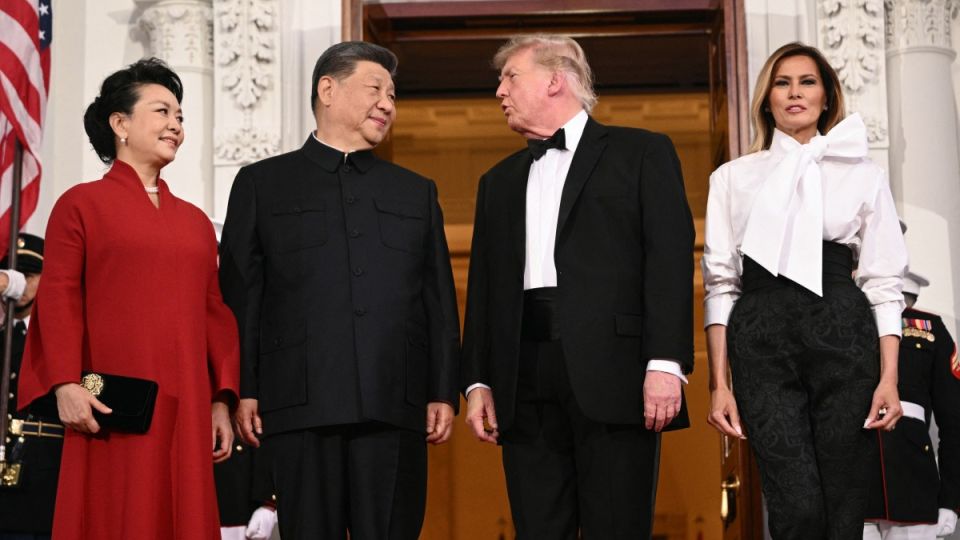
As President Donald Trump extends an unusually warm welcome to Chinese President Xi Jinping — his first visit to the White House in over a decade — American analysts are asking a pointed question: what boundaries is Washington itself unwilling to cross?
The Chinese leader's arrival was set for the morning of September 24, complete with a grand ceremony featuring military bands and fighter jet flyovers, followed by bilateral talks between the two presidents. While the leaders met, Melania Trump arranged to accompany Xi's wife, Peng Liyuan, on a visit to the Smithsonian National Museum of Asian Art. A formal state dinner was planned to close out the day.
China's Familiar Boundaries
The day before Xi touched down in Washington, China's ambassador to the United States, Xie Feng, restated Beijing's non-negotiable positions. Writing in the official People's Daily on September 23, he insisted that China's sovereignty, security and development interests must not be violated, and that four red lines could not be crossed: the Taiwan issue, democracy and human rights, China's chosen political and economic systems, and its right to development.
These are long-standing talking points that Beijing repeats before, during and after visits by senior American officials. Xi laid them out himself in November 2024 during a meeting with then-President Joe Biden in Lima.
What Does the US Want China to Stop?
If those are China's limits, what is the United States demanding in return? The answer is far less clear.
"The United States has not stated its own red lines as plainly; we can only try to infer them," said Kelly Grieco, a US foreign policy researcher at the Stimson Center.
Iran likely tops that list. China purchases Iranian oil and has reportedly backed Tehran's war effort. Observers are watching to see whether Beijing steps forward as a mediator, and what it might expect from Washington in exchange.
A second concern is China's grip on rare earth exports — the materials critical to producing everything from smartphones to missiles. Although Beijing has formally lifted its strict export controls, it has still tightened the flow of these elements to American firms.
A Shift in Priorities
Scott Kennedy, a China specialist at the Center for Strategic and International Studies, noted that US red lines have traditionally centred on China's industrial policy, its ambitions toward Taiwan, disputes in the South China Sea, and human rights.
Those priorities are difficult to spot in the current administration's stance, he said. "Instead, they want to avoid war. They want to keep markets high, and they want anything that makes President Trump look good. These are very different red lines than the US has held in the past."
Grieco offered a more measured reading. She said she did not see a dramatic break from established US positions, pointing to the administration's pushback against Chinese pressure in the South China Sea — including renewed defence commitments to the Philippines, continued joint maritime patrols, and military exercises.
"On maritime disputes and China's support for Iran, I'd pay closer attention to actual policy decisions rather than shifts in rhetoric," she said. "Some analysts are confusing the administration's effort to avoid unnecessarily provocative language with a genuine retreat from US commitments. Those are two very different things."
She added that greater openness on both sides could prove valuable: "Clarifying each side's red lines could help stabilise the relationship, particularly by preventing misperceptions and reducing the risk of accidental or unintended escalation."