Beijing Warns Paris and Berlin Against Protectionism Before EU Trade Talks
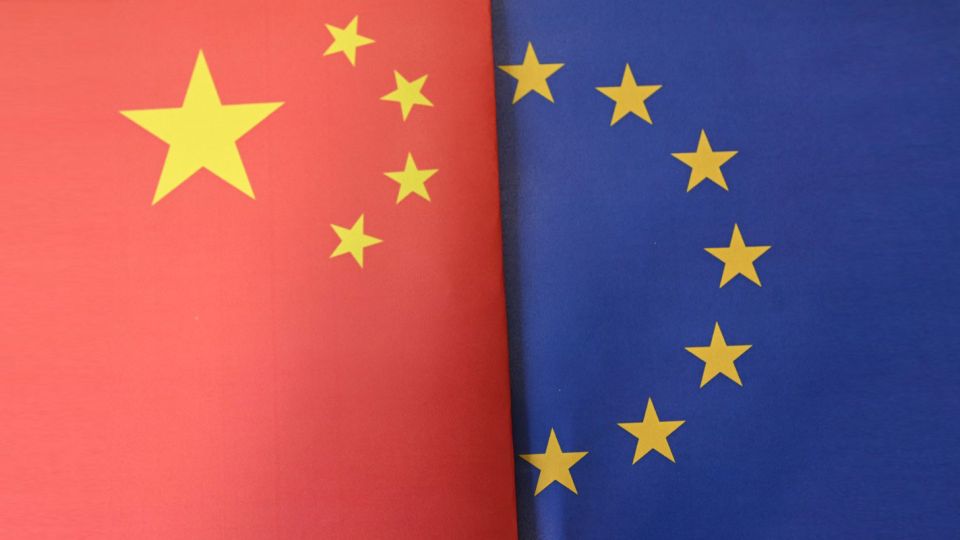
Ahead of high-level trade talks between China and the European Union later this week, Chinese officials and experts have cautioned France and Germany against pursuing protectionist steps, turning economic questions into political ones, and wrapping trade issues in the language of security.
The warning follows a joint letter from French President Emmanuel Macron and German Chancellor Friedrich Merz to European Commission President Ursula von der Leyen. The letter urges the bloc to strengthen itself with a new trade diversification tool and a new trade defense measure. Reuters reported on Monday that the Commission welcomed the letter and an accompanying unofficial proposal paper, calling them a useful contribution to the debate on geoeconomic risks and global imbalances, and in line with von der Leyen's views on competitiveness and how the EU should approach its trading partners.
Although the letter does not mention China, analysts believe Beijing is the most likely target, since it was sent shortly before possible China-EU trade discussions scheduled for Thursday.
A spokesperson for China's Ministry of Commerce said on Tuesday that the ministry had noted the report. It expressed hope that France and Germany, as major economies, would support openness, cooperation and free trade, respect World Trade Organization rules, and stop nudging the EU toward protectionism at every turn. The spokesperson also said the two countries should be far less willing to politicize trade under the cover of security concerns. “They should avoid taking the wrong approach down the wrong path, which could ultimately backfire on themselves,” the spokesperson said.
The China Chamber of Commerce to the EU (CCCEU) also opposed the proposal in its current form. It called for continued dialogue, consultation and a balanced approach to trade concerns. “At a particularly critical stage of the ongoing China-EU trade negotiations, we believe that introducing such a mechanism could increase uncertainty, undermine mutual trust and complicate efforts to achieve constructive and tangible outcomes,” a CCCEU spokesperson said.
The two sides held their first round of trade talks in June and set up four working groups covering trade and investment balance, export controls, intellectual property rights and WTO reform. The negotiations take place against a backdrop of deep economic ties, with bilateral trade exceeding $828 billion in 2025.
Business voices call for restraint
Michael Schumann, chairman of the board of the Federal Association for Economic Development and Foreign Trade of Germany, said German companies are growing uneasy about the political uncertainty surrounding the relationship. They want a credible political signal that Brussels and Beijing intend to manage their differences rather than escalate them.
“Companies need predictability,” Schumann said. “They want fair competition and better market access, and they want to hold on to the enormous opportunities that still exist in China.”
He cautioned that Europe should not treat new economic tools as ends in themselves. Such instruments can serve as safeguards and bargaining leverage, but the goal must always be fairer and more balanced trading conditions. He also warned against answering every dispute with another restriction, noting that once retaliation becomes the dominant dynamic, businesses and consumers on both sides suffer.
Schumann described the talk of a “kill switch” in the current debate, and in coverage of the Franco-German paper, as irresponsible. He stressed that word choice carries weight in diplomacy, since language can open doors just as easily as it closes them. Europe, he said, should firmly defend its legitimate economic interests without drifting into a confrontation that neither side stands to gain from.
Analysts urge cooperation
Mark Logan, a London-based political risk consultant and former British lawmaker, said Europe should watch closely for signs of greater engagement emerging from the recent China-United States summit. He argued that the EU should pursue more cooperation with China rather than resort to protectionist measures.
“European leaders must find a way to work with China and the new emerging centers of economic power by learning the most important ingredients for their success: technological innovation and entrepreneurialism,” Logan said.