BeReal Craze Sparks Corporate Data Leaks and Security Overhauls in Japan
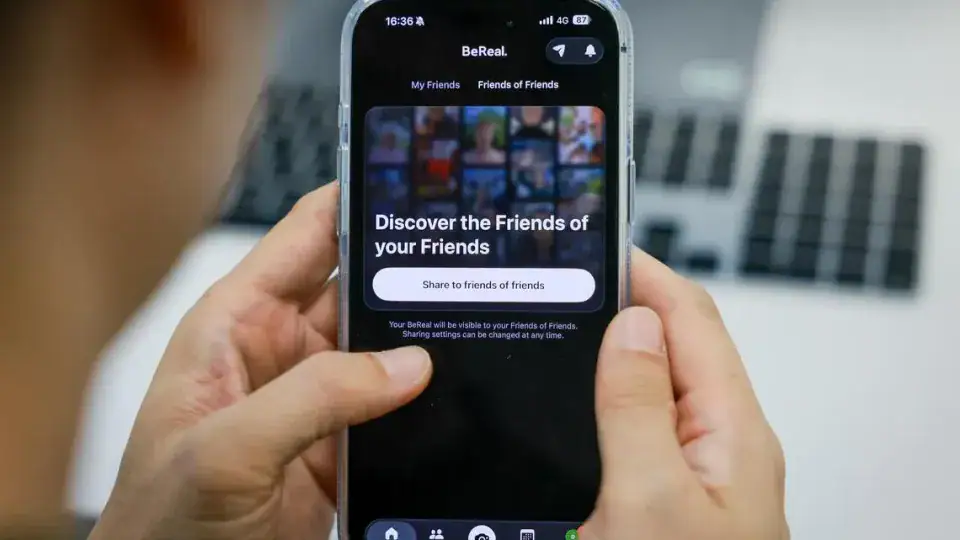
Every day at an unpredictable moment, millions of smartphones across Japan buzz in unison. The prompt comes from BeReal, the photo-sharing platform that gives users exactly two minutes to capture dual-camera images of whatever they are doing, without filters, staging, or edits.
While interest in the French-born platform has tapered off in several Western markets, it has found immense staying power in Japan, particularly among Generation Z. By mid-2026, the application counted over 6.5 million monthly active users nationwide, up from five million the previous year, with more than 90 percent of its user base between the ages of 13 and 27. Its cultural footprint has expanded rapidly, earning a nomination for Japan’s Buzzword of the Year in 2024 and attracting major corporate marketing campaigns from brands like Uniqlo and Shiseido.
An Antidote to 'Kira-Kira' Culture
Much of BeReal's appeal lies in its contrast to conventional social media. In Japan, where young people often feel intense societal pressure to maintain a kira-kira—or perfectly curated and dazzling—online presence, the app's requirement for raw, unvarnished snapshots offers relief. The platform locks feeds until a user contributes, stamps posts as late if the two-minute timer expires, and deletes content after 24 hours. Shared primarily with close peer networks, these mundane scenes from daily life have felt like a rare protected haven for genuine self-expression.
When Casual Snaps Breach Corporate Defenses
However, that same spontaneous mechanism has created a severe headache for Japanese employers. A public investigation by national broadcaster NHK revealed that over a single 45-day period in spring, at least 40 organizational information leaks were directly linked to employees hastily snapping BeReal updates at their desks.
Because the app creates an illusion of intimacy within private circles of friends, many workers fail to realize that photos taken in haste can capture proprietary company materials—or that those images can easily be screenshot and broadcast across wider networks like X.
The most severe incident involved Nishi-Nippon City Bank, a regional lender headquartered in Fukuoka. In late April, an employee snapped an office photo that quickly migrated to X, garnering upwards of 10 million views. Visible on a background whiteboard were the private details of 19 corporate clients, names of eight wealth-management customers, an individual's home address, and internal financial targets. The incident sparked a regulatory inquiry by Japan's Financial Services Agency, prompted an official public apology from bank president Hideyuki Murakami, and sent parent company shares down nearly 3 percent.
A Nationwide String of Blunders
Similar incidents have emerged in rapid succession across diverse sectors:
- In Sendai, an elementary school instructor accidentally shared an image showing the municipality's student management software on her desktop.
- A Tokyo employee at the pizza chain Pizza-La inadvertently photographed customer records.
- At a branch of the Dandadan dumpling chain, a worker photographed a job applicant’s resume.
- A factory in Ishikawa leaked proprietary equipment pricing formulas.
- A hospital in Hokkaido exposed private patient records via a snapshot taken near the reception counter.
Security analysts note that these episodes differ fundamentally from past social media scandals driven by intentional delinquency, such as viral pranks at sushi restaurants. In BeReal's case, staff members hold no malicious intent; they simply disregard how easily personal devices can compromise institutional privacy.
Rethinking Office Security in the Smartphone Era
The fallout has accelerated workplace reforms across corporate Japan. While reports of new leaks have begun to slow following heavy public scrutiny, firms are taking concrete measures to prevent future slip-ups. Many offices are now strictly enforcing longstanding mobile device restrictions, implementing total social media bans during shifts, or requiring employees to stow personal electronics in secure lockers during working hours.
As younger employees adapt to the realities of permanent digital footprints, companies are finding that maintaining cybersecurity requires updating outdated workplace norms to match the fast-moving behaviors of a hyper-connected staff.