Border Disputes Must Be Resolved Through Legal Mechanisms, Not Rhetoric
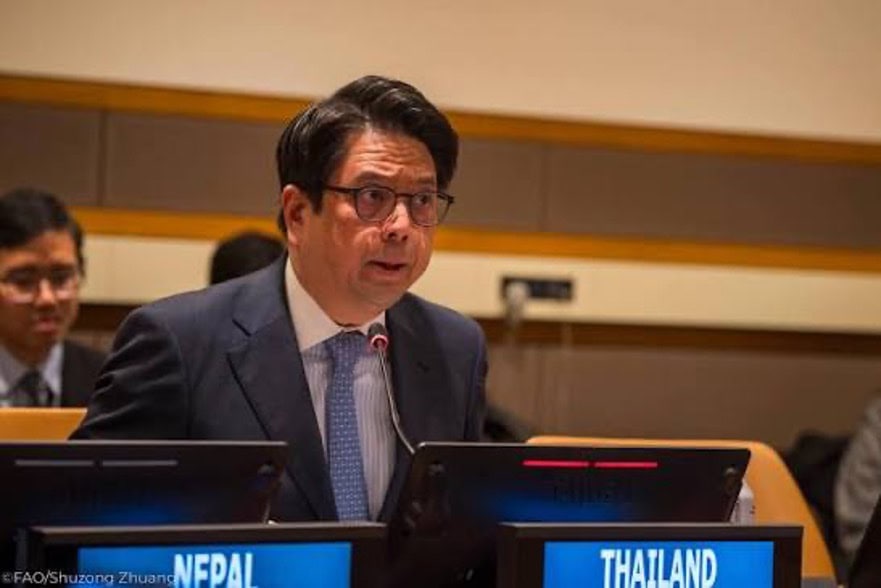
When Thailand's UN ambassador Cherdchai Chaivaivid recently characterized Cambodian residents near the shared border as occupying territory that rightfully belongs to Thailand, his comments underscored a persistent problem: both nations continue to rely on public statements rather than allowing established bilateral processes to determine where the boundary actually lies.
Speaking at the UN General Assembly in late September, Ambassador Cherdchai described the Cambodians in question as living in areas originally designated as temporary shelters during the 1970s, framing their ongoing presence as territorial encroachment. Yet if Thailand is certain these lands fall within its jurisdiction, the obvious question becomes: why not permit the Cambodia-Thailand Joint Boundary Commission to complete its mandate using the technical and legal tools both countries have already agreed upon?
Let the Commission Do Its Work
International borders are not properly defined through press releases, military deployments, or competing cartographic claims. They are established through treaties, technical surveys, and the application of recognized legal principles. Cambodia has consistently urged the resumption of joint survey and demarcation activities under the JBC framework, pointing to historical Franco-Siamese agreements, the 2000 Memorandum of Understanding, the 2003 Terms of Reference, and other mutually accepted documents as the foundation for resolving territorial questions.
Thailand has likewise acknowledged the importance of the JBC. The commission's sixth meeting, held in Phnom Penh in mid-2025, produced technical agreements on boundary markers, joint fieldwork, and the deployment of modern surveying technologies including LiDAR and orthophoto mapping. If disagreements exist about where the line should be drawn, the proper response is to allow technical experts from both sides to examine the evidence together—treaties, maps, boundary pillars, historical documentation, and survey data—and reach conclusions through the agreed bilateral process.
Law Should Be the Common Ground
Both Cambodia and Thailand are UN members, ASEAN participants, and states that have publicly committed to peaceful dispute resolution and respect for international law. The border issue should therefore be approached through legal instruments and established procedures, not through unilateral declarations.
Cambodia maintains that the land boundary must be addressed according to the relevant Franco-Siamese conventions, associated maps and records, and subsequent bilateral agreements. Thailand holds its own interpretation of the territorial facts. These competing views are exactly why bilateral mechanisms exist: to transform disagreement into evidence-based resolution through negotiation and mutually agreed technical work.
Dialogue Must Produce Results
While bilateral contact has not entirely ceased—representatives from both countries have held JBC discussions and informal meetings under ASEAN observation—the real question is whether these encounters translate into tangible progress. Meetings without implementation do not build confidence. Both governments should ensure that established mechanisms convene regularly, that agreed technical activities proceed on schedule, and that differences are addressed through direct communication rather than dueling public narratives.
The Human Cost
Behind every debate about sovereignty and treaty interpretation are ordinary people. Cambodian authorities report that approximately 20,000 civilians remain displaced from affected border areas, unable to return to their homes. Regardless of where the legal boundary ultimately lies, the humanitarian dimension should concern both nations equally. Families should not become permanent casualties of an unresolved territorial dispute.
One practical confidence-building measure would be to facilitate the safe, voluntary, and dignified return of displaced civilians wherever this can be accomplished consistent with ceasefire arrangements, security requirements, and applicable legal frameworks. The goal should be straightforward: people should be able to go home once the necessary security and boundary arrangements are in place.
Actions, Not Words
Cambodia and Thailand cannot alter their geography. They will remain neighbors. The question is what kind of relationship they choose to build. Thailand's UN mission has emphasized the importance of mutual trust, peaceful coexistence, and cooperation. Cambodia has likewise stressed peaceful settlement through bilateral mechanisms and international law. If Thailand believes Cambodian citizens are living on Thai territory, the solution is to allow the Joint Boundary Commission to examine the evidence and make that determination. If Thailand seeks to rebuild trust, it should come to the table and engage the process both countries have already established.
The path forward requires both nations to move beyond competing claims and let law, not rhetoric, define the border.