Call of Duty’s Fictional Korean War Becomes a Real Political Fight in Seoul
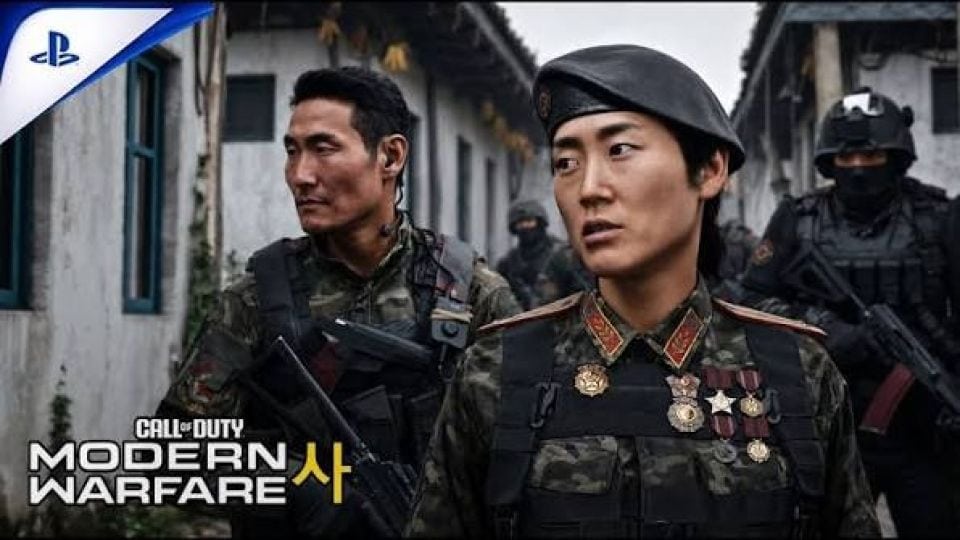
A fictional North Korean invasion of Seoul has become a real-world political battle in South Korea. The newest installment of the Call of Duty series has drawn lawmakers into a clash over national security, relations with the North, and the limits of free expression.
Call of Duty: Modern Warfare 4 imagines a devastating second Korean War that begins with a surprise North Korean attack. Opposition politicians have seized on the game as a talking point, urging President Lee Jae Myung to play it and see for himself the consequences of what they call his government’s overly soft approach toward Pyongyang.
The debate reached the National Assembly’s annual audit on Friday, when Culture Minister Choi Hwi-young was asked whether the government should review a game that features combat against North Korean troops and the fictional death of the country’s leader. Choi said video games, like films, are protected forms of creative expression.
“Games are not subject to prior censorship,” Choi told lawmakers. She stressed that the government cannot suppress a creative work simply because it has political content, noting that freedom of expression is guaranteed by the Constitution.
Developed by the US studio Infinity Ward, the game was released worldwide on Friday. Its story also explores political turmoil inside the North Korean leadership. Players take on the role of a young South Korean soldier who fights alongside other troops across the peninsula, including in urban combat in Seoul. A mission that storms a compound resembling the North’s leadership headquarters has drawn particular attention online.
Real security concerns
The game’s dramatic depiction of war on the peninsula has captivated players, but it has also handed opposition lawmakers fresh material to use against Lee’s North Korea policy. The 1950–53 Korean War ended in an armistice rather than a peace treaty, so the two Koreas are still technically at war.
Conservative lawmaker and former Justice Minister Han Dong-hoon joined the debate on Friday, urging Lee to play the game to understand what could happen if the country’s defenses were not ready.
“Of course, it is a fictional story,” Han wrote on Facebook. “But North Korea’s invasion on June 25, 1950, was a historical reality, and the North Korean military threat remains very real today.”
Han acknowledged that the game could stoke hostility toward the North. Still, he argued that its fictional premise raises a fair question: would South Korea be ready if the North attacked again?
He also criticized Lee for calling North Korea’s nuclear arsenal a “last-resort defensive weapon” during a meeting with reporters on October 19. In that remark, the president questioned whether Pyongyang would actually use nuclear weapons in battle, given its conventional disadvantage against the South. Han pointed out that the North has written into law the conditions under which it could carry out a preemptive nuclear strike. He further questioned the administration’s push to bring forward the transfer of wartime operational control from Washington to Seoul, as well as its cuts to joint military exercises with the United States.
Han said he hoped the destruction of Seoul in the game would stay in the virtual world. “National security is not about hope, but preparation,” he wrote.
On October 20, Rep. Ahn Cheol-soo of the main opposition People Power Party made a similar suggestion, accusing Lee of underestimating the threat from the North. Ahn said even watching gameplay footage might help the president grasp the potentially catastrophic results of what he described as naive assumptions about security.
The minor opposition Reform Party also tied the game’s fictional warfare to a real incident on the border. In a statement on Sunday, deputy spokesperson Choi Je-il pointed to two land mine blasts inside the Demilitarized Zone on September 21, which wounded three South Korean soldiers, two of them seriously. A joint investigation by the South Korean military and the United Nations Command later concluded that the mines were North Korean antipersonnel mines planted south of the Military Demarcation Line, a violation of the Korean War Armistice Agreement.
Choi argued that real peace depends on a clear-eyed view of military threats rather than goodwill. “Politics must confront the reality of those threats more accurately than a video game does,” he said.
From battlefield fantasy to free expression
The row has also opened a second front: whether lawmakers apply the same standards to creative works that touch on politically sensitive subjects.
Comparisons have been drawn with “Assassin(s),” a Korean historical thriller released in theaters last month. The film portrays the 1974 assassination of former first lady Yuk Young-soo and suggests that the South Korean intelligence agency of the time may have been involved in her death. Conservatives have criticized it on that basis.
Some conservative lawmakers accuse progressives of hypocrisy. They argue that those who defended the film as a work of fiction should extend the same courtesy to a game that depicts a North Korean invasion.
People Power Party Rep. Park Soo-young made this case in a Facebook post last week, asking those who insisted a film should be judged simply as a film to apply that same principle to Call of Duty. Fellow party lawmaker Joo Jin-woo defended the game in a YouTube interview, saying its take on a hypothetical future war falls squarely within creative freedom.
The debate has even spilled into political satire. Lee Sang-min, a former comedian who now makes political content online, said on Thursday that he had bought the game as a gift for Unification Minister Chung Dong-young, who favors dialogue, engagement and peaceful coexistence with Pyongyang over confrontation. He posted the receipt online.
Not everyone in the ruling camp is troubled by the idea of virtual combat against North Korean forces. Rep. Kim Han-kyu of the ruling Democratic Party of Korea posted a lighthearted video on Thursday titled “What’s wrong with buying Call of Duty?” The title is a playful Korean pun: the game’s name is often shortened to “Call of Duty 4,” and in Korean, “sa” means both “four” and “buy.”
Kim dismissed the idea that a game involving attacks on the North is inherently inappropriate. In his view, video games should be regulated only when they break the law. He also suggested that familiar Korean settings could make the game more appealing to domestic players.
“Given that we are technically still under an armistice, it would be stranger if there were no games about fighting a war against North Korea,” Kim said.