Cambodia Calls for Border Demarcation and Civilian Return Following Thai PM's UN Remarks
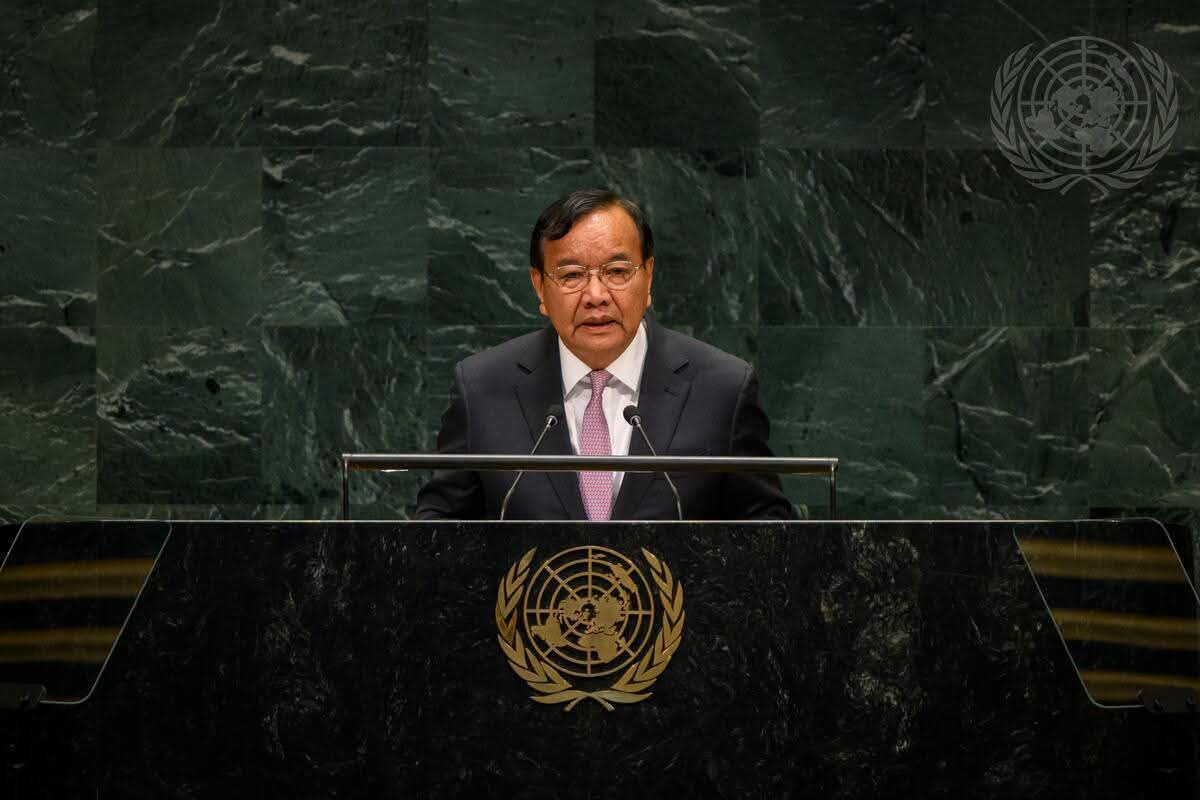
Cambodia has called on Thailand to uphold existing border agreements, restart joint demarcation efforts, and permit over 20,000 displaced Cambodian civilians to return to their homes, while justifying its pursuit of international conciliation regarding the maritime boundary dispute between the two nations.
Speaking at the UN General Assembly on September 26, Foreign Affairs Minister Prak Sokhonn cautioned that recent hostilities have severely undermined trust between the neighboring countries, causing enduring harm that includes damage to cultural heritage locations and ongoing risks from unexploded munitions.
"Rebuilding trust is therefore not merely desirable; it is essential to the future of our bilateral relations and to our shared interest in lasting peace and good-neighbourly relations," the minister stated.
His speech followed a day after Thai Prime Minister Anutin Charnvirakul addressed the assembly, asserting that Cambodia had failed to give bilateral talks "a genuine chance" and had instead launched mandatory conciliation procedures under the UN Convention on the Law of the Sea.
Sokhonn refrained from directly mentioning Anutin or responding explicitly to his comments. Instead, he emphasized that Cambodia's strategy for resolving the border dispute continues to rely on peaceful methods, urging complete implementation of the Kuala Lumpur Joint Declaration, the Fuxian Consensus, and particularly the joint statement issued on December 27, 2025.
According to that statement, both nations pledged to reject threats or use of force, honor international borders, de-escalate tensions, and pursue normalized relations.
The foreign minister indicated that quickly resuming survey and demarcation work through the Joint Boundary Commission would help resolve outstanding territorial claims and establish a mutually recognized border consistent with international law and current agreements.
He also demanded the return of more than 20,000 Cambodian civilians who remain displaced due to what he characterized as continued military presence and obstruction. Activities in areas Cambodia regards as occupied that might create or cement a permanent situation must stop, he added.
Maritime Dispute and International Conciliation
Regarding the separate maritime disagreement, Sokhonn explained that Thailand's May decision to cancel the 2001 memorandum of understanding eliminated the sole bilateral legal mechanism designed specifically to address the issue.
As a result, Cambodia initiated mandatory conciliation under the Law of the Sea convention. He characterized the conciliation commission's inaugural meeting in Singapore earlier this month as a chance to narrow differences and restore trust.
In his September 25 address, Anutin stated that Thailand is engaging in the maritime conciliation proceedings in good faith, while also urging tangible cooperation on border security, online fraud, and landmine clearance.
"Thailand has never sought conflict," Anutin declared, emphasizing that peace demands genuine joint effort from both countries.
Sokhonn similarly identified online fraud as a significant concern, describing its elimination as among Cambodia's top national priorities. He observed that criminal operations span borders and necessitate enhanced international collaboration, referencing a conference Cambodia convened this week with international partners.
The two leaders presented contrasting narratives about how trust deteriorated and the path toward restoration. Cambodia has advocated for renewed land border demarcation and adherence to ceasefire agreements while pursuing maritime dispute resolution through the international conciliation framework. Thailand has questioned Cambodia's selection of this approach and emphasized the need for bilateral security cooperation along their shared frontier.