Cambodia Loses $2.5 Million a Year to Plastic Pollution, Launches New Circular Economy Project
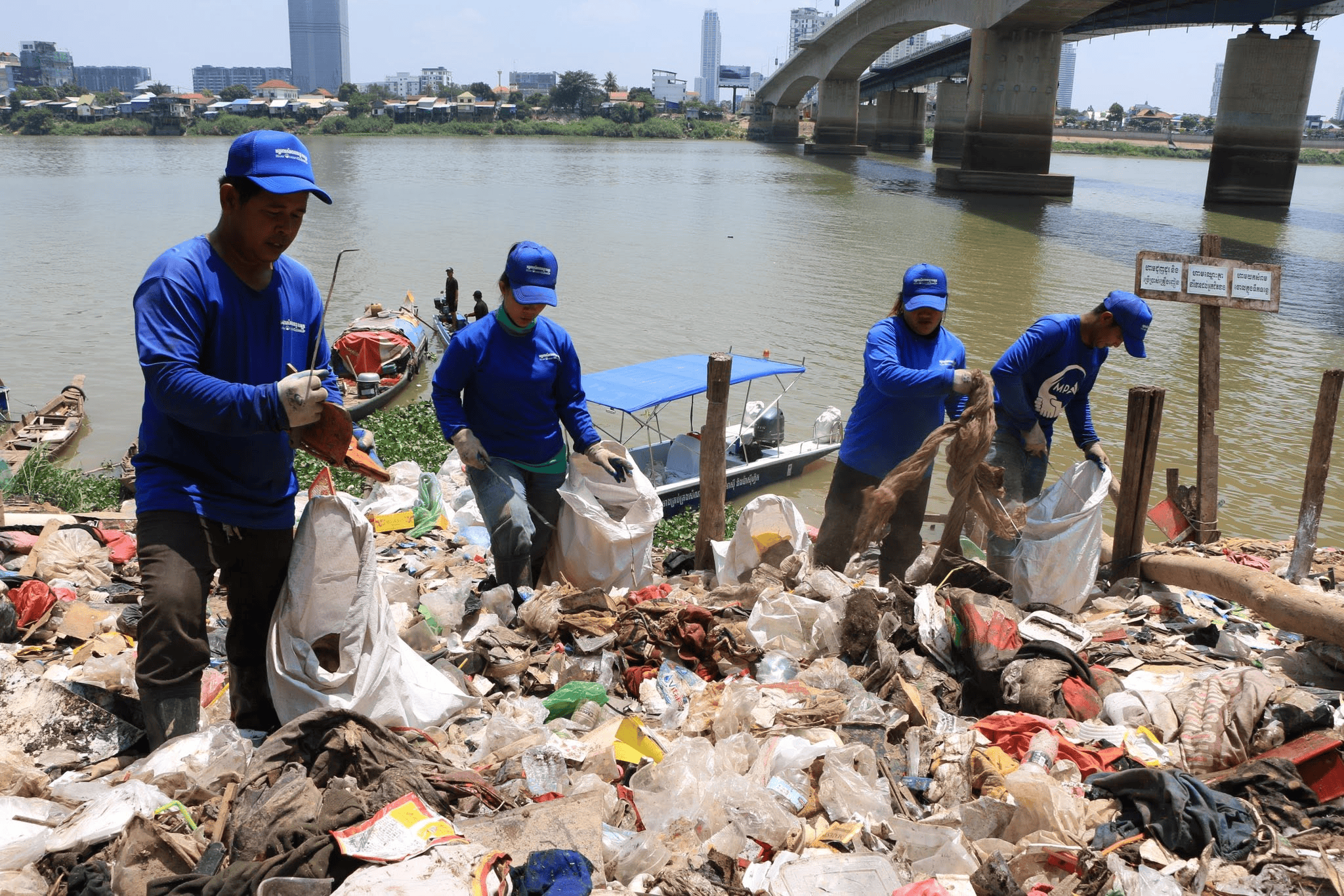
Plastic pollution is draining Cambodia's economy to the tune of an estimated $2.5 million annually, the country's Ministry of Environment has revealed, as it rolls out a new initiative aimed at curbing waste from the food and beverage industry.
The ministry on September 25 unveiled the "Plastic Reboot Cambodia" project, a circular-economy effort targeting single-use plastics in the food and beverage sector. Backed by the Global Environment Facility (GEF), the project will be carried out jointly by the ministry, the UN Development Programme (UNDP), and the UN Environment Programme (UNEP) across Phnom Penh, Siem Reap, and Preah Sihanouk provinces.
Waste volumes surging
According to ministry data, Phnom Penh's annual solid waste output has surged roughly 275 percent — climbing from over 340,000 tonnes in 2007 to nearly 1.3 million tonnes by 2022. Plastics make up around 20 percent of that total.
Studies indicate that disposable plastic items from the food and beverage sector — bags, cups, containers, and bottles — are among the biggest contributors to waste at dump sites. The ministry warned that approximately 90 percent of this refuse ultimately finds its way into the country's waterways, rivers, and coastal zones.
Environmental and economic toll
Beyond its ecological damage, the ministry said plastic pollution inflicts $2.5 million in yearly economic losses tied to marine contamination. Clogged drainage systems compound the problem, raising the risk of urban flooding in Phnom Penh, Siem Reap, and Preah Sihanouk, while also posing serious public health threats.
Project targets and beneficiaries
The initiative aims to slash plastic waste from the food and beverage sector by more than 19,000 tonnes by 2028 and cut greenhouse gas emissions by roughly 74,000 tonnes. Officials expect the project to directly benefit over 520,000 people, with a particular focus on women and waste pickers in the three target provinces.
Ministry Secretary of State Chuop Paris, speaking at the launch event, said the project would bolster policy frameworks, attract financial resources, encourage private-sector engagement, and drive behavioural shifts away from single-use plastics. He described it as a focused response aligned with Cambodia's Environmental Circular Strategy and the national circular economy action plan.
Paris urged government agencies, businesses, development partners, and civil society groups to collaborate on reducing disposable plastic consumption, promoting reuse, and strengthening waste management systems.