Cambodia Pledges Five Million Trees a Year at Global Biodiversity Summit
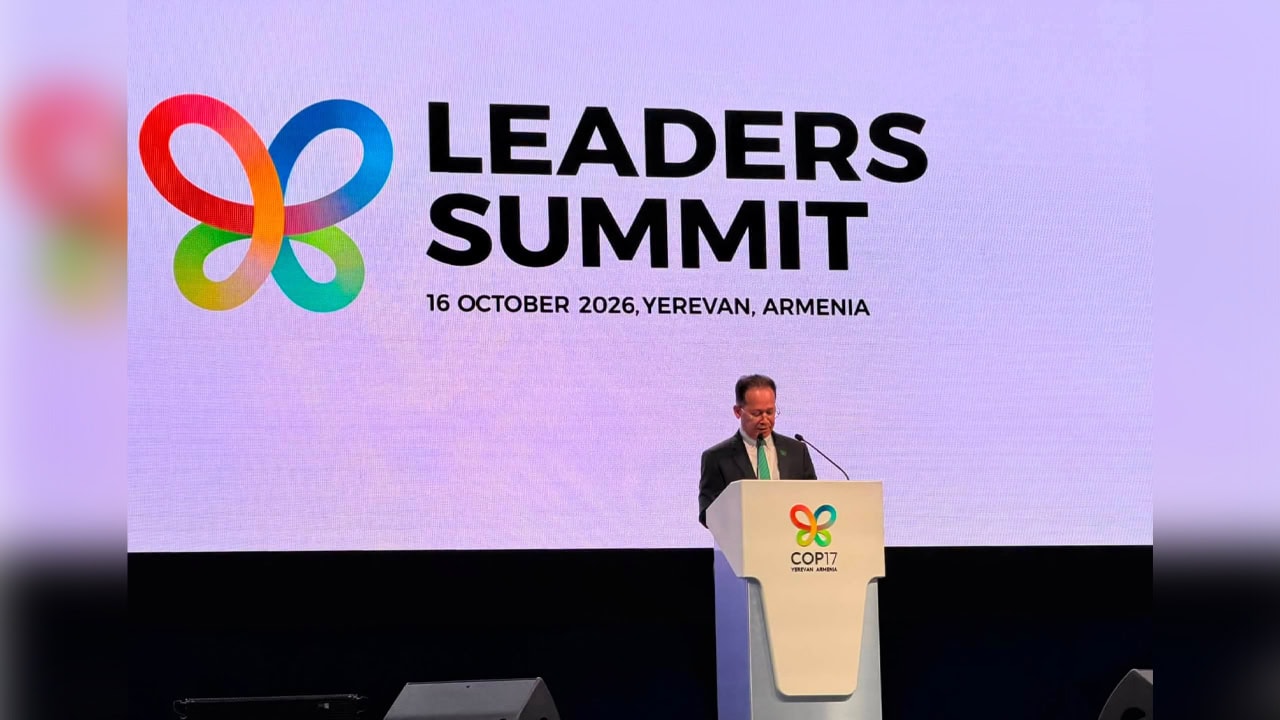
Cambodia has reaffirmed its commitment to protecting biodiversity, restoring ecosystems and promoting sustainable development. At the same time, it is calling for stronger international financing, technology transfer and capacity-building support to turn global biodiversity goals into real results.
Environment Minister Eang Sophalleth made the case in Cambodia's national statement at the UN Biodiversity Conference Leaders’ Summit, held in Yerevan, Armenia, on October 16. He thanked the Government of Armenia for hosting the summit, whose theme was “Leaders for Nature.” He stressed that protecting nature is central to green growth, food security, economic prosperity and people’s livelihoods.
A national roadmap
Cambodia’s efforts are guided by its National Biodiversity Strategy and Action Plan (NBSAP) for 2026–2030. The plan sets out how the country will halt biodiversity loss, restore ecosystems and their services, strengthen ecosystem resilience and use natural resources sustainably. The minister explained that the strategy aims to align national priorities with global environmental targets while advancing inclusive development.
Progress so far
As a party to the Convention on Biological Diversity, Cambodia has designated 39% of its territory as protected areas. According to the minister, that exceeds Target 3 of the Kunming-Montreal Global Biodiversity Framework (KM-GBF). The country has also expanded its marine protected areas, along with other achievements listed in its Seventh National Report.
To support its goal of reaching carbon neutrality by 2050, Cambodia has launched the “Green Sprouts” campaign. The initiative aims to plant at least five million trees every year by giving out saplings for free and encouraging public participation.
What is still needed
The minister warned that these goals depend on adequate financing, access to technology and stronger institutional and technical capacity. He backed the KM-GBF and its global biodiversity action plan in full. He also called for closing international funding gaps through clear financing mechanisms, effective resource mobilization and firm political commitment.
Cambodia, he said, is ready to work with international partners and local stakeholders to carry out its updated biodiversity strategy, address the continuing loss of biodiversity and advance the shared vision of living in harmony with nature. He added that sustained international cooperation, backed by sufficient funding and capacity development, will be essential to turning these commitments into lasting environmental outcomes.