
Cambodia Rejects Use of Anti-Scam Efforts as Pretext for Border Violations
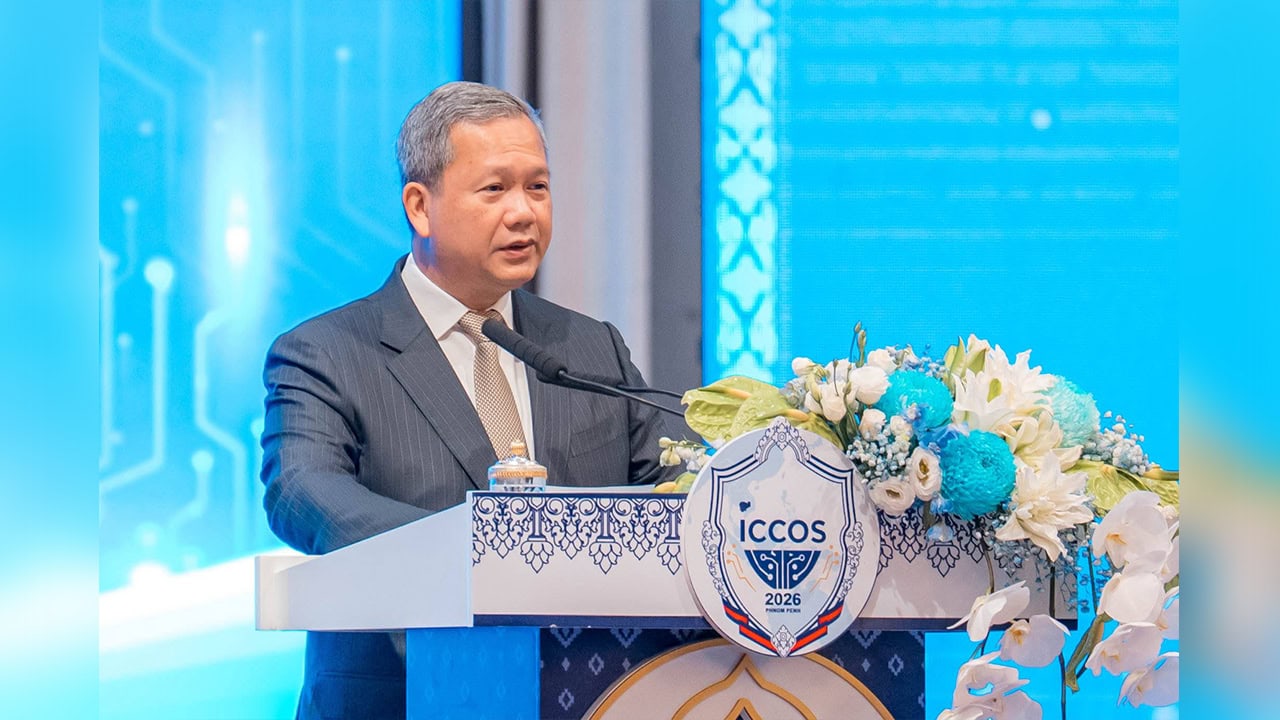
Cambodian Prime Minister Hun Manet has emphasized that the nation's crackdown on online fraud operations represents genuine commitment rather than mere theatrics, while warning against the weaponization of transnational crime concerns to justify territorial encroachment.
Speaking at the opening of the International Conference on Combating Online Scams in Phnom Penh on September 23, Manet addressed approximately 500 delegates from 27 nations and seven international organizations, including UN agencies and NGOs.
"The Kingdom will not serve as a refuge for online scam operations," Manet declared. "This form of transnational criminality emerged in the post-pandemic era and stands contrary to our cultural heritage and national character. We refuse to let criminal organizations jeopardize the progress of our nation and the welfare of more than 17 million citizens."
The prime minister acknowledged that Cambodia neither originated nor exclusively hosts the online scam industry. He explained that the country's initial vulnerability stemmed from the expansion of internet gambling and casino ventures, which criminal networks exploited and rapidly adapted across international boundaries.
"Cambodia accepts complete responsibility for border security, law enforcement, and restoring the credibility of our judicial system. We must demonstrate accountability through rigorous internal measures," he stated.
"We approach law enforcement as an ongoing national security imperative, not a publicity exercise. Our focus remains on the permanent dismantling of criminal networks and preventing their resurgence," he continued.
Manet highlighted Cambodia's enactment of anti-scam laws and collaborative efforts with law enforcement from China, the United States, Japan, South Korea, and Australia, alongside ASEAN partners and international bodies such as UNODC, Interpol, and IOM.
In remarks clearly directed at Thailand, which last year cited anti-scam operations when occupying Cambodian territory, Manet cautioned against exploiting transnational crime as a political tool.
"Online fraud should never become a weapon for one nation to wield against another, nor should anti-scam objectives justify military force or territorial occupation, which violates fundamental international law. Regrettably, Cambodia has experienced this along certain sections of our border with Thailand," he said.
"Instead, anti-scam initiatives should unite nations in sincere cooperation based on mutual respect for collective benefit. No country can successfully address cross-border challenges in isolation," he added.
The prime minister outlined five pillars for enhanced international cooperation: immediate intelligence exchange, sophisticated financial investigations, harmonized legal and operational systems, public-private collaboration, and victim safeguarding.
"Our collective determination to confront this multifaceted challenge must translate into tangible, coordinated action. In a spirit of mutual confidence and shared obligation, Cambodia anticipates international partners will adopt the Phnom Penh Declaration on September 24—evidence of our unified commitment to dismantle and eliminate online scam networks definitively," Manet concluded.