Cambodia Unveils 2027 National Budget Focused on Sovereignty, Livelihoods and Growth
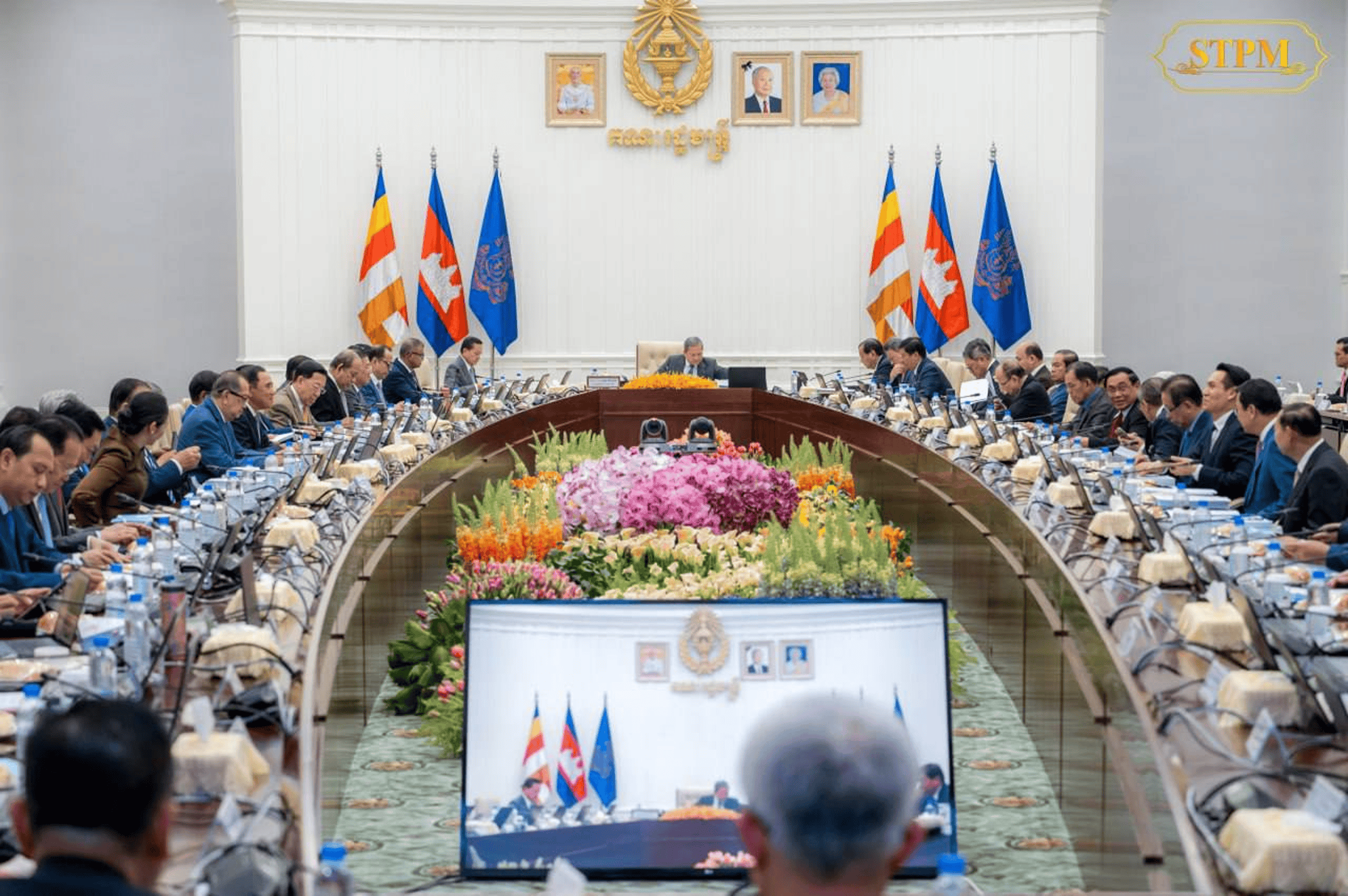
Cambodia's Council of Ministers has described the 2027 national budget as one that will safeguard sovereignty and territorial integrity, stabilise people's livelihoods and support targeted growth in a climate of heightened uncertainty. The government says the budget will also keep enough capacity to respond to shocks while keeping public finances sustainable.
The council met on October 23. In a statement issued the same day, it said national revenue for 2027 is projected at 32.327 trillion riel, or roughly $8 billion. That equals 13.49% of gross domestic product (GDP) and would be a 6.7% increase over the 2026 projections.
Revenue collected by sub-national administrations is forecast at 2.819 trillion riel (over $700 million). That makes up 8% of total state revenue, or 1.18% of GDP.
The government expects the economy to grow by about 4% in 2026 and 4.8% in 2027. GDP per capita is forecast to rise from about $3,098 in 2026 to $3,277 in 2027.
Growth next year is expected to be driven by several key sectors and subsectors:
- Industry, especially garment manufacturing, along with non-garment manufacturing, food and beverage production, and tobacco
- Services, including accommodation and food services, wholesale and retail trade, transport and storage, and information and communications technology
- Agriculture, covering crops, livestock and fisheries
The government's strategic aim is to hold total expenditure at 39.7 trillion riel (nearly $10 billion), equal to 16.57% of GDP. That is a 3.2% increase on the figures in the 2026 finance law.
Spending by sub-national administrations is projected at 5.068 trillion riel (about $1.26 billion). That accounts for 11.9% of total state budget expenditure, or 2.12% of GDP.
When allocations for health departments under provincial and capital administrations are included, the total spending envelope for sub-national administrations rises to 7.955 trillion riel (nearly $2 billion). That represents 18.7% of total state budget expenditure, or 3.32% of GDP.
These allocations cover the conditional transfer of health-sector functions to provincial and capital administrations, as well as the conditional transfer of functions in the education sector.