Cambodia Unveils $690 Million Plan to Curb Haze and Land Fires by 2035
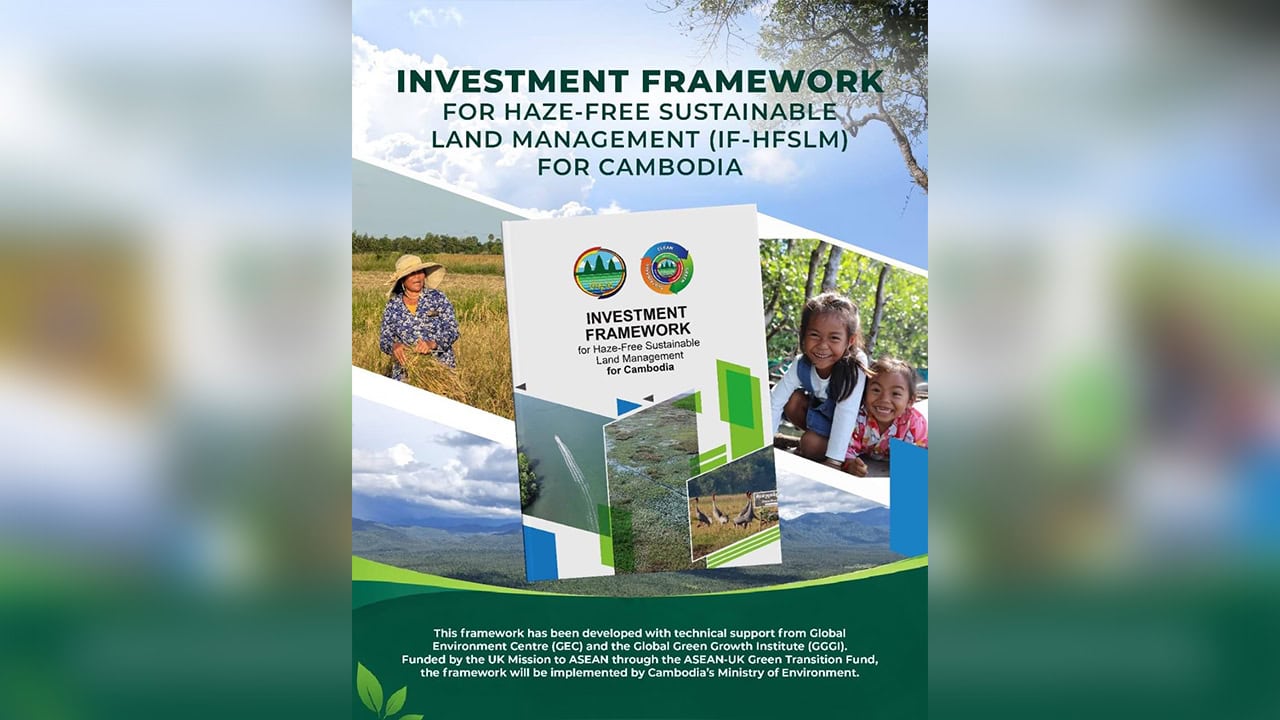
Cambodia has signed off on a $690 million investment framework to reduce land and forest fires, phase out harmful open burning and tackle seasonal haze by 2035. The Ministry of Environment announced the plan on Tuesday, October 27.
Environment Minister Eang Sophalleth approved the document, titled “Investment Framework for Haze-Free Sustainable Land Management 2026–2035.” Its goal is to attract climate finance and encourage more sustainable land use as part of wider efforts to improve air quality and build climate resilience.
The framework outlines 15 proposed projects with an estimated combined value of about $690 million. Funding could come from government budgets, concessional climate finance, blended financing, commercial loans, and carbon and nature-based finance.
The ministry acknowledged that Cambodia has made progress in environmental management, fire prevention and climate governance over the past decade. Even so, seasonal haze remains a problem across the Greater Mekong Subregion, particularly during long dry spells.
Burning of crop residue, fires in forests and wetlands, and the open burning of waste all add to pollution within the country and across its borders. These fires endanger public health, reduce farm productivity, damage ecosystems and set back climate goals.
A national roadmap with an investment angle
According to the ministry, the framework provides a national roadmap for tackling these problems while supporting sustainable land use and resilient livelihoods. Rather than treating haze reduction purely as a legal obligation, the plan presents it as an opportunity for investment.
The document identifies priority projects, financing strategies suited to Cambodia’s conditions, and ways to strengthen public-private partnerships. It also sets out regional monitoring and reporting mechanisms.
The framework was developed with the UK Mission to ASEAN through the ASEAN-UK Green Transition Fund, with technical support from the Global Environment Centre and the Global Green Growth Institute. It turns the ASEAN Investment Framework for Haze-Free Sustainable Land Management 2023–2030 into national action and supports Cambodia’s commitments under the ASEAN Agreement on Transboundary Haze Pollution and its climate pledges under the Paris Agreement.
Seeking funding partners
Cambodia is now looking for support from regional and international financial institutions, development agencies, philanthropic organisations and private investors to fund and expand the work nationwide.
The ministry stressed that haze crosses national borders and is made worse by seasonal burning, so sustained action at home and closer cooperation across the region will be essential. It called on ASEAN members to turn shared commitments into concrete results and build a haze-free, climate-resilient region for future generations.