Cambodia Vows to Keep Clearing Old Landmines While Tackling New Explosive Hazards
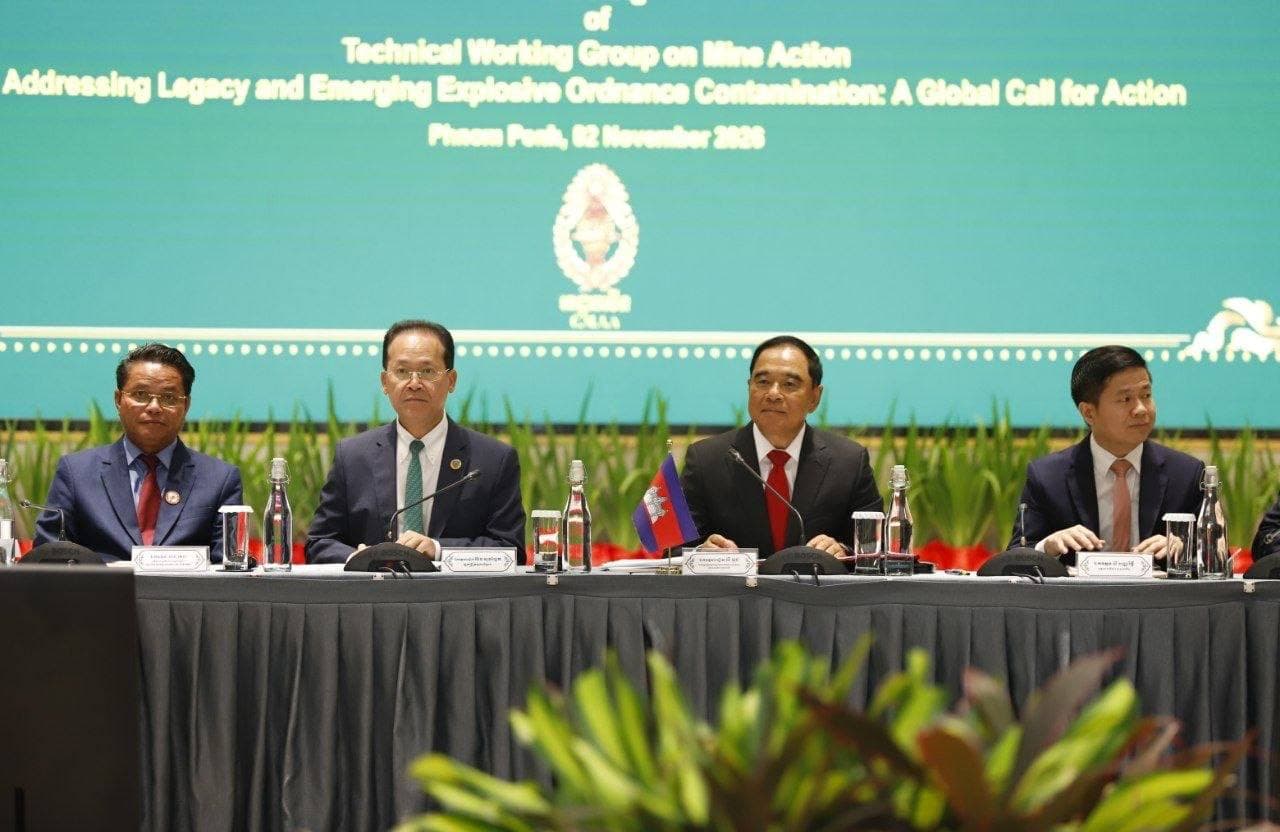
A senior demining official has made clear that Cambodia will neither stop clearing landmines left over from past wars nor overlook the dangers posed by newer explosive contamination.
Ly Thuch, first vice-president of the Cambodia Mine Action and Victim Assistance Authority (CMAA), chaired a November 2 session of the Technical Working Group on Mine Action (TWG-MA). The meeting focused on tackling old and new explosive dangers together, under a theme calling for global action.
Thuch urged government bodies, friendly countries, development partners, donors, demining operators and the private sector to keep working side by side to deal with the danger from explosive remnants of war.
Over the past three decades, Cambodia has cleared more than 3,600 square kilometres of land contaminated by mines and other explosive remnants of war. About three-quarters of that land has been returned to communities for farming.
A fresh challenge on top of an old one
Thuch warned that the 2025 armed conflict with Thailand has added cluster munition contamination across seven provinces. Early assessments suggest the newly affected zones are larger than all the land still polluted by leftovers from more than 30 years of earlier fighting.
“Cambodia faces a double burden on the same ground,” he said. “We have unexploded remnants from the past and fresh contamination from recent fighting, so support must address both at the same time.”
He thanked partners for responding quickly to the threats created by the 2025 fighting.
Three priorities for partners
Thuch laid out three priorities for the Kingdom’s demining partners:
- Expand surveys and assessments of the newly affected areas to pinpoint how far contamination reaches and where it lies, while widening risk education in border provinces.
- Keep backing the clearance of mines and explosive remnants from earlier conflicts, with roughly 1,689 square kilometres still awaiting clearance.
- Broaden funding sources and bring in more domestic private companies, so mine action is owned nationally and can be sustained. Cleared land, he noted, opens up safe space for farming, construction and investment.
Environmental cooperation
Environment Minister Eang Sophalleth said his ministry is determined to work more closely with the CMAA, turning an existing memorandum of understanding into concrete action. The two bodies plan joint workshops to set priorities and draft cooperation plans, with a focus on identifying and ranking protected areas hit by explosive ordnance, especially where contamination threatens conservation officers, local residents or environmental work.
He asked all mine action operators to build environmental safeguards into their surveys and clearance work, in line with national standards and existing environmental rules.
“Mine action does more than protect lives,” he said. “It also supports the conservation of natural resources and the sustainable use of land.”
Other voices and next steps
Heng Ratana, director-general of the Cambodian Mine Action Centre (CMAC), outlined both long-standing and emerging challenges. He stressed the need to strengthen technical capacity, improve survey work and respond effectively to locate contaminated sites, protect communities and back the government’s efforts.
Partners praised Cambodia’s progress and welcomed the launch of the National Mine Action Policy 2026-2035. They pledged continued support but called for that help to be turned into concrete annual targets and implementation plans. Ministry representatives also stressed closer cooperation and closer attention to new threats.
The meeting presented the 2026-2028 three-year implementation plan for the policy. It lays out specific activities, timelines and indicators designed to make implementation more effective and accountable.
Looking back on three decades of work, Thuch said Cambodia has shown that a nation can recover from the devastation of war. He added that the country remains committed to both tasks: clearing old explosive remnants and responding to new threats, so communities can have safe land and a more hopeful future.
“We will finish both jobs because our people deserve safe land,” he said. “We can get there sooner and save lives if we work together.”