
Cambodian Craftspeople Build Connections at China-ASEAN Expo Despite Limited Export Breakthroughs
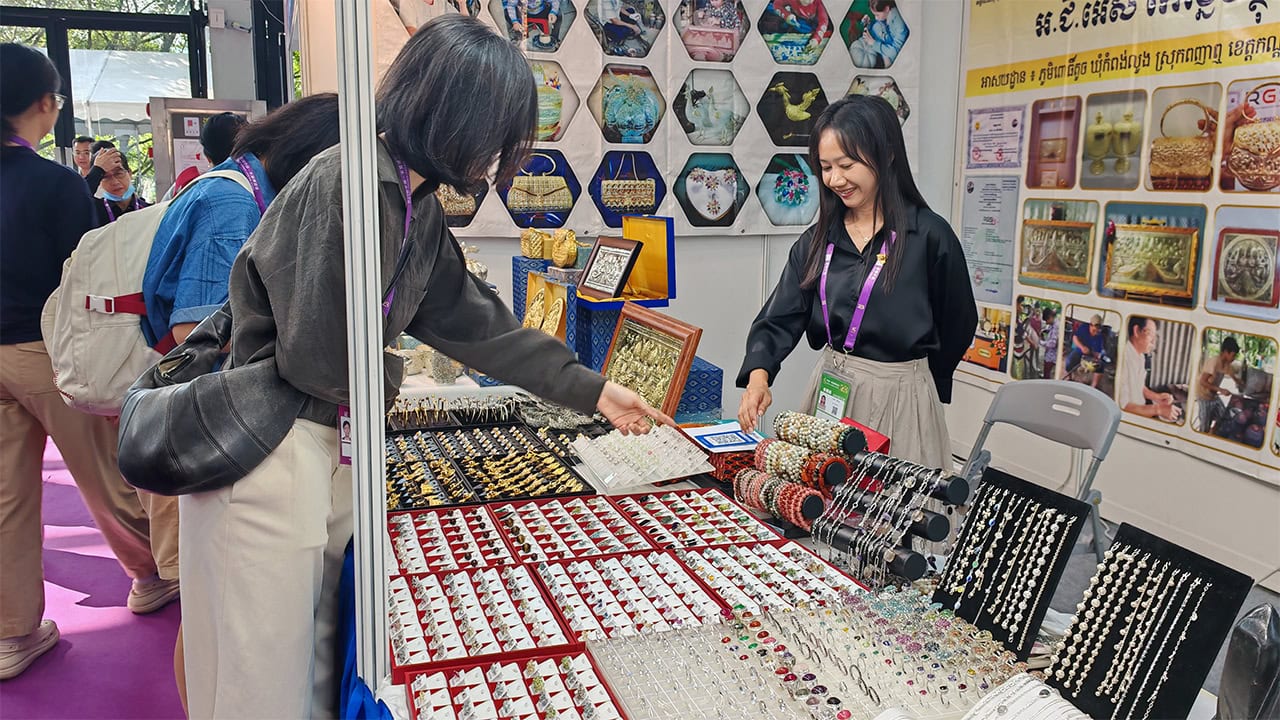
Handicraft producers from Cambodia are leveraging the China-ASEAN Expo in Nanning as a platform to elevate awareness of their traditional products, reconnect with existing clients, and explore partnership opportunities. Yet many acknowledge that despite years of consistent attendance, significant export contracts have remained out of reach.
The Cambodian section of the trade fair featured an array of locally crafted goods, including silk textiles woven in the traditional hol technique, handcrafted bags, jewelry pieces, sculptural works, ornamental metalwork, and distinctive agricultural offerings. These items highlighted the expertise of local artisans while giving small enterprises a chance to gauge market interest and refine their offerings for buyers from China, Southeast Asia, and beyond.
Visitors to the 23rd edition of the expo, which launched on September 17, showed considerable curiosity about the intricately patterned silk bags, silver-toned vessels, jewelry, and embossed art depicting scenes from Angkor. However, the craftspeople present reported that while foot traffic and interest were strong, actual purchase orders remained modest.
Testing New Markets and Building Recognition
Yan Chanveasna, who also goes by Metrey, brought a selection of Khmer silk, hol textiles, and bags with Cambodian motifs to the exhibition in partnership with the Ministry of Commerce. She has previously displayed her work at events in Shanghai and at markets across Europe and Japan, where she found stronger demand for handmade silk products.
For Chanveasna, the Nanning appearance offered a chance to explore a different customer base and observe approaches used by other exhibitors. She noted, however, that marketing Cambodian silk in China proved difficult because shoppers often focused on price comparisons with cheaper, factory-made alternatives.
"Visitors show interest, but they comment on the cost. They haven't yet grasped the quality and effort that goes into creating something entirely by hand," she explained. "When a piece is woven completely by hand, the price reflects that. Handcrafted items aren't sold cheaply anywhere."
The traditional hol technique involves a labor-intensive ikat process. Before any weaving begins, silk threads are tied off in sections and dyed to achieve specific colors and patterns. Weavers must then meticulously arrange these pre-dyed threads on the loom so the design emerges correctly in the finished cloth. This painstaking method makes it impossible for handmade hol and silk bags to compete on price with mass-produced textiles. Instead, their market appeal depends on craftsmanship, cultural significance, design quality, and the time invested in each piece.
Chanveasna emphasized that her goal extended beyond immediate sales. She wanted Chinese attendees and representatives from other ASEAN nations to recognize the caliber of Cambodian craftsmanship. "We want to demonstrate that handmade products can be beautiful too," she said. "If handmade items from all ten countries were shown side by side, Cambodian work would hold its own."
Challenges of Converting Visibility into Sales
Her experience underscores a practical hurdle facing smaller Cambodian businesses in the Chinese market: while international exhibitions generate visibility, turning browsers into buyers requires Chinese-language product materials, interpreter support, and ongoing engagement with prospective partners.
At a neighboring booth, artisan Ramaneth presented handcrafted sculptures, souvenirs, jewelry, silverwork, and gemstone items produced by Ramaneth Handicraft and its RGA Design label, based in Kampong Luong, Kandal province. The enterprise launched in 2010 and collaborates with local artisans and community members. Ramaneth noted that the business had exhibited in Vietnam, Singapore, and other neighboring countries in addition to China.
This marked the company's ninth appearance at the China-ASEAN Expo, with participation dating back to before the pandemic. According to Ramaneth, repeated involvement had enabled the business to refine both its products and presentation to better align with expectations in ASEAN and international markets.
"The advantages and learning we've gained include acquiring knowledge, developing and preserving Cambodian products, and supporting our communities and craftspeople," she said. "We learn what businesses and the market need. We've progressed from a basic level to a standard that can be accepted regionally and internationally."
Traditional Methods and Cultural Heritage
Cambodian silverwork has historically been created through several demanding techniques, including lost-wax casting, pressing metal into molds, and hand-raising or shaping metal sheets before engraving or chasing decorative patterns into the surface, according to a UNESCO publication on Khmer silverware.
Kampong Luong, located near the historic royal capital of Oudong in Kandal province, has long been recognized for traditional metalworking. Craftspeople there produce decorative vessels, jewelry, ceremonial items, sculptures, and souvenirs, often incorporating floral, animal, or Angkor-themed motifs.
The items Ramaneth displayed in Nanning included engraved containers, jewelry, ornamental boxes, and framed relief panels depicting Cambodian cultural imagery. The intricate surface details reflected the substantial manual labor required to shape and embellish such pieces.
Despite nine appearances at the expo, Ramaneth said the enterprise had not yet landed a major commercial deal. Nevertheless, it had developed connections with potential partners and cultivated a group of repeat buyers.
"Initially, we came just to display our work, but over time we've also formed business relationships," she said. "We haven't achieved anything large or concrete yet, but the connections persist. Each year, some past customers come back to buy from us and refer our products to others."
She described this ninth visit as more fruitful than earlier ones, crediting the Ministry of Commerce with helping facilitate participation and encouraging links between Cambodian producers and companies interested in sourcing imports.
Long-Term Prospects Depend on Follow-Through
The experiences of these two entrepreneurs suggest that while the China-ASEAN Expo provides Cambodian craft businesses with a valuable platform for exposure and market research, an exhibition stand alone is unlikely to produce sustained export success. Achieving long-term results will require participating businesses to secure dependable local partners, effectively communicate the value proposition of handmade production, adapt designs and packaging to suit Chinese consumers, and maintain engagement beyond the event itself.