China Has Defined Its Red Lines — But Where Does the US Draw the Line?
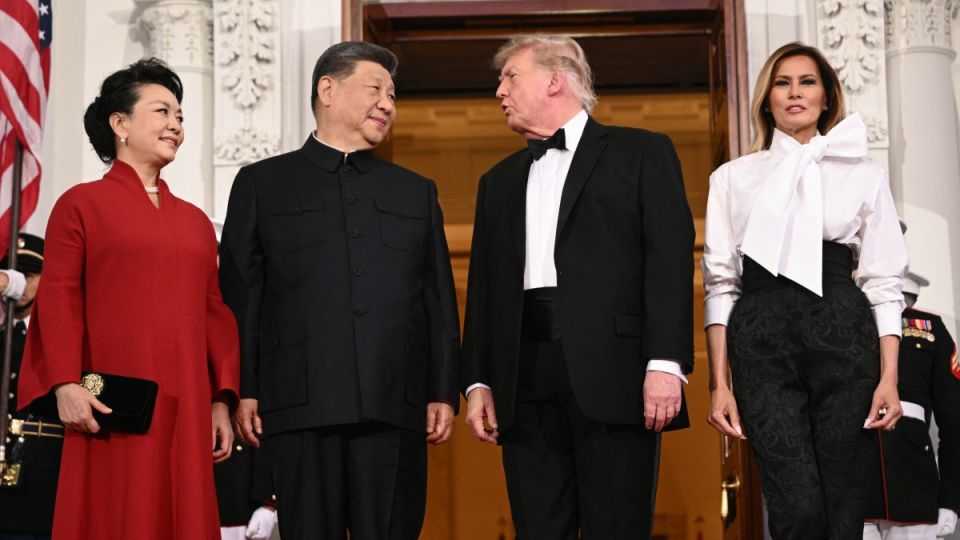
As President Donald Trump rolls out an extravagant welcome for Chinese President Xi Jinping's first White House visit in over a decade, foreign policy analysts are asking a pointed question: what exactly are America's red lines with Beijing?
Xi is set to receive a grand arrival ceremony on the morning of September 24, complete with military bands and fighter jet flyovers, followed by bilateral talks between the two leaders. Melania Trump has arranged a visit to the Smithsonian National Museum of Asian Art with Xi's wife, Peng Liyuan, and a formal state dinner will cap off the day.
Beijing's Non-Negotiables
On the eve of Xi's arrival in Washington, Chinese Ambassador to the US Xie Feng reiterated Beijing's core demands. Writing in an op-ed for the People's Daily on September 23, Xie declared that China's sovereignty, security, and development interests are inviolable. He identified four specific red lines: the Taiwan issue, democracy and human rights, China's chosen development path and political system, and its development rights.
These positions are familiar. Xi himself laid them out when he met then-President Joe Biden in Lima in November 2024, and Chinese officials routinely restate them around high-level diplomatic encounters.
America's Red Lines Are Harder to Pin Down
The US, by contrast, has not articulated its own boundaries as explicitly. "We could try to infer them," said Kelly Grieco, a foreign policy scholar at the Stimson Center.
Near the top of any such list would be Iran. China continues to purchase Iranian oil and has reportedly provided support for Iran's war effort. Observers are watching closely to see whether Beijing offers to play mediator — and what concessions it would seek from Washington in exchange.
Another flashpoint is Beijing's grip on rare earth exports, materials critical to manufacturing everything from smartphones to advanced weapons systems. Although China officially lifted strict export controls on rare earths, it has continued to restrict supply to American companies in practice.
A Shift in Priorities Under Trump
Scott Kennedy, a China specialist at the Center for Strategic and International Studies, noted that traditional US red lines — covering industrial policy, Taiwan, South China Sea disputes, and human rights — are difficult to locate in the current administration's approach.
"Instead, they want an avoidance of war. They want to keep markets up, and anything that makes President Trump look good," Kennedy said. "Very different kinds of red lines than in the past."
Grieco pushed back somewhat on the idea of a dramatic shift. She pointed out that the Trump administration has continued to oppose Chinese coercion in the South China Sea, reaffirmed defense commitments to the Philippines, maintained joint maritime patrols, and carried out military exercises in the region.
"Some analysts are conflating the administration's effort to avoid needlessly provocative rhetoric with a substantive retreat from US commitments. Those are two very different things," she cautioned, urging observers to focus on actual policy decisions rather than tonal changes.
The Case for Transparency
Grieco argued that both nations would benefit from being more explicit about their boundaries. Spelling out red lines on each side could help stabilize the relationship, reduce the risk of misunderstandings, and guard against accidental escalation, she said.