Civil Society Groups Present Climate Policy Priorities Before COP31
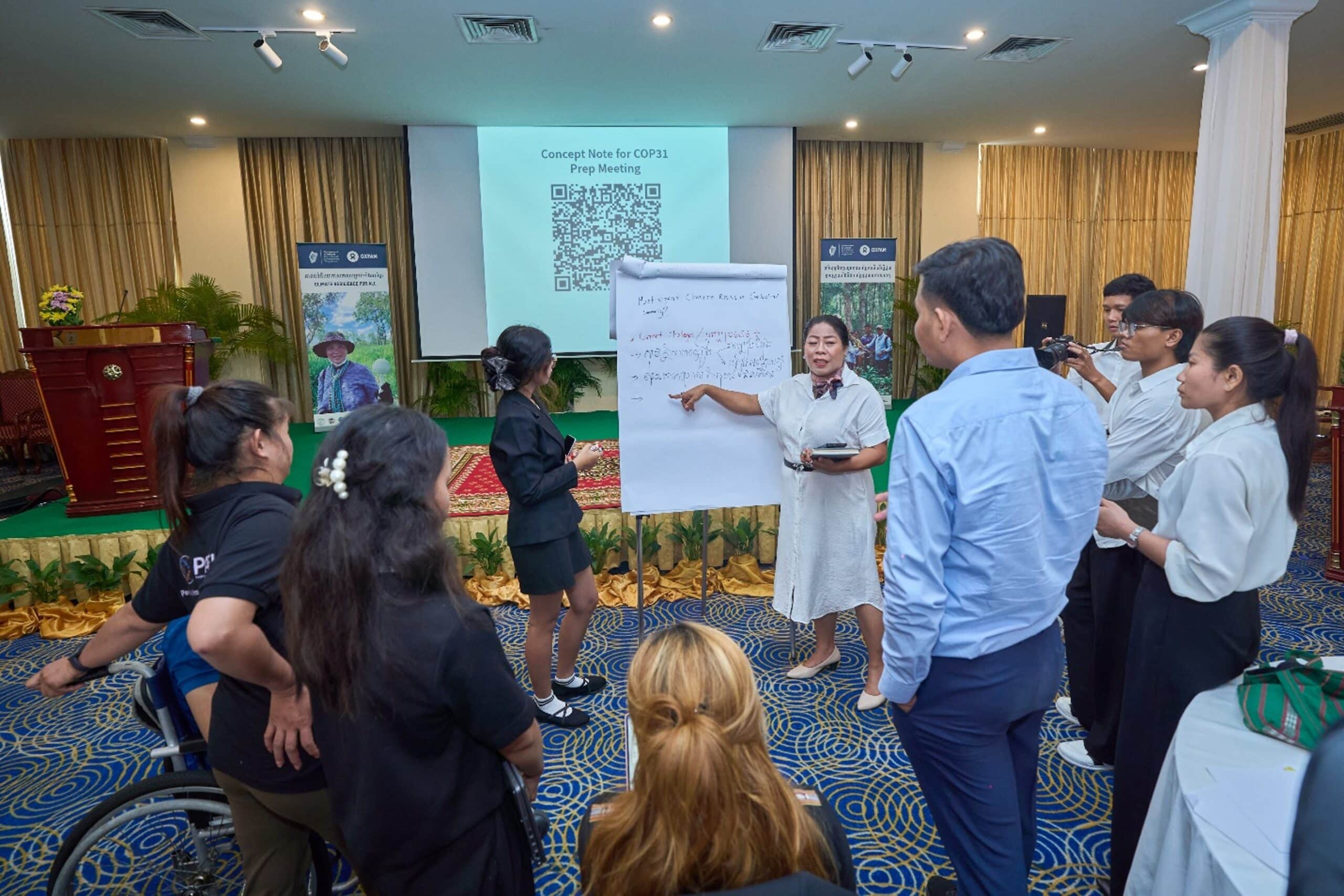
As Cambodia prepares for the upcoming UN climate summit, the country is advocating for improved access to climate funding, enhanced adaptation measures, and an equitable transition strategy that protects vulnerable populations.
The NGO Forum on Cambodia, working alongside Oxfam, organized a preparatory meeting in Phnom Penh on September 23 that drew approximately 80 participants. Attendees represented a diverse cross-section of stakeholders, including government bodies, nonprofit organizations, community leaders, disability advocates, indigenous representatives, youth networks, researchers, businesses, UN entities, and international development organizations.
The gathering aimed to forge a unified, research-backed stance for Cambodia's participation in COP31, scheduled to take place in Antalya, Turkey, from November 9 through 20.
Discussion centered on the urgent need for global climate negotiations to produce tangible assistance for nations in the developing world that are experiencing worsening climate effects, while simultaneously safeguarding their residents' livelihoods, food supplies, and economic progress.
Special focus was placed on Cambodia's forthcoming transition out of Least Developed Country classification, the rollout of its updated climate commitment plan (NDC 3.0), and the critical requirement to preserve favorable financing terms and technical assistance throughout this shift.
Soeung Saroeun, who leads the NGO Forum on Cambodia, emphasized the importance of community-driven climate initiatives. He stated that financial resources and other forms of support must flow directly to local communities without bureaucratic barriers or stringent preconditions, adding his hope that major global powers and high-emission nations will genuinely listen to these concerns.
Phean Sophoan, who directs Oxfam's Cambodia operations, pointed out that the nation's climate goals—a 55% emissions cut by 2035 and net-zero emissions by 2050—require substantial international financial backing. She argued that a fair global climate system cannot require greater commitments from vulnerable countries like Cambodia while simultaneously reducing concessional support when they graduate from LDC status. She called for grant-based, reliable, and non-debt-creating finance at COP31 to ensure graduation represents developmental progress rather than heightened climate risk.
Rural community members also shared their experiences with erratic weather patterns affecting their daily lives and food security. Yem Channy, a participant from Stung Treng province, described how her family and neighbors rely on predictable rainfall, agricultural cycles, and river fisheries—all now threatened by climate instability that is destroying harvests and forcing households into debt. She called for stronger support for locally-led adaptation projects, natural resource conservation, and climate finance that actually reaches frontline communities.
The consultation addressed multiple dimensions of climate policy, including financing mechanisms, adaptation and mitigation strategies, loss and damage compensation, implementation of Cambodia's updated climate pledges, equitable energy transitions, ecosystem-based solutions, carbon trading, climate-smart agriculture and food systems, sustainable investment, and gender-inclusive climate action.
Key recommendations from the meeting included maintaining climate finance eligibility for countries transitioning out of LDC status, expanding grant-based adaptation funding, improving direct community access to loss and damage compensation, and ensuring that global adaptation frameworks recognize the vital role of freshwater ecosystems such as the Mekong River and Tonle Sap Basin.