Could Pursat Become the Next Mondulkiri? A Coffee Venture Plans Major Growth
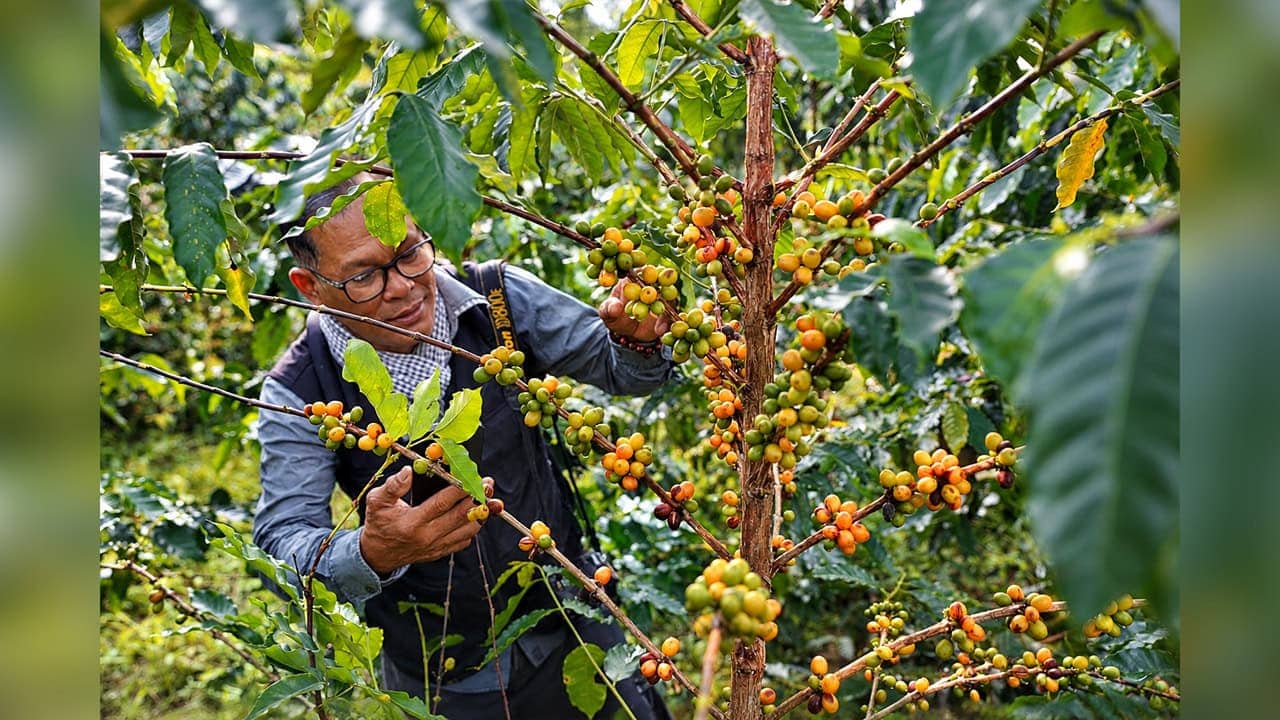
The cool, forested highlands of O’Soam in Veal Veng district, Pursat province, are emerging as a possible new coffee-growing region. A local investor has expanded cultivation to more than 140 hectares and aims to reach 600 hectares in 2026, mainly to supply the domestic market, with overseas sales as the longer-term goal.
The project faces obstacles. Output is still limited, and many local farmers are reluctant to invest in coffee because they worry about access to buyers and the risk of losing money.
A grower with bigger ambitions
Leang Pech started growing coffee three years ago, mainly out of personal interest. As he saw its commercial potential, he scaled up. His plantation now covers more than 140 hectares, and about 80 hectares are already producing beans.
He plans to expand to 600 hectares this year and to 1,000 hectares within three years. He also intends to build local processing facilities and, eventually, export.
Robusta, Arabica and the local climate
The farm grows both Robusta and Arabica, which Pech believes are well matched to O’Soam’s cool temperatures, extensive forest cover and high humidity. Robusta usually yields more, while Arabica sells for higher prices and is valued for its taste. Some Arabica trees began bearing cherries at around 18 months old.
According to Pech, the area’s conditions allow coffee to bear fruit even at an elevation of just 300 metres. He believes O’Soam’s coffee could compete with output from Mondulkiri, one of Cambodia’s best-known coffee provinces. He also notes that Cambodia still imports coffee because domestic production falls short, which leaves room for local growers.
Sales and partnerships
The plantation currently supplies selected businesses in Phnom Penh, along with resorts linked to his wider operations in Preah Sihanouk and Kep provinces. Kiri Coffee is one of his local business partners.
Overseas buyers have shown interest, but the farm has not yet exported any coffee or signed international supply agreements. Pech says the main constraint is production, not demand: the plantation simply does not yet have enough coffee to meet the market.
Yields, costs and prices
- Pech says fresh coffee cherries could attract offers of around $1 per kilogram.
- Young trees may produce two to five tonnes per hectare, rising to five to 10 tonnes as they mature.
- Establishing and maintaining one hectare until it starts producing could cost up to $4,500, including irrigation and upkeep. Actual costs and yields will vary.
Adding value and creating jobs
To keep more value in the community, drying equipment has been brought to O’Soam and roasting facilities are under development. Pech hopes to eventually open a processing factory so that more production stays local.
The plantation employs 26 workers, and his wider agricultural and business operations support more than 130 people.
Bringing other farmers on board
Pech is encouraging neighbours to grow coffee as well. He estimates that nearly 200 hectares have been planted across O’Soam, including his own land. Many residents remain cautious, however, after past crops grown without reliable markets left them with losses.
He argues that proving successful production, building processing facilities and securing buyers will be the best way to convince more farmers to take part.
Provincial support
The project fits into wider efforts by Pursat authorities to draw agricultural investment and develop local processing industries. Governor Khoy Rida has said investors look for security, stability and sustainable returns, and will avoid a province where they expect to lose money.
Outlook
Pech also sees potential in agricultural tourism, where visitors could tour plantations and learn about local production. Still, the expansion will depend on responsible management of land and water, dependable markets and the willingness of local farmers to invest. If it succeeds, the 600-hectare target could mark an important step toward a new coffee-production centre in O’Soam, although processing and export plans will hinge on raising output and securing long-term buyers.