Delhi winter pollution plan to double parking fees, require 50% work from home and halt construction
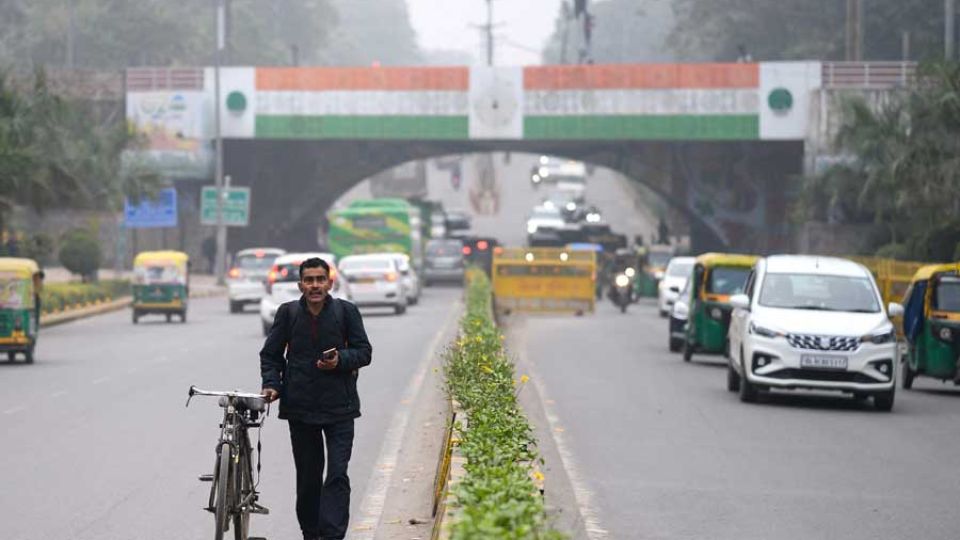
NEW DELHI — The Delhi government has announced a series of measures to limit pollution in the capital during the winter, including tighter controls on construction, staggered office hours and remote-working requirements.
The measures will be introduced in stages from Nov. 1, with the government targeting vehicle emissions, dust and other pollution sources that typically worsen Delhi’s air quality during the colder months.
Parking fees to double from Nov. 1
Parking charges at authorised facilities will be doubled from Nov. 1, 2026, through Feb. 28, 2027, in an effort to discourage private vehicle use. Parking facilities owned and operated by the Delhi Metro Rail Corporation will not be covered by the increase.
Office hours will also be staggered during this period. Municipal Corporation of Delhi offices will operate from 8:30 a.m. to 5 p.m., while offices under the Government of the National Capital Territory of Delhi will run from 10 a.m. to 6:30 p.m.
Government and private offices will be instructed to reduce the number of employees working on-site by half. Fifty per cent of staff will work remotely, with the rest attending offices, from Nov. 1 to Feb. 28.
Construction restrictions to tighten
Dust-producing demolition and outdoor civil construction work will be prohibited from Nov. 1, 2026, until Jan. 31, 2027.
The restrictions will intensify on Dec. 10, when a complete ban on construction and demolition will begin. That ban is scheduled to continue through Jan. 20, 2027.
The phased approach is intended to curb dust and other emissions during the period when Delhi’s air pollution generally comes under the greatest pressure.
PUC checks to begin on Oct. 1
From Oct. 1, the Delhi government will begin enforcement action against vehicles without valid Pollution Under Control certificates. Under existing rules, drivers of vehicles found without a valid PUC certificate may be fined Rs 10,000.
Chief Minister Rekha Gupta said the campaign was designed to help ensure that Delhi residents could breathe cleaner air by verifying the validity of PUC certificates. She said the government works throughout the year to reduce pollution and described the enforcement drive as one part of those efforts.
Gupta also said the city’s PUC-centre network would be strengthened to make the system more effective and dependable.
Delhi records highest PM2.5 level among states and territories
Delhi had the highest annual average PM2.5 concentration among 33 states and union territories, at 101 micrograms per cubic metre, according to a satellite-based analysis. That figure was 2.5 times India’s national standard and 20 times the World Health Organization’s guideline.
The study, conducted by the independent Centre for Research on Energy and Clean Air, covered March 2024 to February 2025. Chandigarh had the second-highest annual average at 70 micrograms per cubic metre, followed by Haryana at 63 and Tripura at 62.
Annual averages were also above the national standard in Assam, at 60 micrograms per cubic metre; Bihar, 59; West Bengal, 57; Punjab, 56; Meghalaya, 53; and Nagaland, 52.
Across the analysis, 447 of the 749 districts examined — 60 per cent — exceeded the National Ambient Air Quality Standard for annual PM2.5, which is set at 40 micrograms per cubic metre.