Does Thailand Apply Different Diplomatic Standards to Different Neighbours?
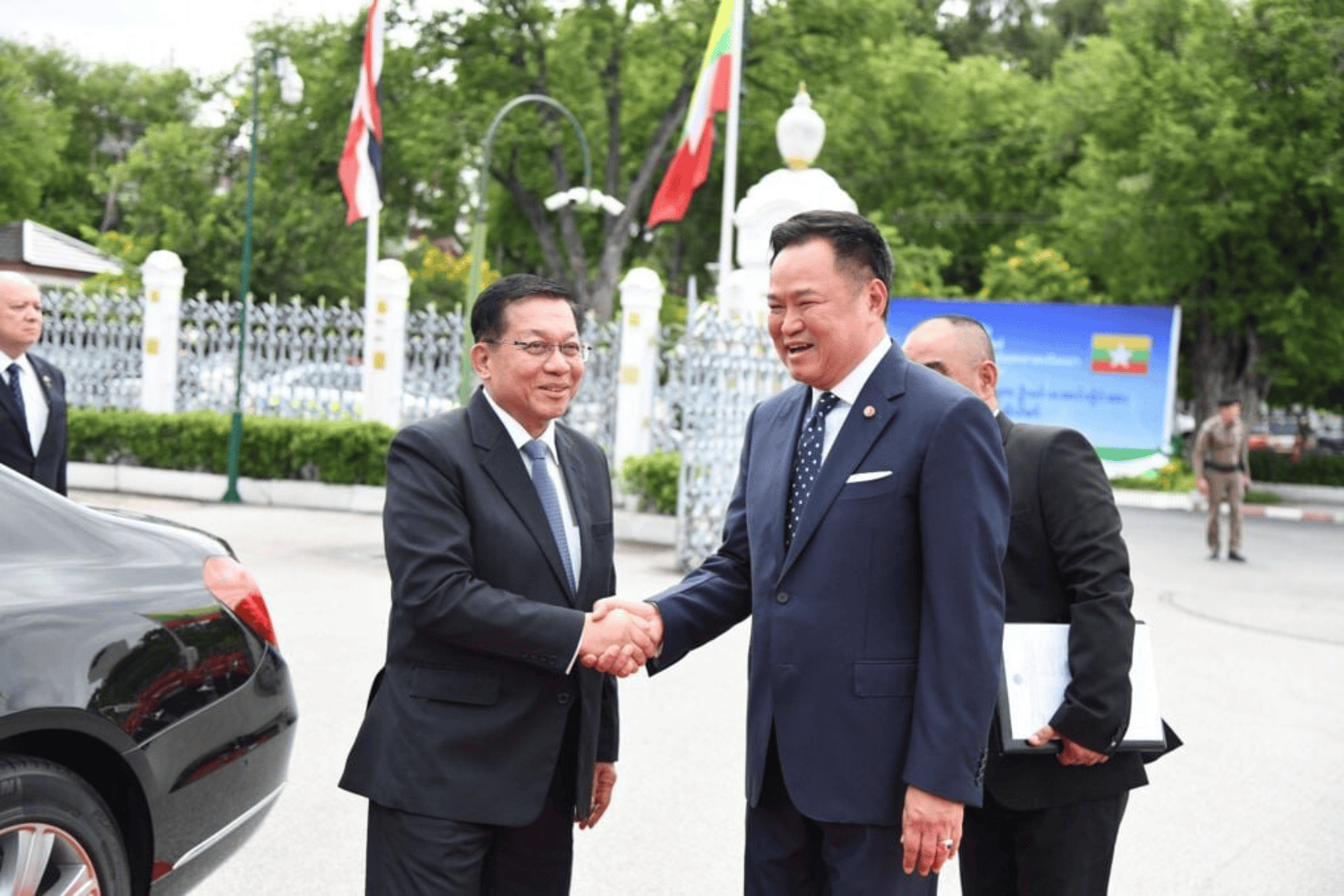
Thailand faces an uncomfortable question it ought to confront openly: does it engage with all its neighbours on the same diplomatic footing, or does its approach shift depending on a neighbour's economic clout, military strength, and strategic value?
This question comes from a Cambodian perspective — not one rooted in hostility toward the Thai people, but shaped by years of observing the Cambodia-Thailand relationship.
Thailand's self-image as a regional leader
Thailand routinely positions itself as a major regional power and a leading voice within ASEAN. That status carries obligations. A country that claims regional leadership should demonstrate consistent respect for sovereignty, territorial integrity, and peaceful conflict resolution — regardless of a neighbour's size.
Yet a closer look at how Thailand engages its various neighbours reveals notable discrepancies.
The Malaysia relationship: partnership and pragmatism
Thailand's dealings with Malaysia offer an instructive example. Bangkok has identified Kuala Lumpur as its top trading partner within ASEAN. In July 2026, Prime Minister Anutin Charnvirakul travelled to Malaysia to promote economic cooperation across trade, investment, tourism, border connectivity, and security. Both governments announced a target of $30 billion in bilateral trade and framed their shared border as an economic asset.
Thailand has also highlighted the strategic importance of cooperation with Malaysia for developing its own southern provinces.
None of this is objectionable. Dialogue and economic partnership are exactly how neighbouring states should interact. But it raises a pointed question: why doesn't the same spirit of accommodation extend to Cambodia?
If economic interdependence motivates Thailand to pursue negotiation and partnership with Malaysia, why do disagreements with Cambodia so readily escalate into confrontation, pressure, or nationalist rhetoric?
Myanmar: restraint when circumstances demand it
Myanmar presents another telling comparison. When fighting inside Myanmar spilled across the border — including an incident in April 2026 when a bomb landed on Thai soil in Mae Hong Son province — Thailand responded with evacuations and bolstered border security rather than military retaliation.
That measured response is reasonable for a government intent on preventing escalation. But it proves an important point: Thailand is perfectly capable of exercising restraint when it chooses to do so.
The real question, then, is not whether Thailand knows how to show restraint, but rather when — and toward whom — it elects to use it.
Cambodia: the convenient target?
This is where many Cambodians harbour legitimate concerns. Cambodia is not Thailand's adversary. Cambodian workers, traders, students, and families maintain deep ties with Thailand. The two nations share culture, geography, history, and an enormous web of personal connections.
Yet when disputes emerge, the public discourse on the Thai side can turn sharply confrontational — far more so than it does when Thailand deals with more powerful or strategically significant neighbours.
Intended or not, this creates the impression that the threshold for applying diplomatic pressure on a smaller neighbour is considerably lower than the threshold for confronting a larger one.
That double standard is the core issue Thailand should reckon with.
Size should not determine sovereignty
Military power does not confer greater sovereignty. A bigger economy does not grant special ownership of international law. A smaller population does not make a country's territorial rights any less valid, and being a smaller neighbour does not oblige Cambodia to stay silent when its interests are at stake.
Cambodia has increasingly turned to diplomatic and legal channels. On September 15, 2026, Cambodia and Thailand launched a UN-backed compulsory conciliation process over their maritime boundary dispute, with an opening session held in Singapore.
That is precisely the kind of mechanism ASEAN should champion: lay the evidence on the table, apply the law, and let diplomacy do its work before military power enters the picture.
The real test is consistency
Thailand cannot credibly advocate for regional peace while applying different diplomatic temperatures to different neighbours. It cannot insist that smaller states respect Thai sovereignty while simultaneously pressing those same states to yield whenever Thai interests are involved. And it cannot celebrate cooperation with one neighbour while allowing disputes with another to become fuel for nationalist sentiment.
The true measure of a country's foreign policy is not how forcefully it speaks but whether its principles hold steady when dealing with a weaker partner.
If Malaysia merits treatment as an essential economic and strategic partner, and if Myanmar warrants restraint despite serious border incidents, then Cambodia deserves an approach grounded in diplomacy, evidence, international law, and mutual respect.
There should be no separate standard for strong neighbours and weak ones. There should be a single standard.
A direct appeal
To Thai policymakers: do not mistake Cambodia's desire for peace for weakness. Do not equate a smaller economy with lesser sovereignty. Do not interpret a Cambodian call for international law as an act of hostility. And do not let political rhetoric drive a wedge between ordinary Cambodians and Thais.
Thailand's prominent role in ASEAN gives it an opportunity to model responsible regional leadership. Genuine strength is not found in pressuring a weaker neighbour — it is demonstrated by treating that neighbour with the same dignity and respect afforded to a stronger one.
Cambodia does not seek hostility with Thailand. It seeks a relationship built on equal sovereignty, evidence-based dialogue, international law, mutual respect, and peaceful coexistence.
Ordinary Thai citizens deserve the same. Borders may be drawn by governments, but peace is lived by the people on both sides.