Energy Minister Reports Stable Fuel Imports, 10- to 21-Day Supply Buffer
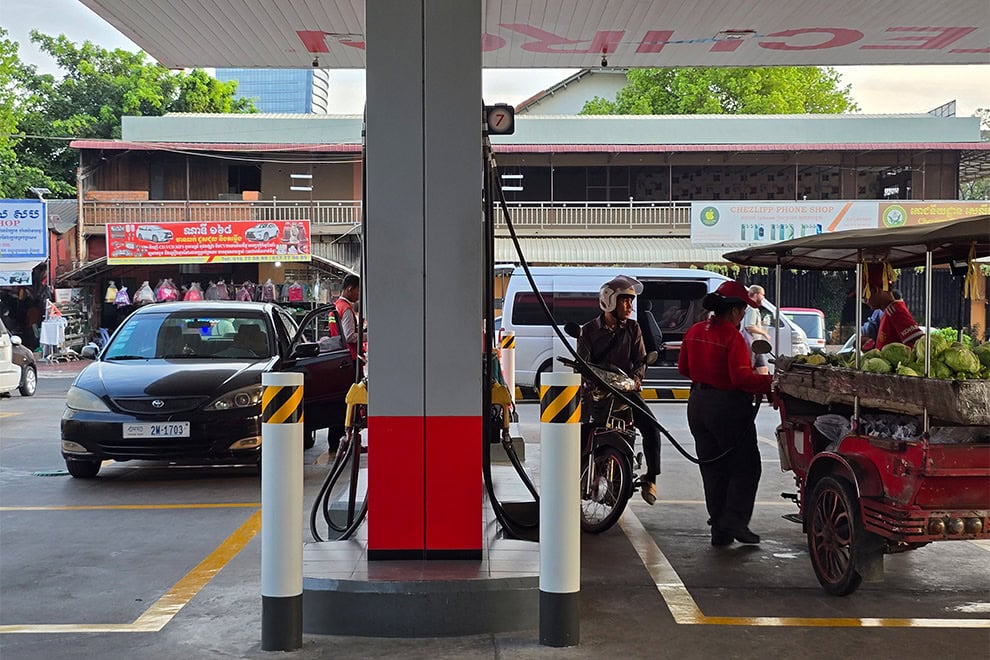
Cambodia’s fuel and liquefied petroleum gas (LPG) imports are proceeding without disruption, according to Minister of Mines and Energy Keo Rottanak. Speaking on September 25, he assured the public that current stockpiles and approved import plans provide a safety margin ranging from 10 to 21 days, depending on the fuel type.
Current Supply Levels
Rottanak outlined that reserves stand at 10 days for aviation fuel, 21 days for petrol, 15 days for diesel, and 10 days for LPG—if no new shipments arrive. He noted that these levels are similar to those observed before recent instability in the Strait of Hormuz, but stressed that imports have not halted.
The minister attributed the continued flow of supplies to Cambodia’s diverse sourcing strategy and regional partnerships, which have helped avoid logistical interruptions.
Government Support and Infrastructure
Alongside monitoring efforts, the government is maintaining its fuel price stabilization policies, jointly managed by the ministries of Mines and Energy, Commerce, and Economy and Finance. Additional storage infrastructure is also under development to bolster long-term energy security.
Global Market Concerns
Rottanak warned that international fuel markets remain volatile, citing the ongoing Russia-Ukraine war and heightened tensions near the Strait of Hormuz. He pointed to measures taken by other nations—including fuel conservation efforts—as further evidence of the fragile market conditions, urging Cambodians to use energy responsibly.
“While the government continues to closely monitor the situation and coordinate with suppliers, we encourage the public to conserve fuel and gas wherever possible,” he said.
Electricity Situation Remains Stable
On electricity, Rottanak confirmed that supply is unaffected, with tariffs unchanged and capacity sufficient. As of September 25, hydropower and solar contributed around 83.2% of the country’s generation, while coal accounted for 16%. Fuel oil is not currently being used for power generation.
Electricité du Cambodge continues to absorb rising coal costs to prevent electricity price hikes, he added.
LNG Power Plant Update
The minister also shared progress on the planned 900-megawatt liquefied natural gas (LNG) power plant in Koh Kong. Site preparation and construction of a gas receiving terminal are underway, and the first 450-megawatt turbine is en route to Cambodia.
Rottanak advised citizens to rely on official statements from government agencies as developments continue.