Energy minister says fuel imports remain stable, with 10- to 21-day supply buffer
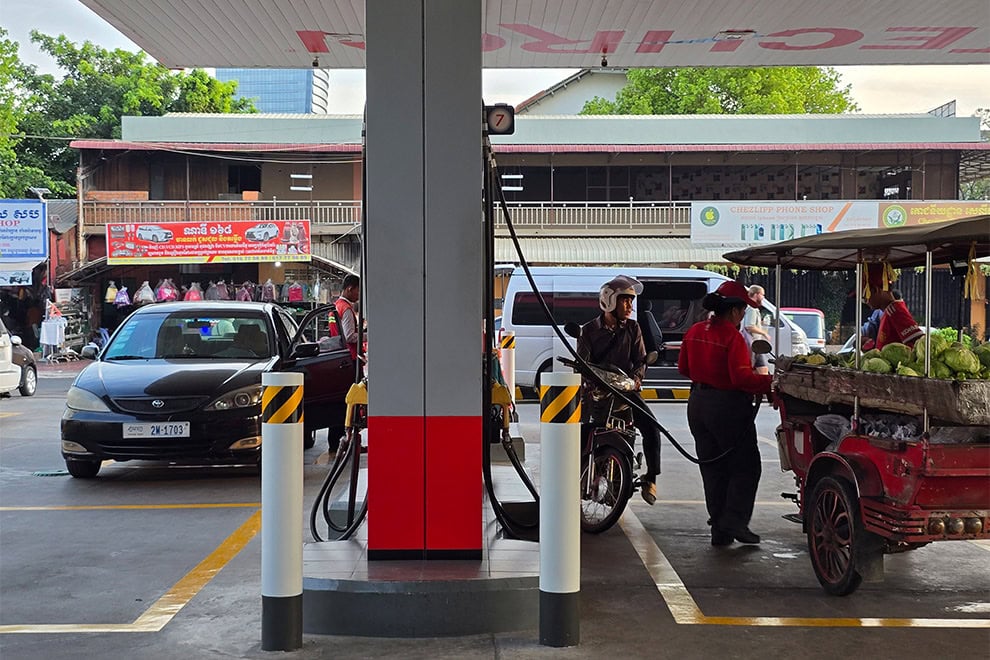
Cambodia’s fuel and liquefied petroleum gas imports are continuing without any visible disruption, Minister of Mines and Energy Keo Rottanak said on September 25, while also urging households and businesses to use energy more carefully amid uncertainty in global and regional markets.
He said the country’s existing stocks and approved import plans would be enough to maintain a supply buffer of 10 days for aviation fuel, 21 days for petrol, 15 days for diesel and 10 days for LPG if no additional shipments entered Cambodia.
The minister noted that this level of cover was similar to the situation before the crisis in the Strait of Hormuz, and stressed that the figures did not mean imports had stopped.
Imports, support and storage
Rottanak said Cambodia’s mix of suppliers and regional partnerships has allowed fuel and LPG shipments to continue without interruption. He added that the energy ministry, the Ministry of Commerce and the Ministry of Economy and Finance are maintaining the government’s fuel price support measures.
The government is also advancing plans for additional storage facilities to strengthen longer-term fuel security.
He warned, however, that the fuel market remains fragile, pointing to the prolonged Russia-Ukraine conflict and rising tensions around the Strait of Hormuz. Some countries, he said, have introduced restrictions aimed at conserving fuel, so Cambodians should use petrol, diesel and gas responsibly.
He said the government is closely monitoring the situation and working with fuel and gas suppliers on further measures, while calling on the public to save as much fuel and gas as possible.
Electricity supply unchanged
Rottanak separately assured the public that electricity supply remains normal, with sufficient capacity and no change to tariffs. As of September 25, he said hydropower and solar energy were accounting for about 83.2% of Cambodia’s electricity, while coal supplied 16%. No fuel oil was being used for power generation at the time.
He said Electricité du Cambodge would continue to absorb higher coal costs and prevent an increase in electricity prices.
LNG plant progress
The minister also provided an update on the planned 900-megawatt liquefied natural gas power plant in Koh Kong province. Site preparation and construction of a gas receiving port are under way, while the first 450-megawatt turbine is being transported to Cambodia, he said.
Rottanak asked the public to follow official updates from the relevant government institutions as the fuel situation develops.