Flood survivors abandon temporary camps in Nepal as rehabilitation stalls
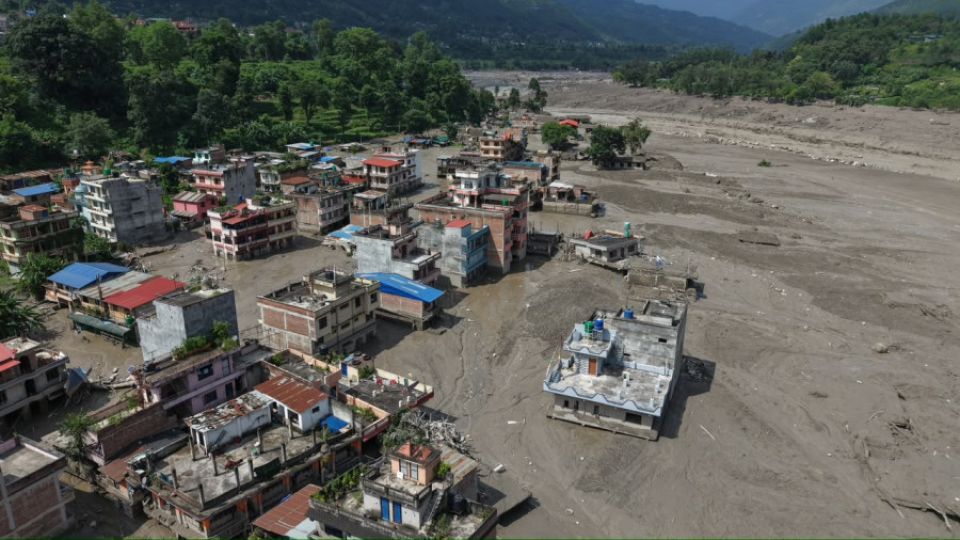
KATHMANDU — Blemde Ghale, 28, of Khalte in Rasuwa, buried four members of his family in the Bhotekoshi flood: his mother, his eight-year-old son Roman and his two brothers. He and his four-month-pregnant wife got out alive, but on September 25, a month later, she lost the child she was carrying.
After leaving Khalte, the couple stayed briefly at a holding centre in Laharepauwa before shifting to Pipaltar in Nuwakot. On September 22 rainwater seeped through their tent and soaked both their clothes and the rice and lentils handed to them as relief. “We could not sleep the whole night because of the cold and the stress,” Ghale said. The following day he decided to rent a room in Bidur, though he had no idea how he would pay for it.
Ghale is one of hundreds of survivors who lost nearly everything in the flood, sheltered in temporary camps for a few weeks and then moved on because the living conditions there were woefully inadequate. Most now live in rented rooms across Bidur Municipality, and some have gone as far as Kathmandu. With authorities dragging their feet on rehabilitation, survivors are steadily drifting away from the camps established after the disaster.
The flood destroyed more than 7,500 houses in Rasuwa, Nuwakot and Dhading. Roughly 4,500 people took refuge in emergency shelters in the days immediately after, but only about 1,000 remain there, according to the National Disaster Risk Reduction and Management Authority.
“We came to Kathmandu to save our lives,” said Nabin Raila of Sole in Bidur Municipality. “Every day, staying in the camp became harder.” Even after securing a room in Kathmandu, he said, the couple worries about the rent and about what to eat.
The government has announced Rs15,000 per family per month for six months, but flood victims have received none of it. They now fear they will end up like the squatters once evicted from the riverbanks of the capital, most of whom left the holding centres citing poor management and no certainty of permanent resettlement.
“The government has not even given us money to conduct the funeral rites of our loved ones,” said Raila, who lost his mother, brother and sister-in-law, along with his house and fields. Buti Tamang, still at a camp in Pipaltar, said only those with nothing left and nowhere else to go remain in the camps. She lost 43 relatives, including her husband, Krishna Bahadur Tamang, and her parents. Her hotel in Naubise and her grocery stores in Mailung and Shubhaghat were swept away.
Ghale and Tamang were among survivors uprooted from Gogane in Rasuwa by the 2015 earthquake. They relocated to Khalte Bagar after engineers and geologists working for the then National Reconstruction Authority ruled their old settlement unsafe and in need of relocation. They first rented private land at Naubise and built makeshift shelters, then moved to Khalte Bagar when the rent became unaffordable and no government assistance was forthcoming. Many of those living there were carried off by the flood on August 26. Some survivors are now renting land in Pipaltar and living under tarpaulins.
The tarps were of such poor quality that not a drop of water was kept out, said Uddhab Rijal, chief of the Nepal Red Cross Society's Nuwakot district chapter. “Once their belongings were soaked through, we mobilised volunteers quickly and covered the shelters with plastic sheets,” he said.
Rijal said the rain soaked people as well as their possessions, leaving some of them ill. He added that he caught a cold and fever himself after being drenched while working at the camps.
Bishwas Nepali, a writer and activist assisting the flood-displaced in Rasuwa, said many have relocated to Kathmandu and elsewhere because the camps are barely habitable and they want their surviving children to keep studying. According to him, aid organisations are eager to help; the real problem is that the state has not said what type of housing it will build, where it will be built, or whether it will ask aid agencies to construct it.
“Keeping victims in limbo this long without a decision will only prolong their suffering,” Nepali said. “The state has to understand the plight of displaced people. Some survivors fled with nothing but the clothes on their backs. They lost everything, mobile phones included.”
Flood victims and activists working in the affected areas said the temporary shelters are no longer fit to live in, and that their greatest fear is the winter ahead. Some displaced households now consist only of children, others only of elderly members. Those who could have gone out to earn a living were unable to leave, since vulnerable relatives would have been left without care.
Donors have said they cannot release assistance until the central government makes a decision, raising fears that the displaced will have to endure harsh conditions for an extended period.
The National Disaster Risk Reduction and Management Authority has said displaced families of four will receive Rs15,000 a month for six months in rent support, while those choosing temporary settlement will get a one-time payment of Rs50,000. Yet no family of the deceased or displaced has received any money.
“We have registered 580 people from our municipality as missing and 1,536 families on the displaced list,” said Salikram Ghimire, chief of the information technology section at Bidur Municipality. “But we have not paid relief to anyone so far.”
Municipal officials expect the number of displaced families to grow as those who left for Kathmandu and other areas come back to the district to register.
“We have not declared anyone dead, nor have we provided money for funeral rites,” Ghimire said. Rabindra Nepal, chair of Bidur-7, added that 175 families in his ward have been listed as displaced, and not one has received relief money so far.
Authority officials said that unless a new decision is taken, flood-displaced people will receive relief under the existing guidelines. “For victims to get the relief amount, the respective local units have to identify them as displaced and recommend a relief amount,” said authority spokesperson Shanti Mahat, adding that local bodies are still verifying the number of victims and affected families.
Tamang, who remains at the Pipaltar camp, said the delay and uncertainty are wearing her down. “We have nowhere to go,” she said. “Sometimes I wonder why I survived the flood at all.”