Foreign Minister Says Cambodia Is Exposing the Truth About Thai Occupation, Not Playing the Victim
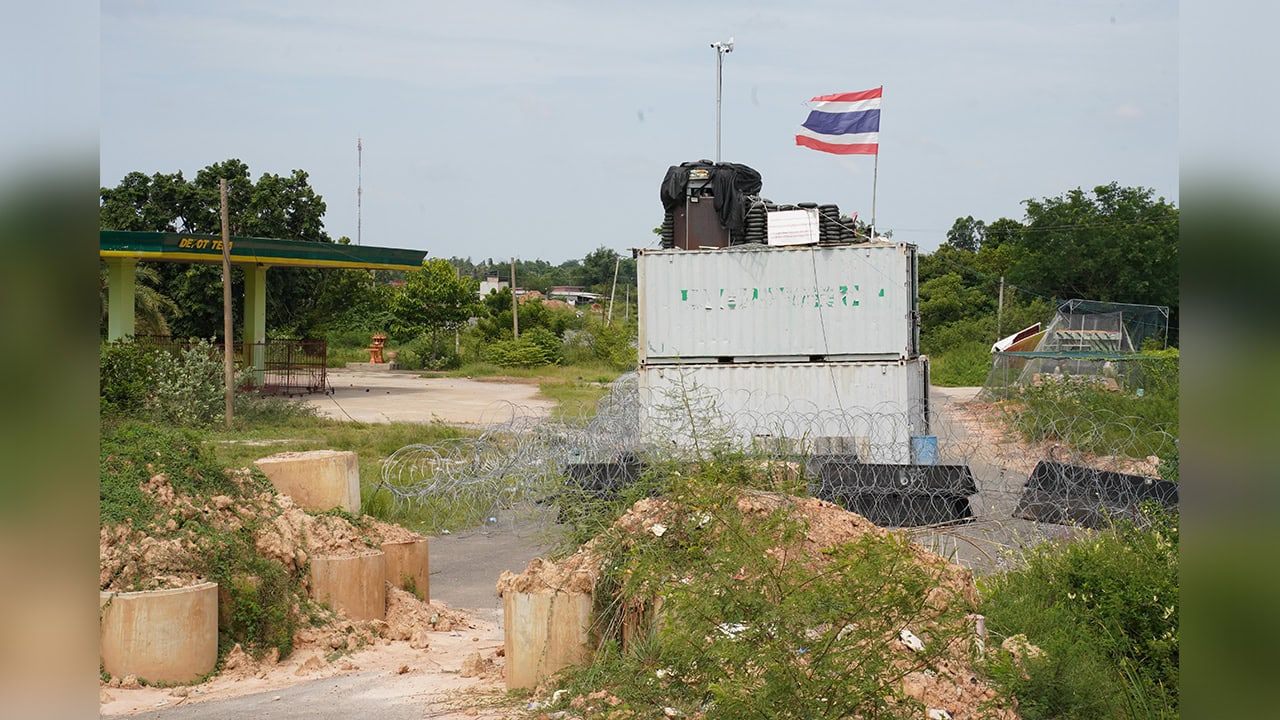
Cambodian Foreign Minister Prak Sokhonn has rejected claims that his country is casting itself as a victim on the international stage. He argued that Cambodia cannot deny that Thai troops are occupying Cambodian land and keeping more than 20,000 displaced people from returning home.
Speaking in a special interview with National Television of Cambodia (TVK) on October 20, Sokhonn said his country has no need to pretend to be a victim, because it is one. He stressed that Cambodia cannot stay silent about what it sees as violations of its sovereignty and territorial integrity, especially while tens of thousands of civilians remain cut off from their homes.
According to Sokhonn, Thai forces continue to hold areas that Cambodia says lie within its sovereign territory, which is preventing residents from returning to their villages. He said raising these issues in international forums is a legitimate way for Cambodia to defend its interests and present the facts. He rejected the suggestion that Cambodia is inventing allegations or exploiting humanitarian suffering to win sympathy abroad.
His comments come amid ongoing disputes between Cambodia and Thailand over the situation along their shared border and the implementation of the December 27, 2025 ceasefire agreement. Cambodia has repeatedly urged Thailand to honor existing agreements, including provisions meant to let civilians affected by the conflict return home safely and without obstruction.
Sokhonn reaffirmed that Cambodia remains committed to resolving disputes peacefully through negotiations, bilateral mechanisms and international law, rather than through military confrontation. He also stressed that the land and maritime boundary disputes with Thailand are separate matters, each governed by its own legal framework and dispute-resolution mechanism.
He acknowledged that tensions on land could weigh on the atmosphere of maritime talks, since any successful settlement depends on mutual trust. Sokhonn said Cambodia had made clear to the conciliation commission that its decision to start maritime conciliation under UNCLOS should not be used as a reason to suspend or end land boundary negotiations. He explained that the maritime process was launched to protect Cambodia's legitimate rights after Thailand unilaterally terminated the 2001 memorandum of understanding that governed maritime negotiations.
The dispute also played out in Geneva. On October 14, Thailand's representative at the 77th session of the Executive Committee of the UN High Commissioner for Refugees (UNHCR) rejected Cambodia's claims of territorial occupation. Benjamin Sukanjanajtee, Thailand's ambassador and permanent representative to the UN in Geneva, argued that the buildings Cambodia described as displaced families' homes are located inside Thai territory. He said Thailand's security measures complied with the December 27 ceasefire, which required both sides to keep their military positions as they were when the truce took effect.
Cambodia rejected that interpretation. Keo Sovann, Cambodia's ambassador and permanent representative to the UN in Geneva, called Thailand's account an inaccurate picture of the border situation. He maintained that Cambodia neither started the conflict nor tried to escalate it, and that its concerns about displaced civilians are genuine humanitarian issues that need to be resolved.
During the same interview, Sokhonn discussed the outcome of the second UNCLOS Conciliation Commission meeting. He said both countries had agreed to a package of confidence-building measures designed to reduce tensions and support peaceful negotiations. One of these measures recognizes each side's right to speak publicly to defend its legitimate rights and interests or to correct factual misinformation and disinformation. The parties also agreed on the importance of constructive public communication and on avoiding accusations that could undermine confidence in the conciliation process.
The agreement matters because Cambodia and Thailand continue to offer sharply different accounts of the conflict, including over territorial control, civilian displacement and responsibility for the fighting. Sokhonn said Cambodia will keep presenting its position through diplomatic and legal channels while respecting the peaceful process. He emphasized that conciliation is not a court meant to decide which side is right or wrong. Instead, it is designed to narrow differences and help reach a maritime settlement both sides can accept.
At the meeting in The Hague, held from October 14 to 18, the Cambodian and Thai delegations presented their legal arguments, positions and supporting evidence to the commission in separate confidential sessions. The talks also covered confidence-building steps, including setting up a direct hotline between the two navies' commanders, restoring diplomatic representation, and refraining from threats or the use of force in maritime areas.
Sokhonn described the second meeting as constructive, saying it helped the commission better understand Cambodia's position and moved both sides closer to building trust. However, no final agreement on maritime boundary delimitation has been reached.
The third meeting of the Cambodia-Thailand Conciliation Commission is scheduled for Kuala Lumpur, Malaysia, from November 23 to 27, 2026. A fourth meeting is planned for The Hague in late January 2027.