
From floating homes to solid foundations: Three decades of progress in China’s Xiaqi village
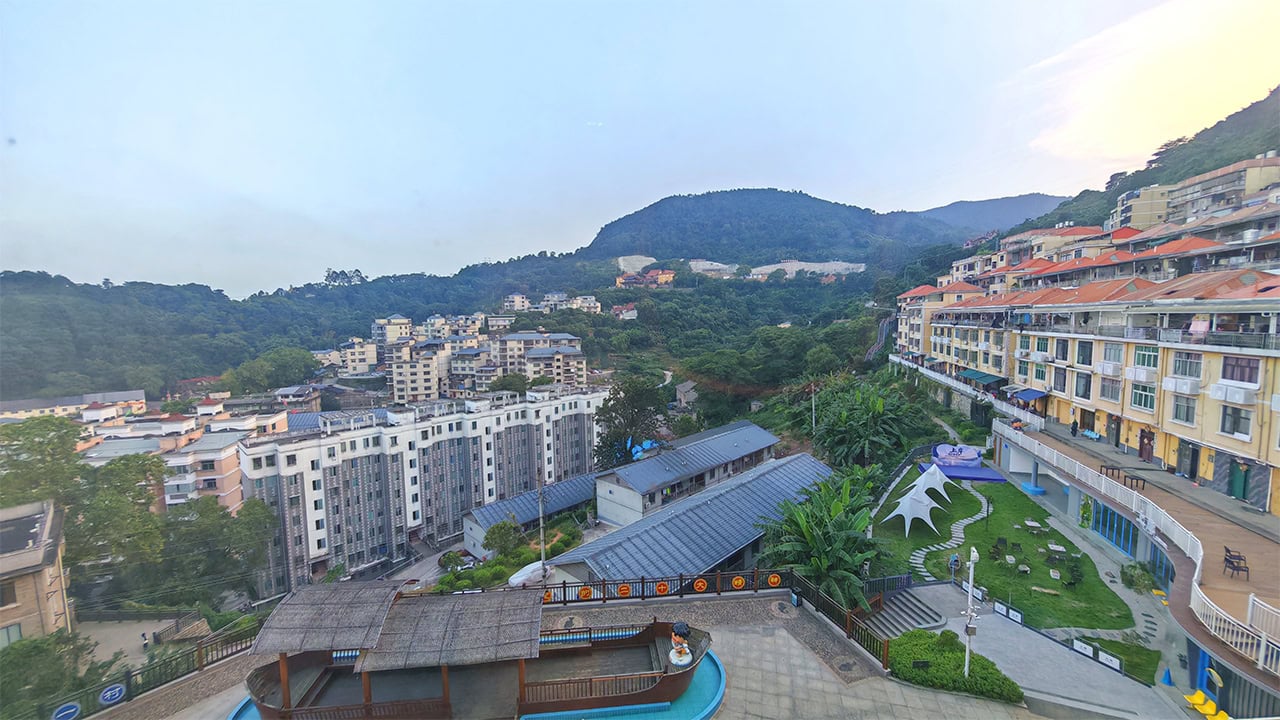
For generations, the Lianjia people of Xiaqi village lived entirely on the water. Their small wooden boats — typically just six or seven metres long — served as home, kitchen, bedroom, and workplace all at once. Families crowded into cramped central cabins, fished from the bow, and improvised sanitation at the stern. Those without boats built fragile shelters from linoleum and woven sacks along the shore, left exposed to heat, cold, and storms.
The dangers were ever-present. Former boat dweller Jiang Chengcai recalled the constant fear of children falling overboard or boats capsizing in rough seas. Some parents resorted to tying ropes around toddlers to keep them from being swept away. Access to healthcare was virtually nonexistent; Jiang's mother fell ill aboard the family boat and died young because she could not reach a doctor in time.
That difficult chapter began to close in the late 1990s. Between 1997 and 1999, Xiaqi launched its first organised resettlement programme, building 339 homes along the shoreline to house 511 families totalling more than 2,300 people. The government provided free land, a one-off housing subsidy of around 200 dollars per resident, and basic furnishings including stoves, beds, and electric fans. Roads, running water, electricity, and communication networks were developed from scratch. The single-storey houses were designed with space for bathrooms and stairways so families could add upper floors as their finances improved.
Zheng Yue'e, who grew up on a fishing boat and now serves as secretary of the Xiaqi village Party branch, returned to the community in 1996 and has witnessed the entire transition. "When I first came back, the Lianjia were still living on their boats," she told visiting journalists. She described how early residents had to learn entirely new livelihoods. "At the beginning, they knew only how to fish and had few other skills."
Through government-organised training, former boat dwellers learned aquaculture techniques and other trades. Many residents saved money to expand their original homes. Jiang, who had received almost no formal schooling, secured a loan with village support to start shellfish farming and later established a construction team employing other relocated locals. But illiteracy took a toll — unable to read contracts, he had to pay an educated assistant and eventually turned to his son for help with legal and financial paperwork. The experience convinced him to prioritise his grandchildren's education.
The results have been striking. By 2024, Xiaqi had produced more than 300 university graduates. Villagers' annual per capita net income rose from under 1,000 yuan before resettlement to nearly 33,000 yuan in 2023. Employment now spans aquaculture, seafood processing, construction, restaurants, hotels, tourism, and online commerce, while major steel, automotive, and new-energy industries in the surrounding Ningde area offer additional jobs within commuting distance.
The village population has grown from roughly 2,770 during the early resettlement period to about 3,570, driven by births and marriages between locals and people from outside the community. "In the past, life here was so difficult that many fishermen could not find wives," Zheng said. "Now that living conditions have improved, women from other places are willing to marry residents of Xiaqi."
A second housing project in 2013 provided new accommodation for 120 additional households whose earlier homes had become overcrowded or whose resettlement sites lacked adequate infrastructure.
Xiaqi's transformation is closely linked to the early career of Chinese President Xi Jinping, who served as Party secretary of Ningde prefecture from 1988 to 1990. During that period, six of the prefecture's nine counties were classified as impoverished. Xi travelled extensively through the region and identified the Lianjia boat dwellers and ethnic She mountain communities as especially disadvantaged. After taking on senior roles elsewhere in Fujian, he continued to promote the relocation of water-dwelling families, visiting Xiaqi for inspections in 1998 and 2000.
At a village exhibition centre, photographs, household objects, and reconstructed living quarters preserve the memory of those earlier years. The displays make clear that moving ashore was only the first step. The harder task — helping people who had fished for generations adjust to permanent homes, attend school, find employment, and build new skills — unfolded over decades.