
Fujian aquaculture model offers lessons for Cambodia, ASEAN
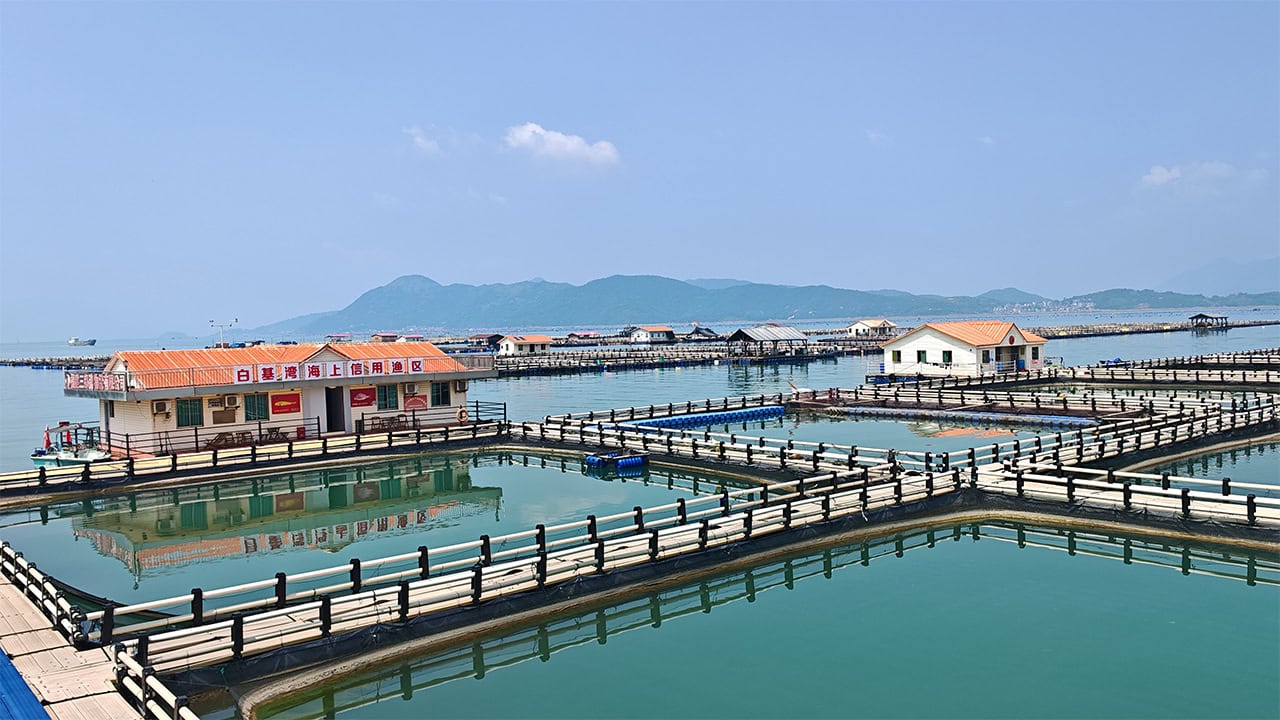
Chinese aquaculture entrepreneur You Weide believes that despite stark differences in climate, Cambodia and other ASEAN nations can learn a great deal from the successful fish-farming industry in China's Fujian province — not by copying it outright, but by adapting its methods to local conditions.
You, who chairs Ningde Guanjinyang Large Yellow Croaker Breeding Co Ltd, Fujian Sandu'ao Foods Co Ltd and Fujian Sanduao Logistics Co Ltd, told journalists that the real value of Ningde's experience lies in transferring breeding technology, production standards and integrated supply-chain practices to species that thrive in Southeast Asian waters.
\"The natural conditions in ASEAN countries are not suitable for raising the same species, but our aquaculture technology and management experience can still be shared,\" You explained during a presentation on the industry's development. \"Each country can select species suited to its own environment and apply our experience in breeding, feeding, disease prevention, quality control and processing.\"
The large yellow croaker, the species at the heart of this success, is native to the coastal waters of eastern China. It has become closely tied to Ningde, where sheltered bays, deep water and favourable currents create ideal growing conditions. The fish was once badly depleted in the wild, but government backing, scientific research and advances in breeding techniques have turned it into a commercially farmed product and a major source of income for coastal communities.
You said the industry's rise shows how research, public policy, private investment and community participation can work together to revive an important aquatic resource while creating jobs and strengthening the local economy.
\"In the past, fishermen here lived very difficult lives. With the development of the aquaculture industry and improvements in technology, their livelihoods have gradually become better,\" he noted through an interpreter.
A full production chain
The Ningde model spans the entire production chain, from broodstock selection and hatchery development to cage farming, specialised feed, disease management, processing, packaging and distribution. The companies behind it have invested heavily in fish breeding and feeding research while introducing modern cages and mechanised feeding systems to lift efficiency.
Different equipment and feed are also used for other aquatic products such as abalone, lobster and shrimp, showing how the technology can be tailored to the needs of each species. This species-specific approach is especially relevant for Cambodia, which has its own water temperatures, ecological conditions and locally important freshwater and marine fish.
You stressed that strict quality control is essential at every stage, particularly for products headed to demanding markets. Modern machinery handles cleaning and packaging, while products are inspected before they are shipped.
\"Our system controls every stage of production to ensure that local products meet good quality standards,\" he said. \"Quality is very important, and appearance and colour also influence whether consumers accept the product.\"
Linking processing and logistics to fish farming has allowed the companies to move beyond selling unprocessed fish — an integrated approach that could be a useful reference for ASEAN producers, many of whom struggle with cold-chain infrastructure, storage, packaging and access to higher-value markets.
Government support and sustainability
You said government involvement has been crucial to the industry's expansion, through support for research, improved equipment and better fish breeds. \"The local and central governments have paid close attention to the industry. They have supported the introduction of new facilities, machinery and technology,\" he highlighted.
Yet he cautioned that growth must not come at the expense of the marine environment. Clean water and healthy coastal ecosystems are vital to maintaining fish health and production quality over the long term. \"We depend on the sea for our livelihoods, so we must protect it well if we want to continue benefiting from it in a sustainable way,\" he said.
The sector's growth has also reshaped employment in coastal communities. While many residents still work in fish farming, young people who attend university can return to take up technical, administrative and processing roles in aquaculture companies. You said this blend of traditional knowledge, professional training and modern technology has helped turn fish farming into a broader industry supporting both rural livelihoods and skilled jobs.
You has long worked in aquatic breeding, aquaculture and seafood processing and holds positions in several fisheries and agricultural industry associations in Fujian and Ningde. His companies have been recognised at national and provincial levels in China's agricultural industrialisation and fisheries sectors, and he has reportedly donated roughly 38.76 million yuan (about $5.8 million) to projects including a primary school, scholarships for disadvantaged university students, roads, drinking-water systems and activity centres for elderly residents.
For Cambodia, adapting the Fujian lessons to native and commercially viable species could boost production, strengthen food security and raise incomes in fishing communities — without relying on an ecologically unsuitable imported fish. Chinese entrepreneurs believe Cambodia and other ASEAN members can carry much of Fujian's success into the growth of their own industries.