Government Urged to Open Up Biodiversity Data and Prioritise Fact-Based Environmental Reporting
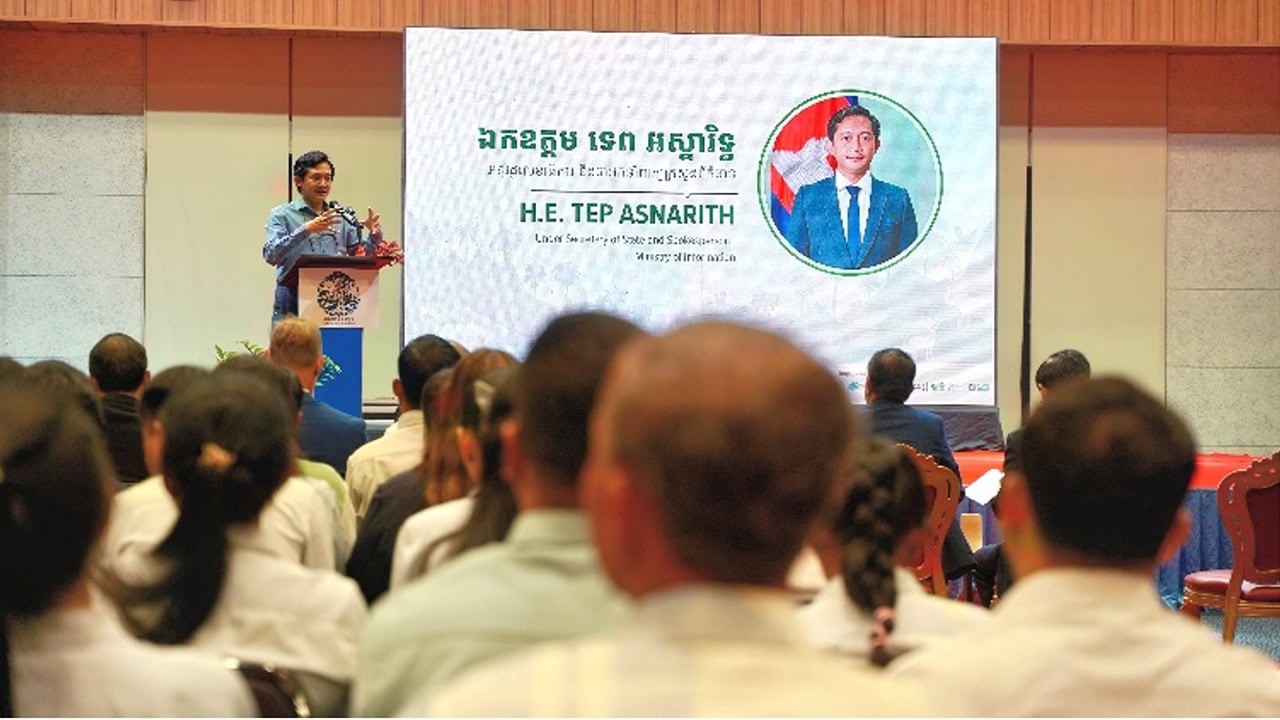
The Ministry of Information is calling on government bodies and conservation groups to make scientific data, newly identified species and research on natural resources more readily available to the public. It is also asking journalists to put accurate, fact-based reporting first, arguing that it can help protect wildlife and support the livelihoods of local communities.
Ministry spokesperson Tep Asnarith made the appeal at the opening of the “Amazing Nature of Cambodia” campaign at AEON Mall Sen Sok City in Phnom Penh on 24 October. Speaking on behalf of the information minister, he said environmental stories built on verified facts, scientific evidence and reliable sources can build public trust and encourage conservation, nature-based tourism and higher incomes for local communities.
He described responsible journalism as a bridge that brings knowledge of protected areas, forests, biodiversity and local people closer to the public. Accurate information, he added, can turn awareness into real action that helps safeguard Cambodia's natural resources for sustainable development.
Calling for greater transparency
Asnarith urged government institutions and conservation organisations to be more open by sharing scientific research, biodiversity discoveries, findings on how protected areas are managed and details of projects that support local livelihoods. Easier access to this material, he said, would help journalists produce educational content that shows the public why natural resources matter and how people can help protect them.
He also encouraged media outlets to connect environmental issues with tourism, culture, health and education, highlighting the link between conservation and socio-economic development.
Guidance for journalists
Asnarith reminded reporters and content creators to research their subjects thoroughly, rely on credible and official sources, and include the views of all stakeholders. He stressed professional ethics and responsible reporting, particularly when covering rare wildlife, natural attractions and the illegal trade in natural resources.
Beyond scenic destinations, he asked journalists to highlight communities living around protected areas, including their traditional livelihoods, cultural heritage and involvement in conservation work. Journalists and citizen reporters, he said, act as messengers who share the real-life experiences of local people, including their way of life, customs and the ancient cultural heritage of Indigenous communities.
About the campaign
“Amazing Nature of Cambodia” is co-organised by Conservation International Cambodia, the Wildlife Conservation Society (WCS), Wild Earth Allies, Wonders of the Mekong, IBIS Rice, Sam Veasna Conservation Stays, WWF, NatureLife Cambodia, Fauna & Flora, WWT and IUCN. Government institutions and private-sector partners, including AEON Mall Sen Sok City, Siempang Forest Lodge, Cardamom Tented Camp and Canvas & Orchids Retreat, are also involved, alongside media partners, educational institutions, youth groups and local communities. The two-day event aims to make conservation knowledge easy to understand and to open the door to collaboration beyond its close.
The initiative is aimed in particular at urban young people, showing them why Cambodia's forests, rivers, wetlands and coastal ecosystems matter for livelihoods, public health and cultural identity.
Small steps for young people
Asnarith encouraged young people to adopt more environmentally responsible habits, such as cutting back on plastic use, refusing to eat bushmeat and taking part in conservation activities.
He reaffirmed the ministry's commitment to working with government agencies, conservation groups and the private sector to improve environmental communication and encourage public involvement in protecting Cambodia's natural heritage for future generations.