Hun Manet Insists on Cambodian Venue for Talks with Um Sam An, Offers On-Site Verification
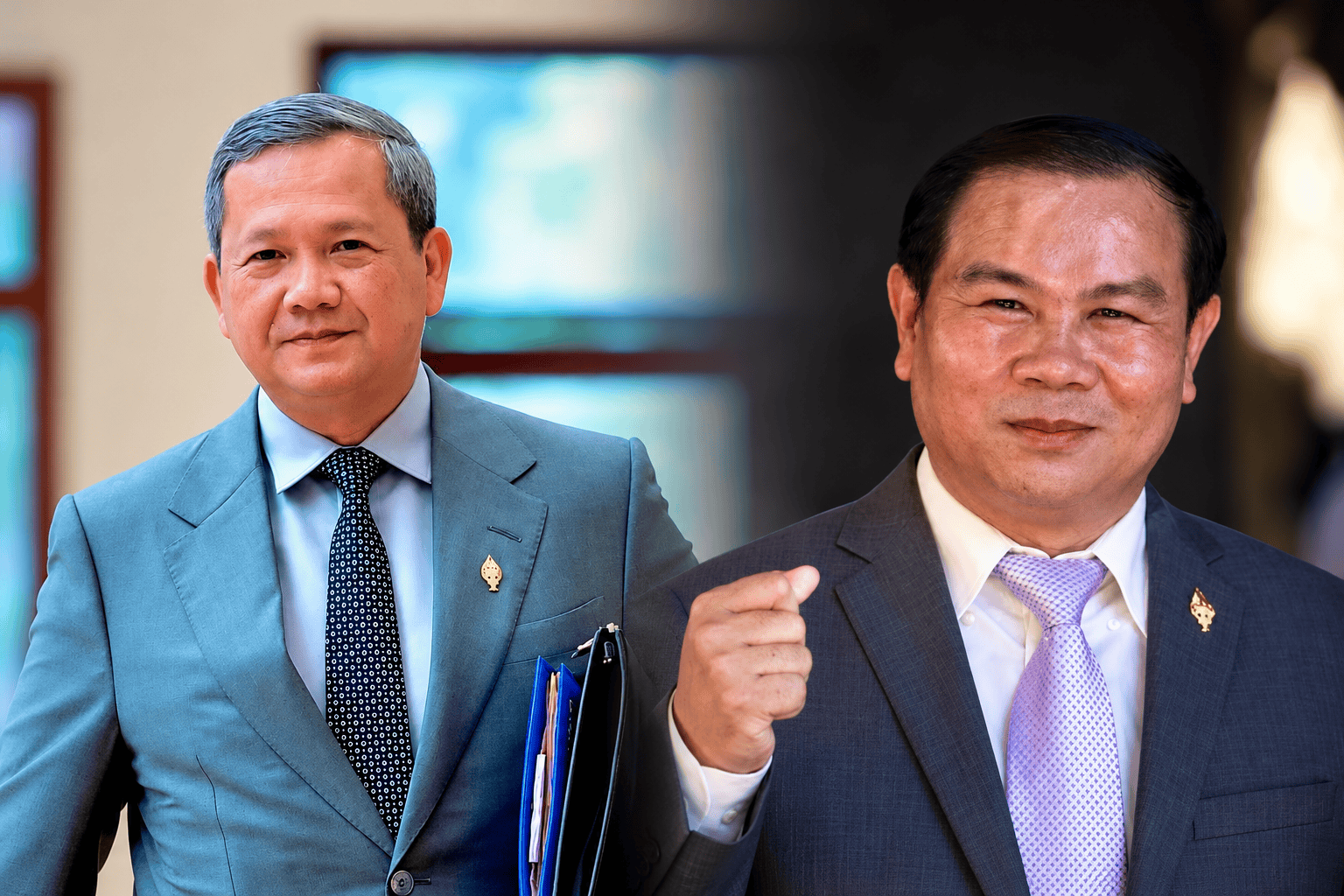
Prime Minister Hun Manet has once again invited former opposition lawmaker Um Sam An and his team to take part in discussions inside Cambodia about the disputed Cambodia-Thailand border between boundary pillars 52 and 59. He argued that holding the talks in Cambodia would allow for on-site verification if documents and technical discussions fail to settle the matter. He also offered to let foreign embassies or civil society organisations monitor Sam An's safety.
The renewed invitation followed Manet's review of an roughly 80-minute response from Sam An to his earlier request. That request asked Sam An to present evidence supporting his claim that temporary border markers placed between pillars 52 and 59 had caused Cambodia to lose territory to Thailand.
In his latest message, Manet said Sam An had not yet given a firm answer on whether he would accept the invitation. Sam An has voiced concern for his personal safety if he returns to Cambodia. According to Manet, Sam An fears he could be shot or face some other form of violence. Sam An has indicated that he would be willing to meet if the talks were held outside the country.
Manet gave two main reasons for holding the discussions in Cambodia. First, Cambodian citizens would be able to watch the exchanges firsthand. Second, all parties could inspect the disputed border area if needed. He warned that talks based only on documents or maps shown across a table might not be enough to resolve technical border questions, and could instead sow further confusion among the public.
“If discussions at the table do not produce a clear and conclusive outcome, then only verification on the ground can provide clarity,” Hun Manet said.
The new proposal goes further than the prime minister's original invitation, which asked Sam An and his team to bring any documents and evidence to direct talks with officials from the State Secretariat of Border Affairs over the placement of the temporary markers.
On security, Manet repeated his personal guarantee that Sam An and his team would be protected for the duration of their stay in the Kingdom. He went further, saying that if Sam An still doubted the government's assurances, he could request additional security monitoring from a foreign embassy in Cambodia or from a civil society organisation he trusts.
Manet said his public guarantee reflected his personal responsibility. He argued that any incident involving Sam An would damage public confidence in his leadership. He added that if he intended any harm toward Sam An, there would be no reason to make such a public promise, since any incident would expose him to accusations and undermine his credibility.
Manet also said he wanted the talks to be open to observers, including journalists, political party representatives, civil society groups, students, intellectuals and ordinary citizens, among them Sam An's supporters. He framed public participation as a way to show transparency, accountability and responsibility on border issues that have worried many Cambodians.
The prime minister further argued that if Sam An truly valued and trusted Cambodian citizens living in the country, he should consider accepting the invitation so that he could hear explanations from both sides.
The exchanges between Manet and Sam An stem from claims that temporary markers installed by members of the Cambodia-Thailand Joint Boundary Commission (JBC) between pillars 52 and 59 had cost Cambodia territory.
Manet rejected these claims, calling them serious accusations against both the government and Cambodian border specialists who have spent decades defending the country's sovereignty and territorial integrity. He stressed that claims of territorial loss cannot be proven on the word of either side alone.
Establishing the locations of the markers and the legal status of the boundary, he said, requires a review of relevant legal documents, maps and technical data. He also stressed that placing temporary markers is different from the formal demarcation of an international boundary. Conflating the two, he warned, could lead to conclusions about changes in sovereignty or territorial losses without sufficient evidence.
Manet's on-site verification proposal could become a key part of the discussions if both sides agree to meet. However, any inspection would first require clear arrangements on technical procedures, security and the necessary authorisations, especially while the Cambodia-Thailand border issues remain unresolved.