Hun Manet Outlines a Two-Track Approach to Cambodia's Border Disputes with Thailand
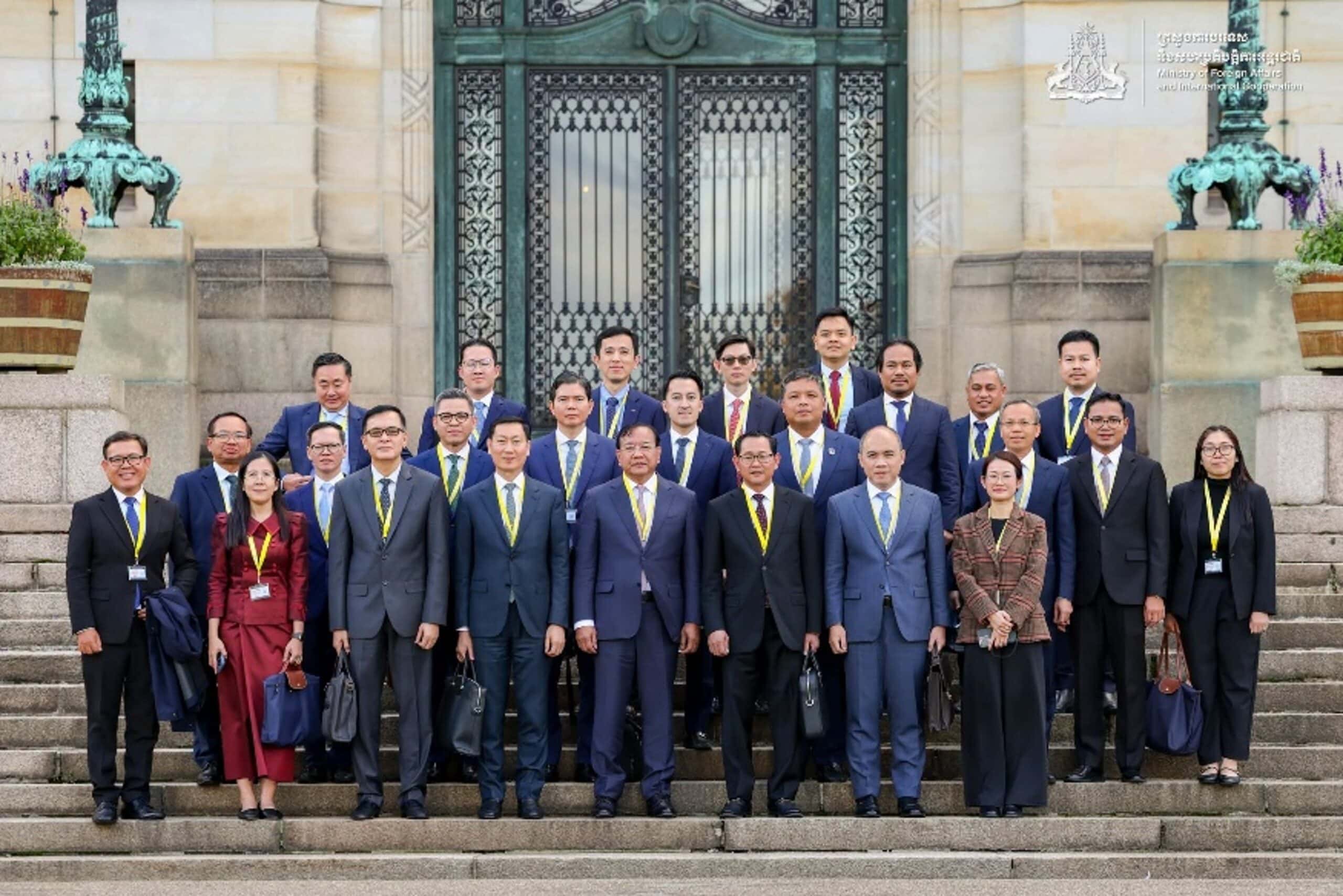
Prime Minister Hun Manet has reaffirmed Cambodia's position on resolving its disputes with Thailand. Land boundary questions should be handled through bilateral talks in the Joint Boundary Commission (JBC), while the maritime boundary should go to compulsory conciliation under the United Nations Convention on the Law of the Sea (UNCLOS).
In a social media post on October 16, he said the method chosen for any dispute should suit the situation on the ground and rest on sound, documented legal foundations.
Two tracks for two kinds of boundary
His message came as a Cambodian delegation, led by Foreign Minister Prak Sokhonn, took part in the second session of the Conciliation Commission at the Peace Palace in The Hague, the Netherlands. The meeting runs from October 14 to 18.
Manet described the two paths. For the land boundary, Cambodia wants to move forward through bilateral channels, namely the JBC. For the sea boundary, it is pursuing international mechanisms, specifically compulsory conciliation under UNCLOS. He called border negotiations a major responsibility to the nation and its people, one that calls for meticulous work and patience in order to protect sovereignty.
He also warned against building positions on weak material, such as television reports, social media posts, hearsay or guesswork. Any case, he said, must stand on a clear and reliable foundation. He extended his best wishes to the Cambodian delegation and its legal team.
The Hague conciliation
The commission is chaired by Katrina Cooper, with the Permanent Court of Arbitration acting as its registry. Thailand's delegation is headed by Foreign Minister Sihasak Phuangketkeow. The commission was established under Annex V of UNCLOS, and this round follows an initial session in Singapore in September. The goal is to dig deeper into the issues and identify areas of agreement on delimiting the maritime boundary.
On October 15, Cambodia's foreign ministry said both sides must refrain from commenting publicly on the outcomes until the commission issues an official press release, as stipulated in their agreed Rules of Procedure.
Cambodia has put forward two main options: a treaty establishing a single, all-purpose maritime boundary, or an agreement on joint development and fair sharing of resources until a final boundary is settled. If neither is possible, Cambodia has asked the commission to prepare recommendations to guide future negotiations.
Ahead of the meeting, Thailand's foreign ministry said it was ready to cooperate with the commission and to provide relevant technical information in pursuit of a fair outcome based on international law.
Displaced civilians and competing claims
Land boundary issues and the return of displaced people remain points of contention between the two countries. Speaking in Geneva on October 13 at the 77th session of the Executive Committee of the UN High Commissioner for Refugees' Programme, Cambodia's ambassador to the UN, Ke Sovann, said that at its December peak, last year's border conflict displaced roughly 650,000 Cambodian civilians. He added that more than 20,000 people still cannot return home, blaming Thai forces for occupying parts of Cambodian territory, restricting access to homes and communities, and destroying houses and infrastructure.
Royal Thai Army spokesperson Maj Gen Winthai Suvaree responded on October 15, arguing that Cambodia's figures could give a misleading picture. He said close to 500,000 Thai civilians were evacuated during the fighting and that Thai military measures in the affected areas are meant to protect sovereignty, soldiers and civilians. Thailand also rejected accusations that it is occupying Cambodian land.