
Indonesia's Fires and Haze in Kalimantan Bring Billions in Losses as Families Bear the Costs
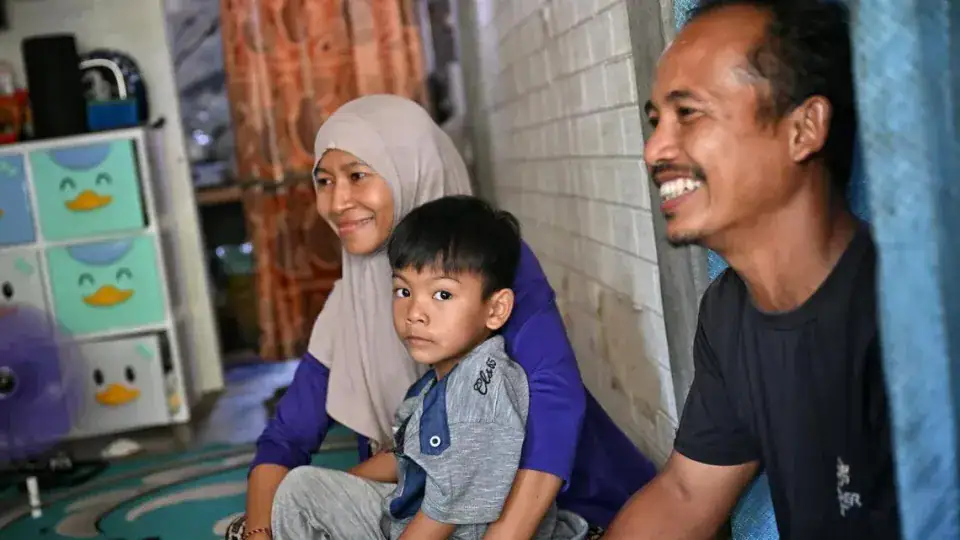
In Syamsudin Noor village near Banjarbaru, South Kalimantan, 43-year-old vegetable farmer Adi Siswoyo watched his fields burn. On August 27, flames moved toward his plot and he called for help. More than 20 fire trucks arrived, he said, but crews told him their hoses were too short to reach the fire.
Adi said the crews could have joined extra hoses together to extend their range. When asked why that was not done and what other options were considered, local authorities did not respond.
Within a few hours, his 1,960-square-meter field — about the size of five basketball courts — was destroyed. The raised planting beds he had spent nearly three months building on the marshy ground to keep crops above the water were gone, along with the chye sim and water spinach he had sown about two weeks before.
He estimated his losses at 13.5 million rupiah, about S$979. That includes 12 million rupiah for the labor to rebuild the beds, one million rupiah for the chye sim and 500,000 rupiah for the spinach. All the work, money and time put into the plot was lost, he said.
Indonesia is facing a particularly harsh fire season, driven by extended heat and dry conditions worsened by a very strong El Nino. Large areas of Sumatra and Kalimantan have burned, and smoke has drifted to nearby countries including Malaysia, Singapore and the Philippines. The Center of Economic and Law Studies estimates economic and health-related losses from fires between January and August at between 39.29 trillion and 123.1 trillion rupiah.
Adi's household shows how those broader costs are felt in small, accumulating ways — a ruined harvest, a clinic visit, a higher power bill, and less food at home — that weigh heavily on families with little financial margin.
Earning less, paying more
As haze persisted, two of Adi's four sons — Arif Achmad Rifai, 11, and Rahmat Rafis Saputra, 5 — developed coughs and colds. Their mother, Asmarawati, 39, took them to a village midwife, paying 60,000 rupiah per visit including medicine, for a total of 120,000 rupiah. The family paid directly because it had stopped paying premiums for the national health insurance program, BPJS Kesehatan, during the Covid-19 pandemic.
Other household costs also rose. With hotter weather, the family used its two fans more, lifting the monthly electricity bill by about 100,000 rupiah to around 300,000 rupiah. When Arif's elementary school moved classes online for two weeks due to the haze, the family spent an additional 100,000 rupiah on mobile data.
These are modest sums individually, but together they strain a household whose monthly income has dropped from around five million rupiah to about three million rupiah. Adi pays roughly 1.5 million rupiah each month on a bank loan for fish-farming equipment and supplies, and his 17-year-old son Riky Dwi Ramadan has vocational school fees of 300,000 rupiah a month.
The dry spell has also made farming more expensive. Adi and Asmarawati have had to pump water more frequently, using more fuel, while overall vegetable supply has fallen. Although market prices have risen, that has not translated into higher earnings for growers.
Asmarawati has raised the price of a bundle of water spinach to 6,000 rupiah from 3,000 rupiah, but customers are buying less. A meatball soup vendor who once bought three or four bundles of chye sim now buys one or two, or switches to cabbage, and fewer people are coming to the market because of the haze.
As she put it, costs have gone up while sales have gone down. Her daily net earnings have fallen from about 200,000 rupiah to around 100,000 rupiah, sometimes as low as 50,000 rupiah, and on some days she takes a loss.
The pressure is evident at home. She said she used to bring home a kilogram of fish for dinner and now brings half that amount. The family has also reduced spending on snacks.
On the farm, Adi now needs to irrigate almost daily. In the wetter season from November to April, he would hardly need to pump at all. He has scaled back planting to limit risk, noting that planting more without being able to maintain the crops would mean even greater losses.
The family is trying to find alternative income. It is raising gourami, which takes 10 to 12 months to reach market size and requires spending on fry, feed, electricity and water. It has also started growing mushrooms after customers asked them to fill in when another supplier quit. They had no prior experience but decided to learn by doing. The dry weather, however, has caused some of the mushroom crop to fail.
Authorities have handed out masks and advised people to stay inside when haze is heavy, but Adi said that is not practical for farmers. Wearing a mask while hoeing makes it difficult to breathe, he said, and when wind carries smoke from the south, the most he can do is turn to face north while working. Visibility in Banjarbaru becomes especially poor at night when smoke thickens.
Beyond one household
Community leader and farmer Hendri Wibowo said some families in Syamsudin Noor with infants or small children have temporarily stayed with relatives in Banjarmasin and Martapura, where the air is clearer. For growers, he said, the prolonged drought has created what locals describe as a lean year with no planting and no harvest income.
The village has 28 registered farmer groups, about 14 of which are still active and grow crops such as melons, chillies and tomatoes. Hendri estimated their combined losses could reach hundreds of millions of rupiah, though he did not have detailed figures to support the estimate.
Village head Fitria Khairani said about 10 hectares had burned, but the total damage is hard to calculate because affected farmers have not reported their losses or cannot assess them accurately. The lack of solid data itself shows how hard it is to measure the impact at the village level. She added that haze has disrupted daily life, with residents reporting breathing difficulties and eye irritation.
Local health facilities have seen more respiratory cases. At Ratu Zalecha Hospital in neighboring Banjar district, public health surveillance officer Winanda Rosalina said cases of acute respiratory infection, or ISPA, started to rise in mid-June. Records showed 341 cases between June and September 9, though she cautioned that not all can be linked directly to haze, since respiratory infections have many causes and ISPA is sometimes recorded as a secondary diagnosis when patients come in for fever or other symptoms that later prove to be dengue or other illnesses.
Economist Achmad Nur Hidayat of Universitas Pembangunan Nasional in Jakarta said recurring fires disproportionately affect low-income households, which have fewer resources to avoid exposure or recover from losses. Those with the least income suffer the most because they have no alternatives, he said.
The haze has also affected education. At SMP 15 Banjarbaru, a public junior high school with 466 students, lessons have been disrupted by the smoke, adding further costs and challenges for families and schools.