Interior Ministry dismisses Thai UN claims on Cambodian border settlements
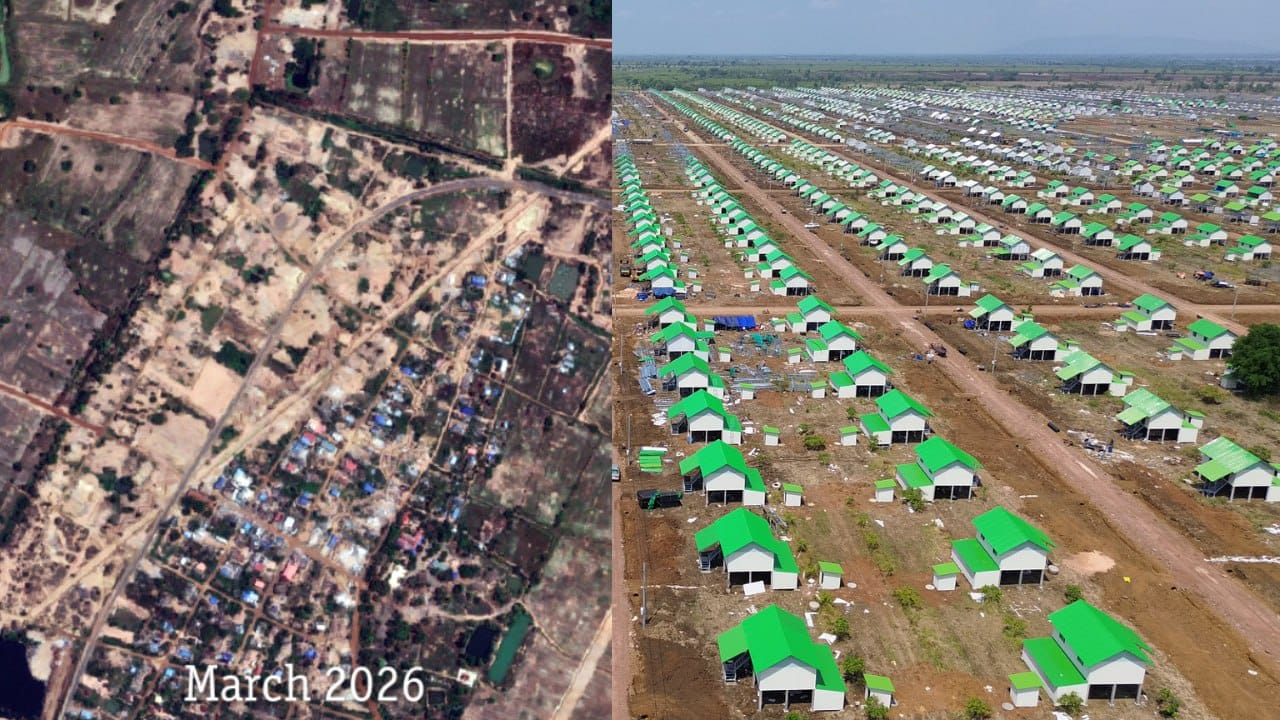
The Ministry of Interior has dismissed statements by Thailand’s representative at the United Nations asserting that Cambodians in Chok Chey and Prey Chan had moved onto and settled Thai territory, saying that one-sided claims do not define a lawful border.
Spokesman Toch Sokhak said on September 30 that Cambodia also rejected Thailand’s request that it refrain from bringing border questions before international bodies.
The comments responded to remarks made by Thai ambassador and permanent UN representative Cherdchai Chaivaivid at the 81st UN General Assembly on September 28. Cherdchai said Cambodians still remaining in camps originally created as temporary shelters in the 1970s had not gone back to their homes, and that their presence amounted to encroachment on Thai land.
Sokhak said repeated Thai assertions could not make a unilateral claim into a legal reality. He said international borders are not created by statements, maps used by one side, troop deployments, shipping containers, barbed wire or other facts imposed on the ground.
He noted that Thai official documents have acknowledged the Cambodia-Thailand boundary as founded on the 1904 Franco-Siamese Convention, the 1907 treaty and related maps, while the 2000 memorandum of understanding sets out joint surveying and demarcation through the Joint Boundary Commission.
If Thailand believes its territorial claims have a solid legal foundation, Sokhak said it should provide the relevant maps, coordinates and documents to Cambodia through the JBC process that both governments have already accepted.
He added that military deployments, fences, containers, trenches or other steps that alter conditions on the ground cannot, in Cambodia’s view, create a lawful boundary or sovereign rights.
Displacement, ceasefire and joint mechanisms
Sokhak said Thailand’s appeal to shelters from the 1970s did not answer the main issue facing the two countries today. He said tens of thousands of Cambodians are still unable to return to their homes, while Thai forces continue to occupy territory that Cambodia regards as its own and calls an illegal occupation.
He recalled that Cambodia’s permanent representative to the UN had said in late July that more than 20,000 Cambodians remained displaced.
The spokesman accused Thailand of picking selected historical references and using claims against civilians to divert attention from the central questions: why Cambodian residents cannot return home, and why the Joint Boundary Commission has not been used to examine the rival territorial claims.
He also pointed to the joint statement from the third special meeting of the General Border Committee, signed by Cambodia and Thailand on December 27, 2025.
That statement says ceasefire arrangements are without prejudice to border demarcation and the international boundary, calls for the JBC to restart survey and demarcation work, and provides that affected civilians should be allowed to return home and resume normal livelihoods safely, with dignity and without obstruction.
Sokhak said compliance with the ceasefire should therefore not be judged only by whether large-scale fighting has stopped. He said full implementation should include no troop advances, no new facts on the ground, no interference with demarcation work and guarantees that civilians can return home.
Cambodia rejects appeal for silence
On Thailand’s call for Cambodia not to raise border issues at international forums, Sokhak said Cambodia could not be expected to remain silent while matters involving sovereignty, territorial integrity and the safety of citizens remain unresolved.
He said presenting disputes through peaceful means is consistent with the UN Charter, which calls for peaceful settlement of disputes and respect for each state’s sovereignty and territorial integrity.
Sokhak said that as long as Thai military actions violate Cambodia’s sovereignty or territorial integrity, block returns by citizens, or create new situations on the ground, Cambodia will continue to use its legal right to speak, present evidence and raise the issues through peaceful bilateral, regional and international channels.
He urged Thailand to honor the documents it had signed and resolve differences through mechanisms agreed by both sides.
He said Thailand should produce a legal basis if it claims territory, and should fully carry out ceasefire provisions if it says it respects the ceasefire.
Sokhak concluded that unilateral assertions cannot establish a border, that force-created conditions cannot replace legal surveying, and that asking Cambodia to stay silent will not erase problems already present on the ground.