Kampong Thom Festival Uses Art to Spotlight Climate Concerns Along the Steung Sen River
From November 20 to 25, the Steung Sen riverside in Kampong Thom will host a free arts festival focused on climate change and everyday life along the water. The event brings together contemporary artworks, Indigenous craft traditions and stories from residents about their connection to the river.
Called Saiyon Kongkea, the festival is organised by Solarpunk Cambodia. Visitors can expect public installations, storytelling sessions, craft workshops and performances throughout Steung Sen town.
The aim is to bring environmental discussions within reach of rural communities while highlighting the knowledge and cultural practices rooted in the area.
Highlights include a solar-powered cooling structure that explores how public spaces can cope with rising heat, video projections on heritage buildings, and workshops involving local villagers and members of the Kui community.
The festival is Cambodia's contribution to Micro Constellations, a network of nine community arts programmes across the Asia-Pacific that respond to the COP31 climate summit. The regional effort is coordinated by the arts initiative Micro Galleries and connects local experiences with broader debates on climate action.
For the Cambodian organisers, the Steung Sen River is the central theme. They are interested in how its seasonal shifts shape people's livelihoods, memories and the surrounding ecosystems. Solarpunk Cambodia points to flooding, riverbank collapses and long dry-season heat as pressures already affecting the area. Through art and storytelling, the group hopes to give residents room to share these experiences and consider how their communities might adapt.
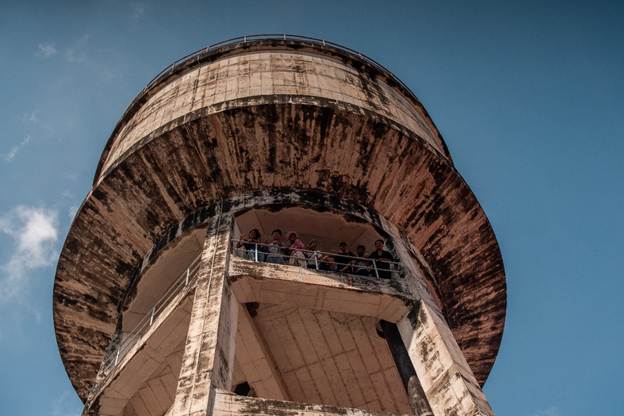
The programme brings works from Solarpunk's 2026 season back to Kampong Thom, where the organisation first launched its artist residency. A key exhibition, Ponleu: An Ecology of Hope, features works by 76 artists from across Southeast Asia. Visitors can also take part in river-based photography activities, watch live painting on solar panels and attend an experimental concert by Tonle Pulse. A water tower will serve as the canvas for an urban art collaboration.
Festival curator Tytaarts said the Kampong Thom Provincial Administration has given substantial backing to the event. She noted that the provincial authorities are not only building infrastructure but also using art and culture to strengthen the local economy and tourism.
Local knowledge at the centre
Mai Yoshikawa, a Solarpunk team member who has lived in Kampong Thom for two decades and now manages the partner venue Sambor Village, believes rural communities hold knowledge built up over generations of daily life.
“Each region holds its own wisdom, shaped over generations by life lived on that particular land,” she said.
Her exchanges with visitors from Phnom Penh have convinced her that this knowledge can offer valuable lessons for the future. Rather than simply preserving local traditions, she wants to understand the values behind them and apply those values to modern life. Artists, she added, can help people notice aspects of community life that are easily overlooked.
“Through this festival, I hope visitors will discover new forms of artistic expression and, seeing through the artists’ eyes, rediscover the beauty of the lives that have long existed here,” she said.
Craft and community
A craft-sharing workshop designed by industrial designer Sokkim Chork reflects this approach. Developed with villagers from Sambor and members of the Kui community, including collaborators from Phum Andas, the session invites participants to weave rattan coasters while seated together on handmade Kui mats. Locally made goods, including krama scarves, will be on display alongside stories about the people who produce them.
Chork said the workshop aims to celebrate and share the region's living craft traditions, with community exchange at its heart.
Architect Karot Choeung is designing a workshop space from natural materials gathered by Kui participants in their community forest. According to the organisers, the structure will blend ancestral building practices with contemporary design.
The wider programme also includes village-style discussions around the solar cooling installation, linking the artwork to questions about public comfort and rising temperatures.
Solarpunk Cambodia says its work seeks to combine art, ecology and community participation to imagine ways of living that support both people and the environment.
Roots in COP Out
The regional initiative grew out of COP Out, a temporary collective convened by Micro Galleries and led by artistic director Kat Roma Greer. Over 12 weeks, nine curators worked together online, sharing ideas and developing programmes suited to their local contexts. Tytaarts was one of those curators, and the Cambodian programme was later built with the Solarpunk team, volunteers, artists and community partners.
Greer said the goal was to show that cultural responses to climate change can emerge in many places and reflect different community priorities.
“Official climate talks take place in one city, but culture is responding in countless places at the same time,” she said.
“The curators demonstrate what climate action looks like when communities lead, creating responses that speak directly to their own needs,” she added.
Saiyon Kongkea is supported by the Heinrich Böll Foundation and the Kampong Thom provincial governor. The event will take place along the riverside in Steung Sen town, and all activities are free and open to the public.