Kim Yo-jong’s Rare Denial of $6.3B Crypto Theft Raises Questions for US-North Korea Talks
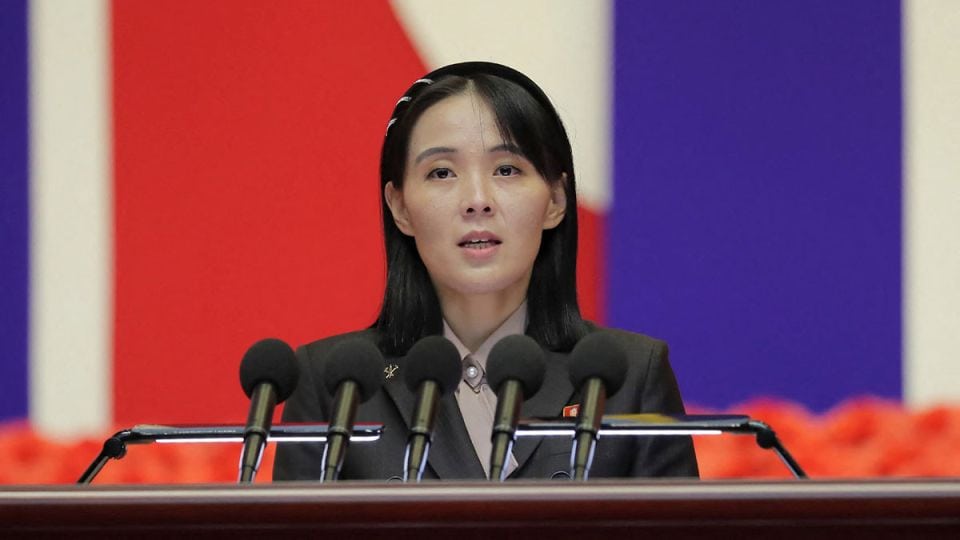
Kim Yo-jong, the sister of North Korean leader Kim Jong-un and a department director in the Workers’ Party of Korea’s Central Committee, on Tuesday dismissed US accusations that Pyongyang was behind a $6.3 billion cryptocurrency theft. She issued the rebuttal just three days after Washington made its findings public.
Analysts describe the speed and high profile of her response as unusual. They say it may reflect North Korea’s concern for its international reputation, as well as an effort to keep the cyber allegations from disrupting any future diplomacy with the United States.
Speaking through the Korean Central News Agency, Kim called the FBI’s conclusions a “grave political provocation.” Her statement came a few days after US authorities linked a massive theft from Binance, the world’s largest cryptocurrency exchange, to North Korean hackers. It repeated familiar complaints about American hostility, but its closing tone was notably measured. Kim said Pyongyang had matters to “reconsider” without explicitly threatening retaliation, a choice observers read as leaving room for diplomacy.
South Korea’s Unification Ministry said Kim’s personal involvement in a cybersecurity dispute was unprecedented. A ministry official, speaking on condition of anonymity, said the North apparently took the accusations seriously enough to have a top figure respond, rather than leaving it to lower-ranking officials or state media. The official added that Pyongyang has recently tried to present itself as a normal state and broaden its diplomatic outreach, and is becoming more aware of how it is viewed abroad.
Seoul also believes the statement was designed to stop illicit cyber activity from becoming a new issue in any negotiations with Washington. At the same time, it said, North Korea is pressing the United States to abandon what Pyongyang considers its hostile policy toward the regime.
Hong Min, a senior research fellow at the Korea Institute for National Unification, reached a similar conclusion. In his view, Kim’s remarks should be seen less as a routine reply to a criminal investigation and more as a carefully worded diplomatic signal to Washington. He argued that Pyongyang wants to prevent the cryptocurrency allegations from becoming either a precondition for renewed engagement or an extra source of pressure that could derail talks. In his assessment, the statement warned the US against using the cyber accusations as leverage, while still leaving the door open to future contact.
The dispute centers on an October 29 theft from Binance, in which roughly $6.3 billion in digital assets was reportedly moved out within about 20 minutes. If confirmed, it would be the largest cryptocurrency heist on record. Blockchain intelligence firm TRM Labs attributed the attack, with a high degree of confidence, to TraderTraitor, a hacking group linked to North Korea. On October 31, the FBI released its own assessment tying the theft to North Korea and published a list of cryptocurrency addresses associated with the incident.
In her statement, Kim flatly rejected the allegations and accused Washington of trying to brand North Korea a cybercrime state. She pointed to the FBI’s claim that a hacking organization “supported” by the North had been involved, and called the US assertion absurd and nothing new. She argued that the United States was deliberately damaging her country’s image and sovereignty, and misleading global opinion into believing that every cybercrime in the world was North Korea’s doing. Pyongyang, she said, opposes malicious cyber activity and rejects any attempt to turn cybersecurity into a tool of political interference.
Kim also turned the accusation back on Washington. She noted that the current administration, soon after taking office last year, announced plans to seize illegally stolen cryptocurrency and hold it as a national strategic reserve. If the US looked closely at who would receive large sums of recovered funds, she suggested, it might find a clue about who was behind the hack. The remark was meant to cast doubt on American motives by implying that the United States itself stood to benefit.
Hong, however, questioned the credibility of the denial. He pointed to similarities between the Binance theft and the $1.5 billion Bybit hack in February 2025, including the hacking methods, the way stolen assets were dispersed, and the use of money-laundering networks with Chinese links. He also noted that Kim had stayed silent about the Bybit incident, yet issued a statement just two days after the latest FBI announcement.
Hong suggested that Pyongyang is trying to keep the allegations from fueling new US sanctions or undermining prospects for renewed dialogue, especially amid speculation about diplomacy following Kim Jong-un’s recent visit to China. He considered the closing lines of Kim’s statement the most significant part. She said the North has “issues to reconsider” regarding what she called the very unpleasant hostile attitude of the US. Instead of threatening retaliation, Kim left space for maneuvering, which Hong read as a sign that Pyongyang is still weighing engagement. Yet the same statement could also give North Korea grounds to blame Washington if talks fall apart, keeping dialogue possible while building a justification for walking away.
Hong said Washington’s response over the next one to two weeks would be a key indicator. In particular, any new sanctions or measures from the Treasury and State Departments could reveal how realistic renewed US-North Korea talks are.
For now, Seoul has not decided whether to join any additional international sanctions over the Binance theft. “We will first assess the situation and respond in consultation with the relevant ministries,” a Unification Ministry official said, adding there was nothing more to add at this stage.