Ministry Draws a Line Between Legal Protections for Professional and Citizen Journalists
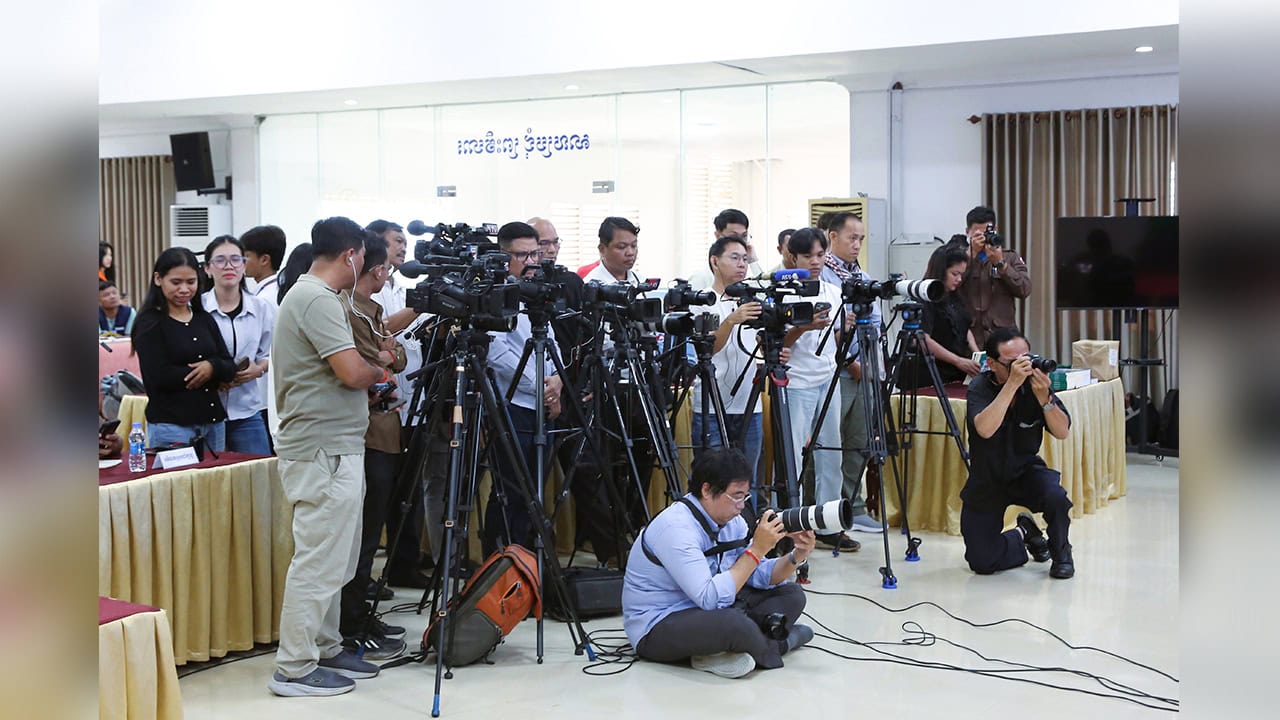
The Ministry of Information has reaffirmed that every citizen has the right to share information on social and community matters, including land disputes, environmental concerns and human rights. At the same time, it draws a clear distinction between professional and citizen journalists, especially when it comes to access to legal protection.
Ministry spokesman Tep Asnarith made the statement in response to questions about what measures exist to protect and support citizen journalists who report on problems facing local communities, particularly when they face threats or abuse.
He said the government respects citizens' right to access information and to freedom of expression, as set out in Articles 31 and 41 of the Cambodian Constitution. Every citizen, he said, has the full right to take part in reporting, voicing opinions or passing on information about social issues and matters affecting their communities.
He cautioned, however, that these rights come with responsibilities: respecting the law, following ethical standards, and honouring the rights and freedoms of others, all in service of security, public order and the common good.
Three forms of protection
On legal protection, Asnarith explained that registered journalists who hold valid press cards and carry out their work within the law and professional ethics can ask the ministry for help when they run into difficulties. He outlined three types of support:
- Legal protection and assistance to defend journalists' rights and professional reputations.
- Social protection through mechanisms set up by the government and the ministry.
- Mediation and out-of-court dispute resolution, designed to settle disagreements between journalists and other parties in line with the spirit of the Press Law. This can reduce the need for court cases and the risk of more serious legal complications.
For citizen journalists who are not registered as professionals, he pointed to coordination channels, ethical guidance, and training on legal matters and the responsible sharing of information.
Asnarith did not directly say whether citizen journalists qualify for the same protections as professionals when they face threats or lawsuits over public-interest reporting. He did stress that Cambodian citizens are equal before the law and enjoy the same rights and freedoms, and that accurate reporting and lawful expression should not expose anyone to legal accusations.
He was clear, though, that calling oneself a journalist or citizen journalist is no shield against legal responsibility if one's activities involve incitement, public disorder, violations of others' rights or breaches of existing laws.
Citizen journalists as supplementary sources
The statement also responded to findings from the Cambodian Center for Independent Media (CCIM), which reported that citizen journalists are helping fill information gaps in local communities but still face risks and inadequate protection. Its October 7 report surveyed 93 citizen journalists in Phnom Penh and 22 provinces, and found that 94 per cent had avoided covering at least one topic because of safety concerns.
Asnarith said it remains necessary to separate professional and non-professional journalists clearly. He added that citizens who share information from their communities are exercising their freedom of expression and drawing attention to social problems, and that such participation could help authorities gather the information they need to respond to community problems in a timely way.
Citizen reporting, he said, is no substitute for the work of professional journalists.
He suggested that reports from citizens could serve as leads for professional journalists, who should then interview sources, investigate, verify facts and gather further information before publishing. Professional journalists who work within the law and ethical standards, he said, remain essential to providing reliable information that the public can use to form opinions and make decisions.
He also encouraged citizens interested in journalism to pursue professional training, study the relevant laws and ethical standards, and consider registering or establishing legally recognised media outlets so they can develop their skills and become professional journalists.
A warning against 'political manipulation'
Alongside its clarification, the ministry called on civil society organisations, journalist associations and development partners to expand training for citizens and content creators on legal requirements, professional ethics and fact-checking. Such training, Asnarith stressed, should help people report accurately, independently and responsibly, rather than push them into activities that could expose them to legal risk.
He urged stakeholders not to train or recruit citizens as 'political tools', nor to encourage reporting that stirs unrest, distorts facts or fuels divisions in society.
He highlighted the Journalism Professional Charter, introduced by the ministry as a shared ethical framework for professional journalists, non-professional journalists and content creators alike. The charter, he said, emphasises honesty, accuracy, impartiality, source verification and respect for individual rights, with the aim of building public trust and reducing the risks of inaccurate reporting.
The ministry said its clarification reflects its recognition of citizens' role in reporting on community issues, while keeping the focus on professional standards, registration and compliance with the law.
Questions nonetheless remain about how much legal protection citizens without official press cards have when they face threats or abuse while reporting on issues of public interest.